Greyhound Racing
Western Australia
RWWA · TABtouch Park Cannington · 3 tracks statewide · Home of the Group 1 Perth Cup
18+ | Gamble responsibly | For free support call Gambling Help 1800 858 858 | gamblinghelponline.org.au
Western Australia takes a different approach to greyhound racing than any other state in the country. With only three active tracks — Cannington in Perth, Mandurah on the coast, and Northam in the wheatbelt — WA has the smallest greyhound footprint of any racing state. But that compact size hides a sophisticated operation, anchored by a Group 1 March carnival at Cannington that draws some of the country’s best dogs across the Nullarbor each autumn.
The other thing that makes WA distinctive is its governance. While most states have a dedicated greyhound body — GRV in Victoria, GRNSW in New South Wales, Racing Queensland up north, GRSA in South Australia — Western Australia rolls all three racing codes (thoroughbreds, harness, and greyhounds) under a single statutory authority called Racing and Wagering Western Australia, or RWWA. Day-to-day track operations sit with Greyhounds WA, the renamed Western Australian Greyhound Racing Association, but the regulatory and wagering pipework runs through RWWA. It is a unified model that nobody else in the country uses.
For eastern-state punters, greyhound racing WA also has one significant calendar advantage: the timezone. Cannington meetings run on AWST, which is two hours behind Sydney and Melbourne in summer and three hours behind in winter. A Wednesday or Saturday night meeting at Cannington gives punters in NSW, VIC and QLD a late-night extension to their betting day, often kicking off just as the local meetings have wrapped. The two big races to know are the Galaxy — a Group 1 stayers contest over 715 metres — and the Perth Cup, the state’s premier sprint over 520 metres with $200,000 to the winner. Both run as part of a March carnival weekend at Cannington that has become the centrepiece of the WA racing year.
This page covers how WA greyhound racing is structured, where the racing happens across the three active tracks, the major races to follow on the calendar, and how the welfare and rehoming side of the sport operates. If you are new to the WA scene, the sections below give you the full lay of the land.
| Detail | Info |
|---|---|
| Controlling authority | Racing and Wagering Western Australia (RWWA) |
| Track operator | Greyhounds WA (formerly WAGRA) |
| Active tracks | 3 — Cannington, Mandurah, Northam |
| Flagship track | Cannington (TABtouch Park Cannington), Perth |
| Group 1 races | The Galaxy (715m stayer), Perth Cup (520m sprint, $200,000 to winner) |
| Carnival weekend | March, at Cannington |
| Race nights at Cannington | Wednesday and Saturday |
| Timezone | AWST (UTC+8), 2–3 hours behind the eastern states |
How WA Greyhound Racing Is Run
WA greyhound racing operates under a two-tier governance model that is genuinely unique in Australia. At the top sits Racing and Wagering Western Australia (RWWA), the statutory body that controls all three racing codes — thoroughbreds, harness, and greyhounds — and also runs the state’s wagering operation through the TABtouch brand. Below RWWA, Greyhounds WA (the renamed Western Australian Greyhound Racing Association) handles day-to-day operations at the three race tracks. This integrated structure is the result of legislation introduced in the early 2000s that consolidated WA’s previously fragmented racing administration into a single authority.
RWWA — the controlling authority
RWWA was established under the Racing and Wagering Western Australia Act 2003 to take over the principal-club functions previously held by separate bodies for each racing code. For greyhound racing specifically, that meant absorbing the regulatory responsibilities of the former Western Australian Greyhound Racing Authority. Today RWWA sets the rules of racing, licenses participants, allocates prize money pools, programs the racing calendar across the three tracks, runs integrity and stewards’ panels, and operates the wagering channel that funds the entire ecosystem. The breadth of its remit makes RWWA more comparable to a corporate racing-and-wagering operator than to a pure regulatory body like GRNSW or GRV in the eastern states.
Greyhounds WA — the on-track operator
Greyhounds WA, formerly the Western Australian Greyhound Racing Association (WAGRA), is the not-for-profit club that operates the three tracks at Cannington, Mandurah, and Northam. The organisation handles meeting-day delivery, on-track presentation, kennel operations, hospitality such as the Box 1 Bar at Cannington, and the participant-facing side of the sport. Greyhounds WA coordinates with RWWA on race programming and integrity matters but does not set the rules itself — those flow down from the controlling authority. The split keeps the regulator at arm’s length from the day-to-day commercial operation of the tracks.
WA Tracks — The Full Picture
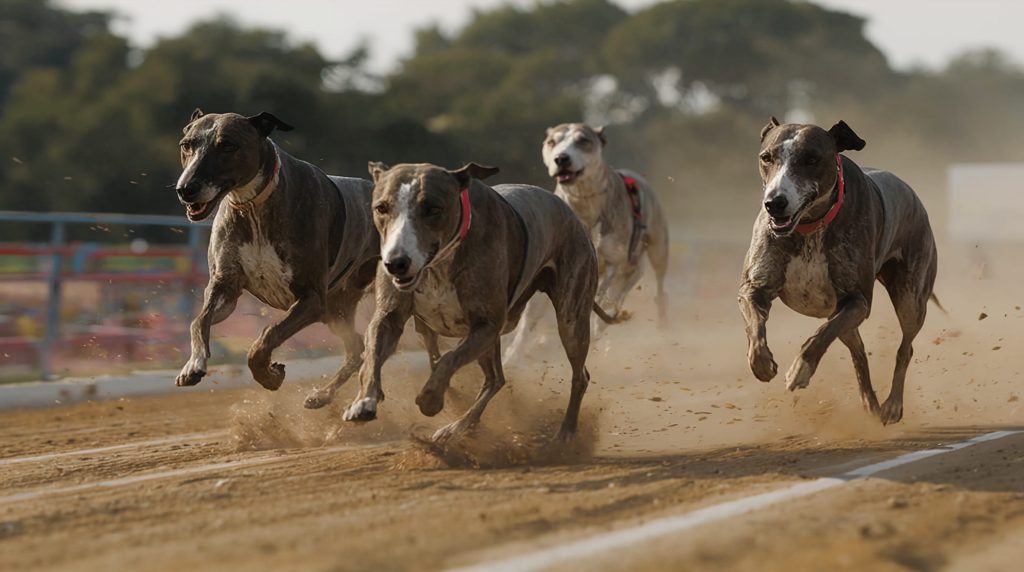
Western Australia operates just three active greyhound racing tracks, making it the smallest racing state in the country by venue count. That number stands in stark contrast to Victoria’s thirteen tracks and New South Wales’s thirty-plus circuits across metro, regional and country areas. The compact footprint is not the result of decline or contraction — it is simply how greyhound racing in WA has been organised since the mid-1990s, with three tracks providing comprehensive coverage between Perth, the south-west coast, and the wheatbelt.
The three tracks each play a distinct role in the WA racing ecosystem. Cannington in Perth carries the metropolitan flagship role, hosting Group 1 racing and the bulk of the city-grade meetings. Mandurah, a coastal city about an hour south of Perth, provides provincial-grade competition and runs the busiest weekly schedule of any WA track. Northam, in the wheatbelt about an hour and a half north-east of Perth, is the country circuit and the qualifying ground for many of the dogs that later step up to Cannington and Mandurah meetings.
The three tracks at a glance
| Track | Location | Distance from Perth | Opened | Race nights | Distances |
|---|---|---|---|---|---|
| Cannington | Station Street, Cannington | ~20 min east of Perth CBD | New circuit 23 March 2016 (original 1974) | Wednesday and Saturday | 275m, 381m, 520m, 601m, 715m |
| Mandurah | Kanyana Park, Gordon Road | 64 km south of Perth | 1979 (new track 2 November 2006) | Three meetings per week | 300m, 400m, 488m, 652m |
| Northam | Burwood Park, Clarke Street | 105 km north-east of Perth | 30 September 1996 | Monday afternoons, April to October | 297m, 509m, 588m, 721m |
Each track holds between 10 and 14 races per meeting, with up to eight greyhounds per race. Northam runs a seasonal schedule only — racing pauses in January and February each year — while Cannington and Mandurah race year-round. The combined schedule produces roughly six WA meetings per week across the three tracks during the main season, supplemented by trial sessions four to five times per week.
The AWST timezone advantage
One of the practical quirks of WA racing — and one that experienced punters in the eastern states factor in — is the timezone. Western Australia runs on Australian Western Standard Time (AWST), which is two hours behind Sydney, Melbourne and Brisbane during the summer months and three hours behind from April through October, when the eastern states switch to daylight saving, and WA does not. A Cannington Saturday-night meeting that starts at 6:30 PM local time is 9:30 PM in Sydney during winter — late enough that the eastern metropolitan meetings have usually wrapped, but early enough that punters can still build a betting card. For dedicated greyhound punters in the eastern half of the country, WA effectively extends the racing day by a couple of hours.
Race grading and qualifying system
WA operates a connected racing system where dogs qualifying at one track are eligible to race at others under specific conditions. A greyhound that runs 32.00 seconds or better over 520 metres in a qualifying trial at Cannington is eligible to nominate for races at all three tracks. Mandurah and Northam have their own qualifying standards over shorter distances — a 24.00-second 400m or 29.00-second 488m at Mandurah; a 31.30-second 509m at Northam. The system creates a clear progression for new dogs, who often start in country trials at Northam before stepping up to provincial racing at Mandurah and city-grade competition at Cannington.
Cannington — Perth’s Flagship Track
Cannington is the heart of Western Australia’s greyhound racing scene. Officially branded as TABtouch Park Cannington and operated by Greyhounds WA, it sits on Station Street about twenty minutes east of Perth’s CBD, with the suburban Cannington railway station providing direct rail access. The current circuit, which opened in March 2016, is the second iteration of greyhound racing at the site — the original Cannington track first opened in December 1974 before being closed in June 2015 to make way for the new build. The replacement circuit cost approximately A$14 million to construct and received a further upgrade in 2024 covering track surface and infrastructure improvements.
| Spec | Detail |
|---|---|
| Address | Station Street, Cannington |
| From Perth CBD | ~20 minutes east |
| Public transport | Cannington railway station |
| Operator | Greyhounds WA (formerly WAGRA) |
| Current circuit opened | 23 March 2016 |
| Capacity | 5,000 |
| Surface | Northam River Sand |
| Race nights | Wednesday and Saturday evenings |
| Gates open | 6:00 PM |
| First race | ~6:30 PM |
| Free entry | Wednesdays |
| Hospitality | Box 1 Bar & Restaurant |
| Major races | Group 1 Perth Cup (520m), Group 1 Galaxy (715m) |
The track itself
The Cannington racing surface is composed of Northam River Sand, prepared and maintained year-round for consistent racing conditions. The grandstand has a capacity of 5,000 patrons, with the record attendance of 15,000 set on opening night of the new circuit in 2016. An electronic LED video board displays form, results and replays for on-course punters. Race distances on offer at Cannington span a wide range, from short-course sprint dashes through to the longest staying trips on the WA calendar:
| Distance | Race type | Headline race |
|---|---|---|
| 275m | Sprint dash | Short-course feature events |
| 381m | Middle-distance sprint | Provincial and city sprint events |
| 520m | Main metropolitan trip | Group 1 Perth Cup |
| 601m | Middle-distance stayer | Stayer development races |
| 715m | Long-distance stayer | Group 1 Galaxy |
Cannington races twice a week, on Wednesday and Saturday evenings, throughout the year. Each meeting carries between 10 and 12 races on the programme, with up to eight greyhounds in each race. The mix is predominantly city-grade racing — the top tier of WA greyhound competition — with provincial and country-grade races mixed in to provide development opportunities for dogs working their way up the grading ladder. Gates open at 6:00 PM, with the first race typically off at 6:30 PM and the final race usually wrapping up by around 10:30 PM. The free-entry policy on Wednesday nights makes mid-week racing particularly accessible for casual visitors and locals dropping in after work.
Where Cannington fits in the racing calendar
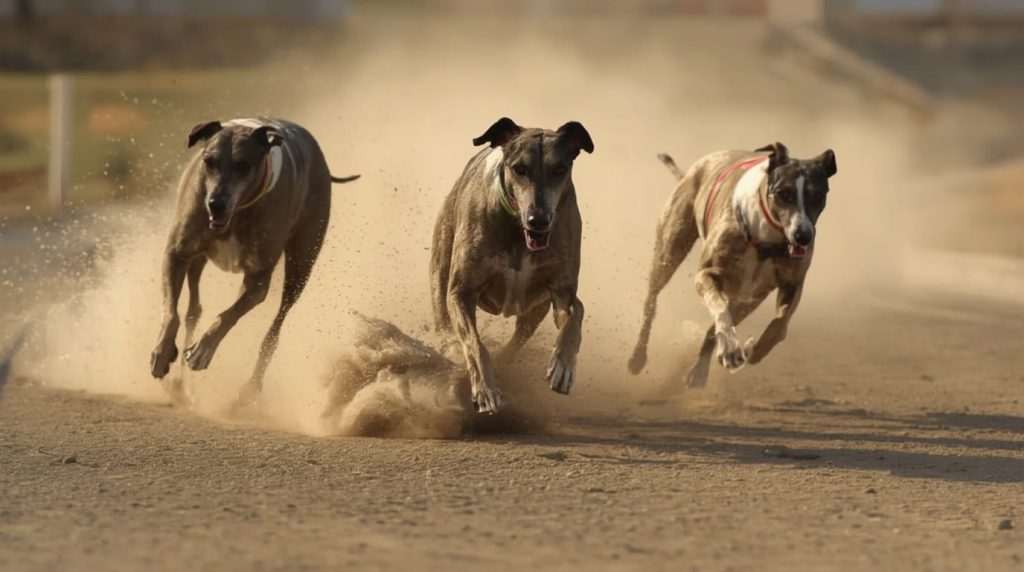
Beyond its weekly programme, Cannington plays host to the most important fixtures on the WA greyhound calendar each March, when the Group 1 Perth Cup and Group 1 Galaxy headline a carnival weekend that draws the best dogs from the eastern states across the Nullarbor. The 2025 Perth Cup, run over the standard 520-metre trip, was won by Deadly Avenger in a slick 29.43 seconds, defeating Morton and Miss Envy in front of a packed grandstand. The Galaxy, contested over the much longer 715 metres, is one of the country’s premier stayers races and the centrepiece of WA’s national racing reputation.
Cannington’s combination of metropolitan accessibility, a major-race calendar in March, and a reliable twice-weekly programme makes it the central venue of WA greyhound racing. The next section covers the two regional tracks — Mandurah and Northam — which complete the WA racing ecosystem with their own distinct characters and roles.
Regional Tracks — Mandurah and Northam
While Cannington dominates the metropolitan storyline, the WA greyhound ecosystem is held together by two regional tracks that do most of the heavy lifting on the weekly schedule. Mandurah, an hour south of Perth on the Indian Ocean coast, runs the busiest weekly programme of any WA venue and stages two Group 2 features each year. Northam, in the wheatbelt about an hour and a half north-east of Perth, operates a seasonal country circuit that serves as the development ground for the next generation of WA racing dogs. Together they account for the majority of actual race meetings held in the state each year.
Mandurah vs Northam at a glance:
| Mandurah | Northam | |
|---|---|---|
| Location | Kanyana Park, Gordon Road | Burwood Park, Clarke Street |
| Distance from Perth | 64 km south | 105 km north-east |
| Opened | 1979 (new track 2 Nov 2006) | 30 September 1996 |
| Race schedule | Three meetings per week | Monday afternoons, April to October only |
| Distances | 300m, 400m, 488m, 652m | 297m, 509m, 588m, 721m |
| Grade level | Provincial and country | Country grade only |
| Group races | Mandurah Cup (G2), Birthday Cup (G2) | None |
| First race time | ~6:00 PM | ~1:00 PM |
| Closed period | Year-round racing | January and February |
Mandurah — the busy provincial circuit
Mandurah Greyhounds operates at Kanyana Park on Gordon Road, about 64 kilometres south of Perth in the coastal city of Mandurah. The current 599-metre circumference track has been in use since November 2006, replacing an older circuit that had operated on the site since 1979. The venue is generally entered via Gordon Road, with an alternative route via Mandjoogoordap Drive from the Kwinana Freeway for those approaching from Perth. Facilities have been progressively upgraded in recent years and offer a modern, comfortable environment for race-night visitors.
Mandurah carries the heaviest weekly schedule of any WA track, racing three nights per week with 11 to 14 races per programme. The grade mix is predominantly provincial with some country races included — a step below Cannington’s city-grade focus but a meaningful rung above Northam’s country-only schedule. The first race typically starts at 6:00 PM with the final race off around 9:30 PM, making for a slightly earlier finish than at Cannington. Race distances cover 300, 400, 488 and 652 metres, with the 488m being a signature distance — qualifying times of 29.00 seconds or better at this trip earn dogs the right to nominate at the larger Cannington meetings.
The two feature races at Mandurah both carry Group 2 status: the Mandurah Cup and the Birthday Cup. These are second-tier features below the Group 1 Perth Cup and Galaxy at Cannington, but they remain meaningful targets for WA-based connections and dogs working their way towards G1 contention.
Northam — country racing in the wheatbelt
Northam Greyhounds, located at Burwood Park on Clarke Street, sits about 105 kilometres north-east of Perth in the wheatbelt town of Northam — a roughly 90-minute drive through the Avon Valley. The track opened in September 1996 with the distinction of being the first greyhound circuit in Western Australia to be built inside an existing trotting venue, a dual-use arrangement more commonly found in the eastern states. Lights were installed in early 2012, enabling the first night meeting in April that year, though most regular Northam meetings still run on Monday afternoons rather than under lights.
The Northam schedule is seasonal. Racing runs from April through October, with the track shut for the hottest summer months of January and February when wheatbelt heat becomes prohibitive. Meetings typically begin at approximately 1:00 PM with 10 to 12 races on the programme. Race distances cover 297, 509, 588 and 721 metres, all in sand-surface conditions with a Safechase Lure system. Broadcasting is available live on SKY Racing 1 & 2 and TABRadio throughout the racing season.
Northam plays a distinctive developmental role in the WA racing pyramid. The track was designed specifically for young greyhounds and lower-grade dogs, with country-grade racing only — there is no provincial or city grade competition staged at Northam. Dogs qualifying at Northam (running 31.30 seconds or better over 509 metres) are eligible to compete at Northam in Qualified Maiden races, but they need to step up through Mandurah and Cannington trials to earn the right to race at the larger venues. The track is therefore the natural starting point for many WA greyhounds, with the better-performed dogs progressing through the system from Northam to Mandurah and ultimately to Cannington.
Together, Mandurah and Northam provide WA greyhound racing with the depth of meetings that a single metropolitan track could never sustain alone. They also represent two of the more distinctive regional greyhound venues in Australia — Mandurah for its sheer weekly volume in a coastal setting, and Northam for its trotting-track dual-use design and seasonal country schedule. The next section turns to the calendar’s headline events: the major races run across all three WA tracks each year.
Major Races and the WA Greyhound Calendar
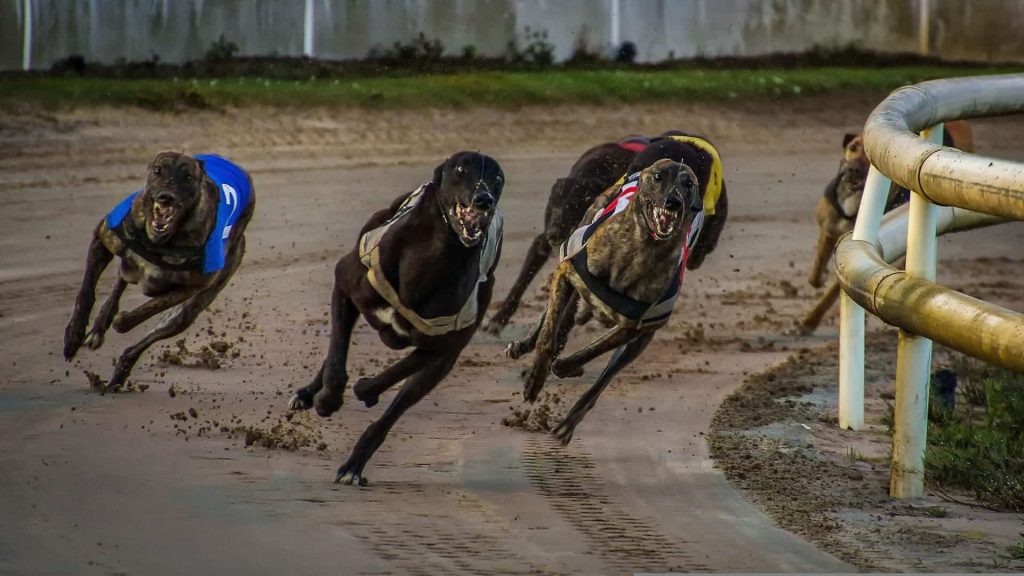
The Western Australian greyhound calendar revolves around its March carnival weekend at Cannington, when the country’s best sprinters and stayers cross the Nullarbor to contest the state’s two Group 1 features. Outside of that headline weekend, the calendar is anchored by a steady rhythm of mid-tier features at Cannington, Mandurah’s two Group 2 races, and a series of qualifier events that feed into the main feature programme. For interstate punters, the WA carnival is the one weekend each year where the late AWST start times become genuine appointment viewing.
Featured races at a glance:
| Race | Grade | Distance | Track | Time of year | Recent prize money |
|---|---|---|---|---|---|
| Perth Cup | Group 1 | 520m | Cannington | March | Up to $200,000 |
| Galaxy | Group 1 | 715m | Cannington | March | $125,000 |
| Sandgroper | Major series | 520m | Cannington | April–May | $300,000 |
| The Miata Final | Listed | 715m | Cannington | April | $30,000 |
| Mandurah Cup | Group 2 | Sprint | Mandurah | Annual | Varies |
| Birthday Cup | Group 2 | Sprint | Mandurah | Annual | Varies |
The Perth Cup — Group 1 sprint
The Group 1 Perth Cup is the flagship event of the WA calendar. Run over 520 metres at Cannington in March, it has been the state’s premier sprint race for decades and routinely attracts the cream of the eastern-states sprint division alongside the best WA-trained chasers. The 2025 edition was claimed by Deadly Avenger in 29.43 seconds, with Morton and Miss Envy filling the placings. Prize money for the Perth Cup has reached up to $200,000 to the winner in recent years, making it one of the more lucrative greyhound features in Australia. The race is the centrepiece of the March carnival weekend and consistently produces the highest betting turnover of the WA racing year.
The Galaxy — Group 1 stayers race
Run on the same March carnival weekend over Cannington’s 715-metre staying trip, the Group 1 Galaxy is the major distance event in Western Australia and one of the most prestigious stayers races in the country. The 2025 Galaxy was won in track-record fashion by Ethanol Water, trained by Tom Dailly, who clocked 41.60 to defeat Groovebird and Miss Ronnie Mac. First prize was $125,000. The race draws specialist stayers from interstate, with Victorian and NSW kennels typically sending strong representation. For Cannington, holding both a Group 1 sprint and a Group 1 stayers race on the same weekend is the defining feature that sets the track apart from any other Australian venue.
The Sandgroper — biggest prize outside the Group races
Although not a Group race in the formal sense, the Sandgroper is one of WA greyhound racing’s most lucrative features. The 2025 final was won by Deadly Avenger in 29.19 seconds — a new Cannington track record over the 520-metre trip — and carried first prize of $300,000, exceeding even the Group 1 Perth Cup in headline value. Run in late autumn, the Sandgroper is structured as a heats-and-final series that builds over multiple weeks, creating a second major betting carnival on the WA calendar after the March Group 1 weekend.
Group 2 features at Mandurah
Outside of Cannington, the two Group 2 features at Mandurah carry the next tier of importance on the WA calendar. The Mandurah Cup and the Birthday Cup are both staged annually at the Kanyana Park circuit and serve as the premier provincial-grade features in the state. Neither carries the prize money or interstate pull of the Cannington Group 1s, but they are meaningful targets for WA-based connections building their dogs through the grading system, and they represent the best racing of the year at Mandurah.
The annual calendar shape
The WA greyhound calendar follows a recognisable annual shape. The March carnival at Cannington — Perth Cup and Galaxy weekend — is the headline event of the year. April and May bring the Sandgroper series, the Miata Final and other autumn features. The rest of the year settles into a steady rhythm of Wednesday and Saturday city racing at Cannington, three meetings per week at Mandurah year-round, and Monday afternoons at Northam from April through October. The seasonal pause at Northam in January and February concentrates the racing volume onto the two metropolitan and provincial tracks during the WA summer.
For punters, the March carnival is when greyhound racing Western Australia draws genuine national attention. For trainers and owners, the year-round programme across three tracks of different grades provides the depth of opportunities that keeps the WA breeding and training industries viable. The next section turns to a topic that sits across all three tracks — the welfare and rehoming framework that supports the dogs themselves.
Welfare and Rehoming
Greyhound welfare and rehoming sit at the centre of how WA racing presents itself to the wider community. The framework operates under Racing and Wagering Western Australia’s regulatory oversight, with Greyhounds as Pets WA serving as the dedicated rehoming program for dogs leaving the track. The system is broadly similar to the state-based rehoming programs in Victoria, New South Wales and Queensland, but with some operational features that reflect WA’s compact three-track footprint and the unique RWWA tri-code structure.
RWWA’s welfare oversight
Animal welfare in WA greyhound racing falls under the regulatory authority of RWWA, which sets and enforces welfare standards across all licensed activities including breeding, training, racing and retirement. Welfare requirements are embedded in the conditions of racing under which all licensed participants operate, and breaches can result in penalties ranging from fines through to disqualification. The framework covers on-track injury management, post-race veterinary attention, kennel inspections, and the broader treatment of dogs at every stage of their careers — from puppy registration through to retirement and rehoming.
Greyhounds as Pets WA — the rehoming program
The dedicated rehoming arm of WA racing is Greyhounds as Pets WA, commonly referred to as GAP. The program is operated by RWWA as part of its animal welfare remit, with a primary mission of finding permanent homes for retired racing greyhounds. The GAP team works from a dedicated facility at Southern River, where dogs are assessed and matched with prospective adopters. Every dog that passes through the program receives a comprehensive welfare and preparation package before being placed in a home.
What’s included with every GAP greyhound:
- Full temperament testing
- Green Collar behavioural assessment
- Sterilisation (desexing)
- C5 vaccination
- Worming treatment
- Microchipping
- Lead and collar
- Training and care guide
- Ongoing post-adoption support from the GAP team
How adoption works
The adoption pathway is structured around matching rather than walk-in selection. Prospective adopters submit an online application that captures details about the home — other pets, time spent alone, children, lifestyle. The GAP team reviews the application and identifies suitable matches from the pool of available greyhounds, then sends a profile of a candidate dog by email. A meet-and-greet is arranged at the Southern River facility, and in most cases the dog goes home with the new owner that same day.
The adoption fee is $200, with a $100 reduction available to Seniors Card holders. WA’s GAP program also offers a four-week foster-to-adopt trial period, giving families time to ensure the match works before the adoption is finalised. If circumstances change at any point in the future — even years later — GAP undertakes to take the dog back, a return-to-program commitment that runs across the major Australian state rehoming services.
Conclusion
Western Australian greyhound racing is a smaller but well-organised state racing system that punches above its weight in two specific areas: the March Group 1 carnival weekend at Cannington, and the strength of its rehoming framework through Greyhounds as Pets WA. The compact three-track structure — Cannington for city-grade, Mandurah for provincial competition and Northam for country racing — covers the full grading pyramid without overlap, and the RWWA tri-code authority provides a unique governance and wagering model that sets WA apart from every other Australian state.
For punters, the standout is the Cannington Saturday-night programme, where the AWST timezone delivers late-evening city-grade racing that effectively extends the national betting day. The Perth Cup and Galaxy weekend in March is the one calendar fixture each year that draws the cream of eastern-states sprinters and stayers across the Nullarbor, and the Sandgroper series in autumn supplies a second carnival of major-prize racing later in the year.
For adopters, the Greyhounds as Pets WA program offers one of the most robust state rehoming arrangements in the country, with the Green Collar behavioural assessment, the four-week foster-to-adopt trial period and the lifetime return commitment all serving as meaningful protections for both dogs and new owners.
The WA greyhound system will not match the volume or feature density of Victoria or New South Wales any time soon. What it offers instead is focus — a tight three-track schedule, two Group 1 features on a single carnival weekend, and a rehoming pipeline that ranks among the strongest in the country.
Frequently Asked Questions
Where can I watch WA greyhound racing live?
WA greyhound meetings are broadcast live on SKY Racing 1 and 2 across Australia, with audio coverage on TABRadio. On-course attendance is available at TABtouch Park Cannington on Wednesday and Saturday nights, at Mandurah three times per week, and at Northam on Monday afternoons from April to October.
What are the race nights at each WA track?
Cannington races Wednesday and Saturday evenings with the first race around 6:30 PM. Mandurah runs three meetings per week starting at approximately 6:00 PM. Northam races on Monday afternoons from 1:00 PM, April through October only — the track is closed during the WA summer.
How can I attend a meeting at Cannington?
TABtouch Park Cannington is located on Station Street, about twenty minutes east of Perth’s CBD. The Cannington railway station provides direct rail access. Entry is free on Wednesday nights, with gates opening at 6:00 PM and the first race typically off at 6:30 PM.
When is the Perth Cup held?
The Group 1 Perth Cup is run in March each year as part of Cannington’s annual carnival weekend, alongside the Group 1 Galaxy. The race is staged over 520 metres at Cannington and has carried first prize of up to $200,000 in recent years.
How do I bet on WA greyhound racing online?
Wagering on WA greyhound racing is handled through TABtouch, the official RWWA-owned wagering platform. National corporate bookmakers also offer markets on WA meetings. Form, fields and replays are available through the Greyhounds WA website ahead of each meeting.
How is WA greyhound racing different from racing in other states?
WA greyhound racing is governed by Racing and Wagering Western Australia, which oversees all three racing codes — greyhounds, thoroughbreds and harness — under a single authority. This tri-code structure is unique in Australia. WA also operates just three greyhound tracks compared with twenty-plus in eastern states.