
Plenty of sites will give you a list of tips for today’s racing. This page does something more useful: it teaches you how to find your own. Daily selections are worth checking, but the punters who consistently back winners are the ones who can read a form guide, assess the pace of a race, and spot value before the market catches up. That is what this page is for.
Greyhound racing rewards form study more directly than almost any other betting product. The fields are small — six dogs in a standard Australian race — which makes the analysis manageable. The races are short, usually under 30 seconds, which means early speed and box position carry outsized importance. And the form data is transparent, publicly available and surprisingly deep once you know where to look. You do not need insider knowledge or paid tipster subscriptions to make informed bets. You need to understand form, pace and the track, and then apply that understanding consistently.
This guide covers each of those in turn. We start with how to read a greyhound’s form, move into speed maps and pace analysis, explain why the box draw matters more than most casual punters realise, and walk through the track and weather factors that can flip a race. After that, we cover where to find the best free greyhound racing tips from expert analysts, the most common tipping mistakes that cost punters money, and a practical approach to staking that keeps your betting sustainable rather than reckless.
Whether you have been punting on the dogs for years or you are placing your first bet this weekend, the fundamentals here apply to every race at every track. The dogs do not care how long you have been watching. The form tells the same story to everyone — the difference is knowing how to read it.
How to read greyhound form
Form is the foundation of every good greyhound tip. Before you look at anything else — pace, box, track, conditions — you need to know how a dog has been performing in its recent starts. Australian greyhound form is presented as a string of numbers showing finishing positions, and once you learn to read it, the story of a dog’s recent campaign jumps off the page.
A form string reads left to right, most recent start first. So a dog showing 1-2-1-3-2 finished first in its last start, second the time before, first the start before that, third, then second. Five recent starts, all near the front — that is a dog in strong, consistent form.
Here is what different form strings actually tell you:
| Form string | What it suggests |
|---|---|
| 1-1-2-1-3 | Consistent front-runner, in strong winning form |
| 5-4-6-5-3 | Struggling, finishing well back in most starts |
| 6-4-3-2-1 | Improving rapidly — each run better than the last |
| 1-1-3-5-6 | Declining — started well but form is falling away |
| 1-3-S-2-1 | Reliable dog with a scratching in the middle of the sequence |
| F-5-2-1-3 | Fell in its last start — need to check if it carried an injury |
Beyond the numbers, you will see letter codes mixed into form strings. The most common ones worth knowing:
- F — fell during the race. Check whether the dog was injured, because a fall affects the next run physically and sometimes mentally.
- S — scratched before the race. The dog did not run, so this start tells you nothing about form.
- W — ran wide. The dog may have been competitive but lost ground through running a longer path.
- NTD — no time displayed. The time was not officially recorded, often due to a race incident.
What to look for in good form
Consistency matters more than one brilliant run. A dog that finishes 1-2-2-1-3 across five starts at a similar grade is a far more reliable prospect than a dog showing 1-6-1-5-1 that wins spectacularly and then drops out completely. The first dog finds the front regularly. The second is unpredictable and hard to trust with your money.
An improving form line is the most valuable pattern to spot. A dog moving from 5-4-3-2-1 across its last five starts is getting better with each run, and if it is still in the same grade, it may be about to step through the class. Backing a dog on the way up, before the market fully adjusts, is one of the simplest edges available.
Class changes and what they mean for form
Form does not exist in a vacuum — it is always relative to the grade the dog was racing in. A dog showing 4-5-5 in Grade 4 is not necessarily in bad form. It may have been outclassed against stronger dogs, and dropping back to Grade 5 could see it immediately competitive. Conversely, a dog showing 1-1-1 in Grade 5 that steps up to Grade 4 is facing a genuine test, and those wins at a lower level may not translate. Always check the grade alongside the finishing positions, because the same numbers can tell very different stories depending on the company a dog was keeping.
The form guide is your starting point. The next layer is understanding what happens once the boxes open, which is where speed maps and pace come in.
Speed maps and early pace
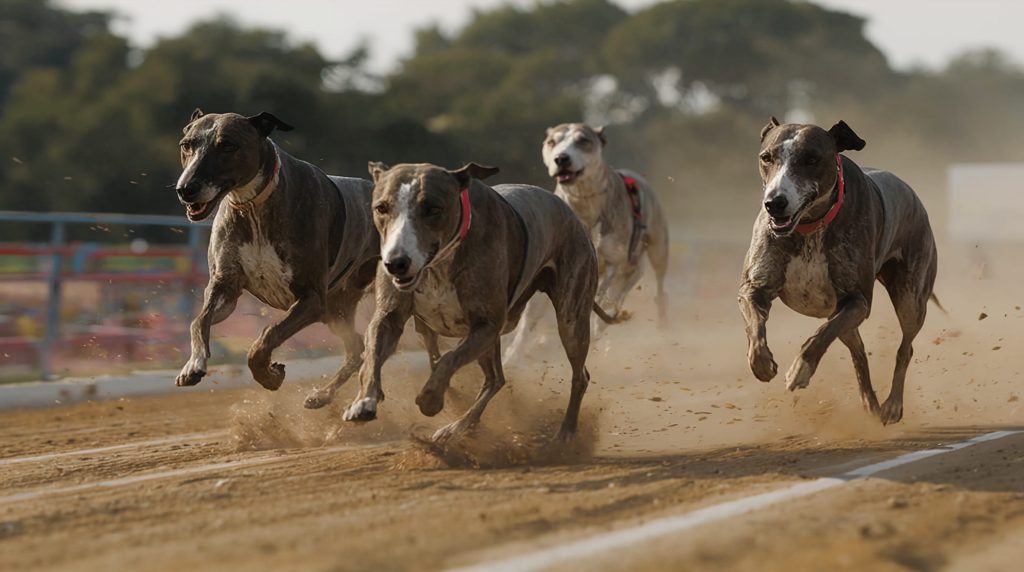
If form tells you how a dog has been finishing, the speed map tells you how the race is likely to unfold. A speed map is a prediction of where each dog will position itself in the early stages of the race, based on its natural running style, box draw and historical sectional times. In greyhound racing, this matters more than in almost any other racing code, because the races are so short that what happens in the first few seconds often decides the result.
The central fact of greyhound racing is this: the dog that leads to the first bend wins far more often than any other runner. There is no jockey to control the pace, no tactical riding, no sitting three wide with cover and swooping on the turn. These are dogs running on instinct, and the one that hits the rail first and sets the pace has a structural advantage that the chasers must overcome with raw speed. They often cannot.
That makes identifying running styles the second most important skill after reading form:
| Running style | What it means | How to identify it |
|---|---|---|
| Leader / front-runner | Breaks fast, aims to lead from the box to the line | Consistently quick first-section times, wins from the front in form |
| Early pace, settles | Shows speed early but does not always hold the lead | Quick starts but finishes behind leaders, mid-pack in results |
| Chaser / backmarker | Begins slowly, relies on late speed to run over the top | Slow first sections, finishes strongly, wins come with fast closing splits |
| One-pacer | Runs at the same speed throughout, rarely brilliant or terrible | Consistent sectional times, rarely leads, rarely finishes last |
A front-runner from box 1 on the inside rail is one of the strongest positions in greyhound racing. The dog has the shortest run to the first bend, the rail to follow, and if it breaks cleanly, it can set up an uncontested lead. A front-runner drawn in box 6 on the outside faces a longer path to the first corner and a greater risk of being crossed by inside dogs, even if its raw speed is identical.
This is where the speed map becomes genuinely useful. When two or more fast beginners are drawn in the same race, they are likely to contest the lead early, which creates pressure and opens the door for a chaser to run over the top while the leaders tire. When only one dog has obvious early speed, and the rest are chasers, the leader has a soft time in front and becomes very hard to beat. Reading that dynamic before the race is what separates an informed bet from a guess.
Where to find speed maps
BoxOne generates speed maps automatically for every Australian meeting, showing predicted positions at the first bend based on historical data. The Greyhound Recorder and several betting operator platforms also provide pace indicators. If you are doing it manually, look at each dog’s first-section times in their recent starts at similar distances — the dog with the consistently fastest first section is your likely leader.
The speed map gives you the race shape. The next factor that feeds directly into it is the box draw itself, which we break down in the next section.
Box draw and track bias
The box a dog is drawn in shapes its chances before the race even starts, and this is one of the factors casual punters most consistently underestimate. In horse racing, a jockey can navigate from a wide barrier and work into a position. In greyhound racing, there is no rider, no tactics and no mid-race adjustment. A dog breaks from its box and runs. Where that box sits relative to the first bend determines how much ground the dog covers and how much trouble it can avoid.
The general pattern across most Australian tracks looks something like this:
| Box | Position | Typical advantage |
|---|---|---|
| Box 1 (Red) | Inside rail | Strongest — shortest run to the first bend |
| Box 2 (Blue) | Inside | Strong — close to the rail with a clean run |
| Box 3 (White) | Inner-middle | Moderate — can get squeezed between inside and outside runners |
| Box 4 (Black) | Outer-middle | Moderate — similar squeeze risk, wider path |
| Box 5 (Orange) | Outside | Weaker — longer run, needs to cross or push wide |
| Box 6 (Green/White) | Far outside | Weakest at most tracks — furthest from the rail |
That pattern is real and backed by decades of race data, but it is not universal. Every track has its own configuration, and that changes the box bias, sometimes dramatically.
Why track layout matters
The key variable is the distance from the boxes to the first bend. A track with a short run to the first turn amplifies the inside advantage because the inside dog reaches the rail first with less ground to cover, and the outside dogs are still wide when the field hits the corner. A track with a long straight before the first bend gives outside dogs more time to find a position, making the box draw less decisive.
Track shape plays a role too. Some Australian tracks run a tighter, more circular layout where the bends are sharper, and the rail is worth more. Others have a more oval or D-shaped configuration where the turns are gentler, and the advantage of being inside is less pronounced. A handful of tracks, particularly in Queensland, run straight-track racing with no bends at all, where box draw works completely differently — inside and outside matter far less, and raw speed over a short distance is everything.
How to use box stats before you bet
The practical step is simple: before betting on any race, check that track’s historical win percentages by box number. Most state authority sites, BoxOne and the form guides publish this data, and it takes a few seconds to find. If box 1 wins 25% of the time at a particular track against a roughly equal share of 17% per box, that is a significant edge worth factoring into your assessment. If a track shows relatively even box stats, the draw matters less, and you can weight form and pace more heavily.
The mistake is applying the same box bias to every track. A dog drawn in box 1 at a tight-turning track is in a completely different position to a dog drawn in box 1 at a long-straight-to-the-first-bend venue. Check the track data, not just the box number.
Track conditions and weather
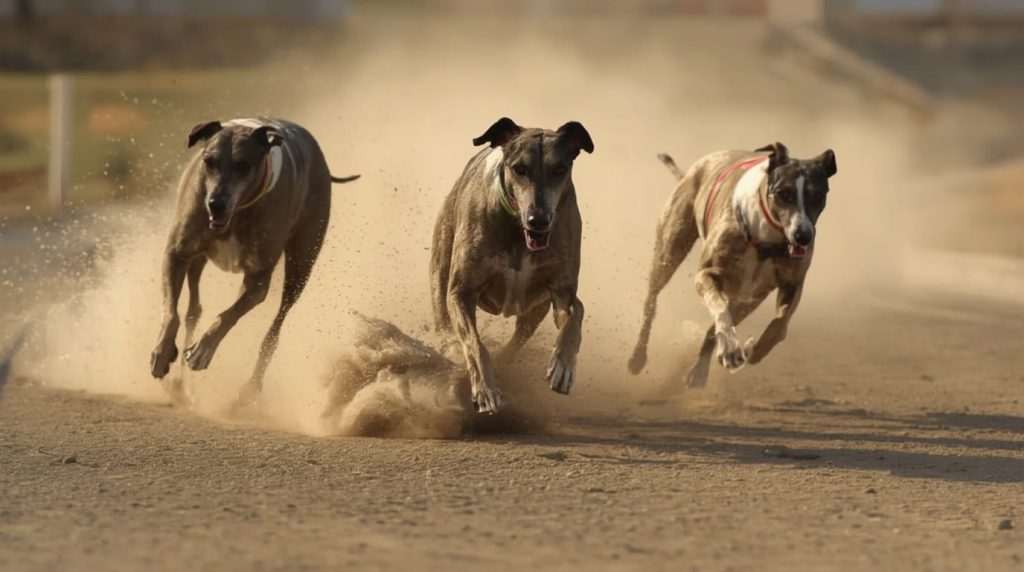
Form, pace and box draw all matter, but on the day of the race, there is one variable that can override all three: the state of the track. A dog with perfect form on a fast surface can struggle on a rain-affected track, and a moderate dog that handles the wet can suddenly become a genuine winning chance when the conditions turn. Checking the track conditions before you bet is not optional — it is the difference between an informed selection and a form-based guess that ignores the ground the dogs are actually running on.
Australian greyhound tracks publish their condition rating before each meeting, and the scale runs from fast to heavy:
| Rating | What it means |
|---|---|
| Fast | Dry, firm surface — fastest times, most predictable |
| Good | Slightly off peak but still solid — reliable running conditions |
| Slow | Some moisture affecting the surface — times slightly longer |
| Heavy | Saturated, rain-affected — significantly slower, grip is compromised |
The practical impact on the racing is straightforward. On a fast track, pure speed wins. Times are at their shortest, the form guide is at its most reliable, and the better dog on paper usually is the better dog on the day. This is where your form and pace analysis works hardest, because there are fewer variables disrupting the expected outcome.
On a heavy or wet track, the picture changes:
- Times slow across the board, so best-time comparisons from dry meetings are misleading.
- Front-runners tend to benefit, because the slippery surface makes it harder for chasers to make up ground through the field.
- Dogs with a lighter frame can struggle more on saturated surfaces, while heavier dogs sometimes handle the give in the ground better.
- Some dogs simply do not handle the wet. Their form on rain-affected tracks will look noticeably worse than their dry form, and you can spot this by filtering previous starts by track condition.
That last point is the key takeaway. Just as you read recent form to see how a dog is running, you should check wet-track form specifically, when the conditions are off. A dog showing 1-1-2 on fast tracks and 5-6-4 on heavy tracks is a very different proposition depending on what the weather has done overnight. Most form guides let you filter by track condition, and BoxOne’s speed maps factor conditions into their predictions.
Temperature is worth a passing mention too. Australian summers push track temperatures well above comfortable levels, and some meetings are moved or abandoned in extreme heat under animal welfare protocols. On hot days, dogs can tire faster, and the later races on a long card can produce less predictable results as the surface dries out further through the meeting.
Check the track rating before every bet. It takes five seconds, and it can save you from backing a dog whose form means nothing on the surface it is about to run on.
Key form factors to look for
Reading a form string tells you how a dog has been finishing. The factors below tell you why, and whether the form is about to improve or decline. These are the indicators experienced punters scan for before narrowing a field down to a betting proposition, and each one can shift a dog’s chances significantly without being obvious in the raw finishing positions.
| Factor | What to look for | Why it matters |
|---|---|---|
| Class drop | Dog moving from a higher grade to a lower one | Facing weaker competition — a strong positive signal |
| Class rise | Dog stepping up after a winning streak | Form at the lower level may not hold against better dogs |
| Distance change | Dog switching from sprint to middle or vice versa | Some dogs are built for speed, others for stamina |
| First start at track | No prior form at this specific venue | Unknown how the dog handles this track’s bends and surface |
| Weight change | Noticeable gain or loss since the last start | Can indicate fitness changes, illness or maturity |
| Trainer form | Trainer winning at an above-average rate recently | A kennel in form often has multiple runners going well |
| Returning from a spell | Dog racing for the first time after a break | May need a run to find race fitness — or may return fresh |
| Backing up quickly | Racing again within a few days of the last start | Some dogs thrive on quick turnarounds, others tire |
A few of these deserve a closer look.
Class drops are one of the most reliable angles in greyhound tipping. A dog that has been running mid-field in Grade 4 and drops back to Grade 5 is suddenly racing against weaker opposition, and form that looked ordinary at the higher level can translate to a genuine winning chance at the lower one. Trainers do this deliberately, and it is not a sign of a bad dog — it is a sign of a smart placement. When you see a class drop combined with decent recent form, pay attention.
Distance changes are trickier. A dog that dominates at sprint distances does not always carry that speed over a middle-distance trip, and a staying dog stepping back to a sprint may lack the early pace to be competitive. Check whether a dog has any previous form at the distance being run today. If it is untested over the trip, you are betting on an unknown.
Returning from a spell catches punters out regularly. Some dogs need a run or two to build back to race fitness after a break, and their first-up form is consistently below their best. Others come back firing. The trick is to check the dog’s first-up record in its form history. If it has a pattern of running poorly first start back and improving sharply at the second or third start, that pattern is worth trusting.
None of these factors work in isolation. The strongest tips for greyhound racing come from layering them — a dog dropping in class, drawn in box 1, on a fast track, with a speed map showing uncontested early pace. When the factors align, the confidence behind the selection rises. When they conflict, caution is warranted.
Common tipping mistakes
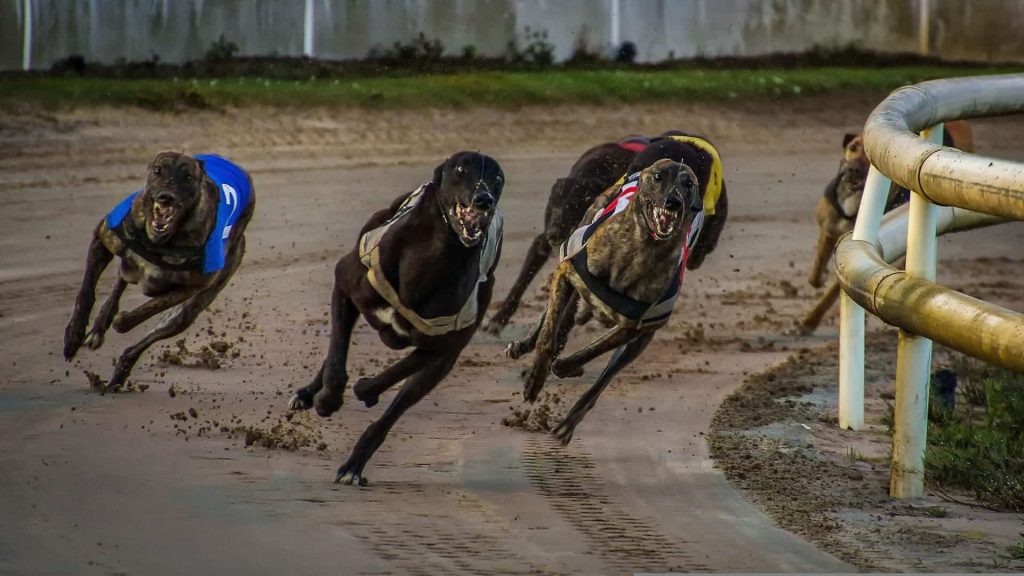
Knowing what to look for is half the battle. The other half is knowing what to avoid. These are the mistakes that cost punters money consistently, and most of them come down to shortcuts and habits rather than bad luck.
- Backing the favourite blindly. Favourites win greyhound races at a decent rate, but the odds rarely compensate for the times they lose. Blindly backing the shortest-priced dog in every race is a guaranteed way to lose money over time. Favourites are worth backing when your own analysis supports them and the price offers value. They are not worth backing simply because they are favourites.
- Betting on every race. A typical day has over 100 greyhound races across the country. You do not need an opinion on all of them, and you should not try to. The most disciplined punters bet on a handful of races where they have a genuine edge and ignore the rest. Forcing a bet into a race you have not studied is not punting — it is gambling for the sake of it.
- Overvaluing one good run. A dog that ran a blistering time or won by eight lengths in its last start is exciting, but one performance is not a pattern. It may have had a perfect box draw, an uncontested lead and a fast surface, none of which are guaranteed to repeat. Always look at the last five starts, not just the last one, and weigh the context of each run.
- Ignoring scratchings. We covered this on the Today’s Racing page, but it bears repeating here. A scratching changes the race. It changes the speed map, the box dynamics and the odds. Betting on a race card from last night without checking for late scratchings on race day is one of the most avoidable mistakes in greyhound punting.
- Not adjusting for track conditions. A dog’s fast-track form is irrelevant on a heavy surface if it has no wet-track record. Checking the track rating and filtering for relevant form takes seconds, and skipping it means you are betting on information that may not apply to the race being run today.
- Ignoring the box draw at this track. Box 1 does not carry the same advantage at every venue. Applying a generic box bias without checking the specific track’s box statistics means your assessment of the draw is based on assumption, rather than data.
- Chasing losses. The most destructive habit of all. Increasing your stakes after a losing run to win the money back is how manageable losses become serious ones. Losses are a normal part of betting. Even the best greyhound racing tipsters lose more often than they win. What matters is how you stake, which is what the next section covers.
Staking and bankroll basics
All the form analysis, speed maps and expert Australia greyhound racing tips in the world count for nothing if your staking is reckless. How much you bet per race, and how you manage your money across a day, a week or a month, is what determines whether your betting stays enjoyable and sustainable or spirals into something you cannot control. This is not the exciting part of punting, but it is the part that keeps you in the game.
The starting point is simple: set a bankroll. This is a fixed amount of money you have set aside specifically for betting, separate from your living expenses, and it should be an amount you can afford to lose entirely without it affecting your life. If losing it would cause a problem, it is too much.
From there, the two most common staking approaches are:
| Method | How it works | Best for |
|---|---|---|
| Level staking | Same fixed amount on every bet, regardless of confidence | Beginners and anyone who wants simplicity |
| Percentage staking | Bet a fixed percentage of your current bankroll (typically 2–5%) | Punters who want stakes to adjust as the bankroll grows or shrinks |
Level staking is the easiest to stick to and the hardest to get wrong. If your bankroll is $500 and you stake $10 per bet, you know exactly where you stand at all times and a losing run does not escalate into bigger and bigger bets. Percentage staking offers a little more flexibility — your stakes grow when you are winning and shrink when you are losing, which naturally protects the bankroll during cold streaks.
What both methods have in common is discipline. A few practical habits that reinforce it:
- Never increase your stake to chase a loss. This is worth repeating from the mistakes section, because it is the single fastest way to blow a bankroll.
- Set deposit limits with your betting operator. Every licensed Australian bookmaker offers daily, weekly and monthly limits. Use them. They are a safety net, not a sign of weakness.
- Track your bets. Keep a simple record of every bet — the dog, the price, the stake and the result. Over time this shows you where your edge is and where you are burning money.
- Accept losing runs as normal. Even at a 30 per cent strike rate, which is strong for greyhound tipping, you will hit stretches where nothing lands. That is maths, not bad luck, and your staking plan is what carries you through it.
Betting on greyhound racing should be entertainment, not a financial strategy. No method, no tipster and no form guide guarantees a profit, and anyone who tells you otherwise is selling something. Bet what you can afford, stake consistently, and treat a winning day as a bonus rather than an expectation.
Frequently asked questions
What is the most important factor when tipping greyhound races?
Recent form is the foundation, but the strongest selections come from layering multiple factors together — form, speed map, box draw and track conditions. A dog in good form, drawn well, with a clear pace advantage on a suitable surface is a far stronger proposition than a dog that ticks only one of those boxes.
How important is box draw in greyhound racing?
Very. The dog drawn in box 1 wins more often than any other box at most Australian tracks, because it has the shortest run to the first bend. But the advantage varies by track, so always check that venue’s historical box statistics rather than applying a blanket rule.
What is a speed map?
A speed map predicts where each dog will position itself in the early stages of the race based on historical sectional times and running style. It helps you identify whether the race is likely to have a clear leader or a contested pace, which directly affects your assessment of each runner’s chances.
Should I always back the favourite in greyhound racing?
No. Favourites win at a reasonable rate, but backing them blindly at short odds is not profitable over time. Back the favourite when your own analysis supports the selection and the price offers value. Pass when it does not.
How do I read a greyhound form string?
A form string shows finishing positions in recent starts, reading left to right from the most recent. So 1-3-2-1-4 means the dog won its last start, finished third the time before, second before that, won, then ran fourth. Look for consistency and improving trends rather than fixating on a single result.
What is level staking?
Level staking means placing the same fixed amount on every bet regardless of confidence. It is the simplest staking method, easy to track, and protects your bankroll from the temptation to increase stakes after a loss or on a hunch.
Can you make money from greyhound racing tips?
No tipping method, form analysis or expert service guarantees a profit. Even the best tipsters lose more often than they win. Greyhound betting should be treated as entertainment, not a financial strategy. Bet only what you can afford to lose and set deposit limits with your operator.