
Greyhound racing runs every single day in Australia. Not most days. Every day. Across Victoria, New South Wales, Queensland, South Australia, Western Australia and Tasmania, there are typically 10 to 15 meetings scheduled on any given day, sometimes more. That is dozens of races from mid-morning through to late evening, at tracks ranging from the big metropolitan venues like The Meadows and Wentworth Park to regional meetings at country circuits most casual punters have never heard of.
This page is your starting point for finding what is racing today, understanding the fields once you find them, and knowing where to watch and where to bet. It is not a live fields page — for that you need the official state sites and form guides we link to below. What it is, is the guide that makes those resources useful, so you can move from “what’s on today” to placing an informed bet without wasting time working it all out from scratch.
Whether you follow the dogs daily or you are checking in for the first time, the same practical questions come up: where do I find today’s meetings, how do I read a race card, what do the scratchings mean, where can I stream the races live, and which bookmakers actually offer greyhound markets with decent coverage. This page answers all of them.
A typical racing day in Australia
To give you a sense of the scale before we get into the detail:
| What | Typical day |
|---|---|
| Total meetings | 10–15+ across all states |
| Total races | 100–150+ |
| States racing | VIC, NSW, QLD, SA, WA, TAS |
| First race | Around 10:30–11:00 AM AEST |
| Last race | Around 10:00–10:30 PM AEST |
| Dogs per race | 6 (standard Australian field) |
| Meeting types | Metropolitan, provincial and country |
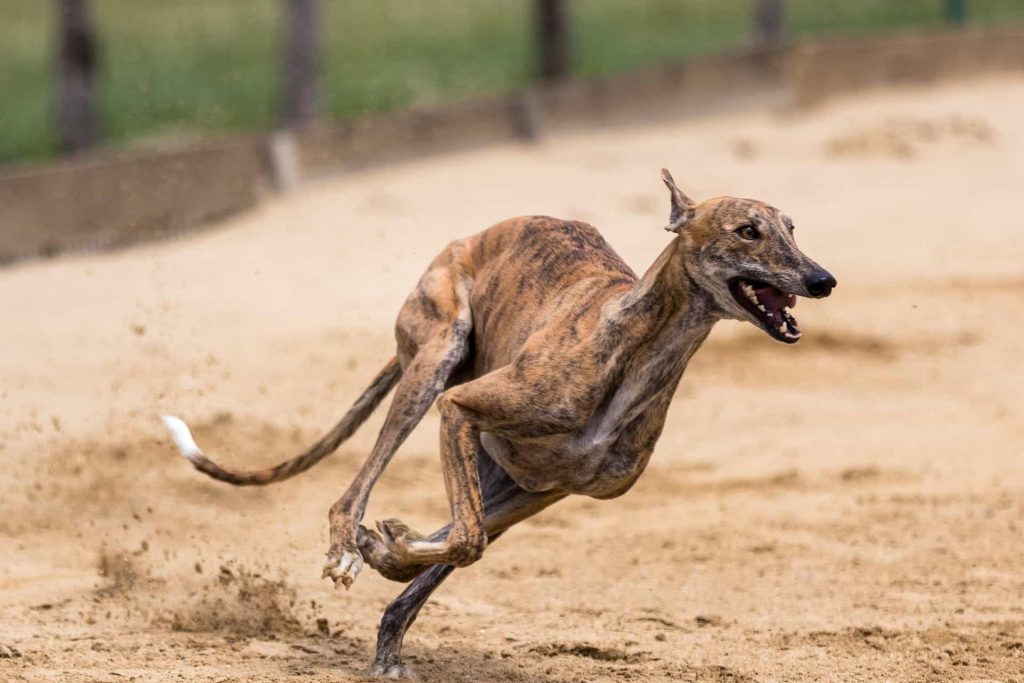
The racing starts in the east and follows the sun west, so your first fields of the day are typically Victorian or Queensland morning meetings, with Western Australian races closing out the evening. That spread means there is almost always a race within the next 20 to 30 minutes no matter what time you check in.
How today’s greyhound racing schedule works
Australian greyhound racing does not follow the same pattern as horse racing, where Saturday is the flagship day and the rest of the week is quieter. The dogs race every day, and the schedule is spread evenly enough that a Tuesday afternoon card can be just as busy as a Saturday night. Understanding how the daily calendar is structured helps you plan what to follow and when to tune in.
The day typically breaks into three windows:
- Morning and early afternoon — provincial and country meetings, usually starting between 10:30 AM and 12:00 PM AEST. These are smaller cards, often at regional tracks, and they set the tone for the day’s racing.
- Afternoon — a mix of provincial and metropolitan meetings filling the middle of the day, with fields generally stronger than the morning cards.
- Evening and night — the headline sessions. Metropolitan meetings at venues like The Meadows, Wentworth Park and Albion Park run under lights, typically from around 6:00 PM onwards. These are the highest-graded races with the strongest fields and the most betting interest.
The volume of racing varies by state, and some states carry a heavier share of the daily schedule than others:
| State | Racing frequency | Key tracks |
|---|---|---|
| Victoria | Most days, often multiple meetings per day | The Meadows, Sandown, Bendigo, Geelong |
| New South Wales | Most days, strong evening cards | Wentworth Park, The Gardens, Richmond, Gosford |
| Queensland | Several meetings per week | Albion Park, Ipswich, Townsville |
| South Australia | Regular meetings | Angle Park, Murray Bridge, Gawler |
| Western Australia | Regular meetings, evening-weighted | Cannington, Mandurah |
| Tasmania | Fewer meetings, smaller cards | Hobart, Launceston, Devonport |
Victoria and New South Wales between them account for the bulk of the national schedule on most days. If you are following the racing from the east coast, you will rarely go more than 20 minutes without a race running somewhere in those two states alone.
One thing worth knowing is the distinction between TAB and non-TAB meetings. TAB meetings are covered by Sky Racing, available for betting through all major licensed operators, and carry full form-guide coverage. Non-TAB meetings are smaller cards with more limited coverage and betting availability. For most punters, the TAB meetings are where the action is, and they make up the majority of what you will see on any daily racing calendar.
Fields for each meeting are released once the box draw is completed, which is typically a day or two before the meeting. That means tomorrow’s fields are usually available by this evening, and today’s have been locked in since yesterday. Knowing when fields drop helps you plan your betting rather than scrambling at race time.
Next we cover exactly where to find those fields, state by state.
Where to find today’s greyhound racing fields
This is the most practical section on the page, because knowing what is racing today means nothing if you cannot find the actual fields. Australia’s greyhound racing is governed state by state, so the official source for fields depends on which state’s meeting you are looking at. The good news is that several third-party sites aggregate everything into one place.
Official state sources
Each state racing authority publishes its own fields once the box draws are done. These are the definitive sources — scratchings, reserves, box numbers and race times all appear here first.
| State | Authority | Where to find fields |
|---|---|---|
| Victoria | Greyhound Racing Victoria (GRV) | fasttrack.grv.org.au |
| New South Wales | GRNSW | thedogs.com.au |
| Queensland | Racing Queensland | racingqueensland.com.au |
| South Australia | GRSA | greyhoundracingsa.com.au |
| Western Australia | Racing and Wagering WA | rwwa.com.au |
| Tasmania | Tasracing | tasracing.com.au |
If you only follow one state, bookmarking that state’s authority site is the simplest approach. For Victoria specifically, the GRV FastTrack platform is well built and includes nomination counts, box draw audits and meeting calendars alongside the fields themselves. For NSW, thedogs.com.au covers fields, scratchings and live results in one place.
Third-party form and fields sites
If you follow the racing across multiple states, and most serious punters do, the third-party aggregators are more practical because they pull every meeting into a single daily view:
- BoxOne (boxone.com.au) — covers every Australian meeting daily with speed maps, AI-powered selections and form breakdowns. Clean layout and updated early each morning. One of the best all-in-one daily racing tools going.
- The Greyhound Recorder (thegreyhoundrecorder.com.au) — the longest-running greyhound publication in Australia, operating since 1931. Fields, form guides, expert selections and news. Strong editorial coverage alongside the raw data.
- Racing and Sports (racingandsports.com.au) — detailed form guides, trainer statistics, track data and course breakdowns for every meeting. Good for punters who want to go deeper on the numbers.
Betting operator apps
The major licensed bookmakers also display today’s fields directly within their platforms, which is convenient if you are already logged in and ready to bet. TAB, Sportsbet, Ladbrokes, bet365 and others all show the day’s greyhound meetings with race cards, form and live odds built in. The fields come from the same official sources but are presented alongside the betting markets, so you can move from reading the card to placing a bet without switching between sites.
Between the official state sites, the aggregators and the betting apps, there is no shortage of ways to find what is greyhound racing today. The next question is what to do with the information once you have it — which means learning how to read a race card.
How to read a greyhound race card
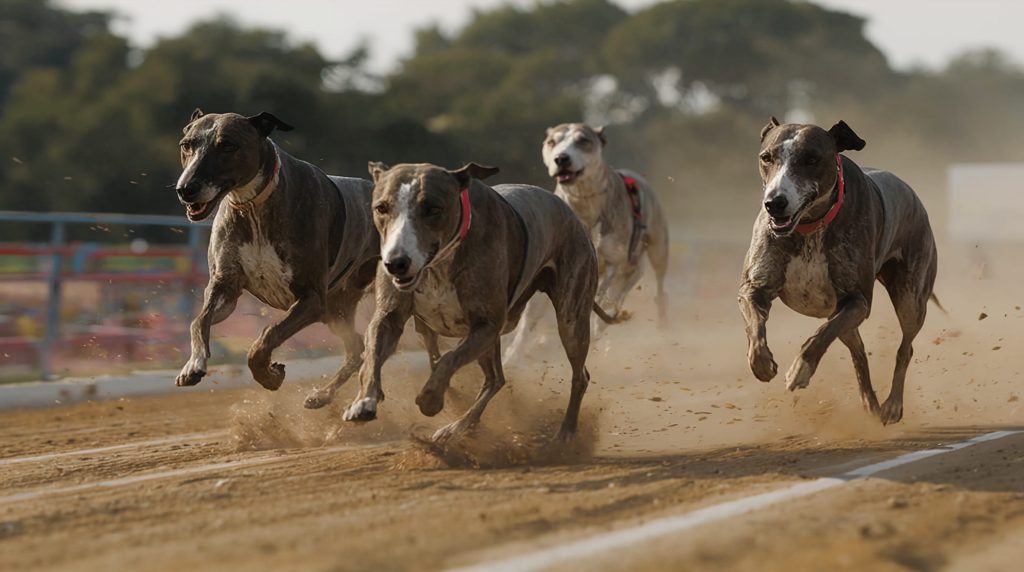
A race card is the full list of runners for a specific race, and it contains everything you need to assess the field before placing a bet. If you have never looked at one before, the amount of information can feel overwhelming, but it breaks down into a handful of key elements that tell you most of what you need to know.
Here is what a typical runner entry on an Australian greyhound race card looks like, using a fictional example:
| Field | Example | What it means |
|---|---|---|
| Box | 1 (Red) | Starting box position and rug colour |
| Dog | Flying Comet | The greyhound’s registered name |
| Trainer | J. Mitchell | The licensed trainer responsible for the dog |
| Form | 1-3-2-1-5 | Finishing positions in the last five starts, most recent first |
| Weight | 31.2 kg | The dog’s racing weight at the last weigh-in |
| Best time | 29.84 | Best recorded time in seconds at the distance being run |
| Distance | 425m | The race distance at today’s track |
| Grade | Grade 5 | The classification of the race based on the dogs’ ability |
A few of those deserve a closer look.
Form is the single most useful piece of information on the card, and it reads left to right from the most recent start. A form string of 1-3-2-1-5 tells you this dog won its last start, finished third the time before that, second before that, won the start before, and ran fifth five starts ago. Common abbreviations you will see alongside numbers include F for fell, S for scratched, and W for wide runner. Consistent low numbers suggest a dog in good form. A string full of 5s and 6s tells a different story.
Grade determines the quality of the field. Australian greyhound grades generally run from Grade 5 (the lowest open grade) up to Free For All at the top, with maiden and novice races for dogs without a win or with limited wins. The lower the grade number, the stronger the competition. A dog dropping from Grade 4 to Grade 5 is stepping down in class, which is worth noting.
Best time gives you a benchmark for how fast the dog can run the distance, but read it with context. Times vary between tracks because of different track lengths, turns, and surface conditions. A best time at Sandown does not directly compare to a best time at Wentworth Park. Where best times are most useful is comparing dogs running at the same track in the same race.
And for quick reference, the rug colours by box number, which are standard across all Australian racing:
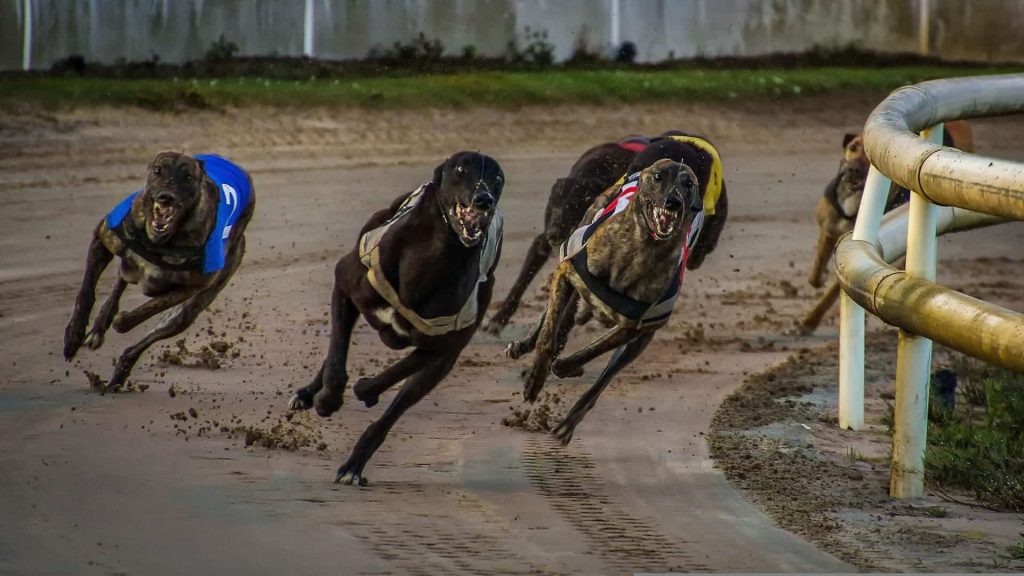
- Box 1 — Red
- Box 2 — Blue
- Box 3 — White
- Box 4 — Black
- Box 5 — Orange
- Box 6 — Green and white stripes
Once you can read the card, the next thing to understand is what happens when the card changes — which brings us to scratchings and reserves.
Scratchings and reserves
Between the time fields are released and the moment the boxes open, the race card can change. Dogs get scratched — withdrawn from the race before it runs — and when that happens, it affects the field, the betting and potentially your plans. Understanding how scratchings work saves you from betting on a dog that is no longer running.
A dog can be scratched for several reasons:
- Injury or illness — the most common cause, picked up by the trainer or identified at the pre-race veterinary inspection.
- Vet inspection failure — every dog is examined trackside before racing, and the vet can scratch a dog deemed unfit to compete.
- Season — female greyhounds coming into season are automatically scratched.
- Trainer decision — a trainer may withdraw a dog for any number of reasons, from a concern about the track conditions to a strategic decision to save the dog for a different race.
Scratchings can happen at different points. Some are declared a day or more before the meeting, giving the field time to adjust. Others happen on race day, sometimes within hours of the race, after the trackside vet inspection. Late scratchings are the ones that catch punters out, which is why checking the fields again close to race time is a habit worth building.
When a dog is scratched, the first reserve steps into the vacant spot. Reserves are listed on the race card below the main field, and they take the scratched dog’s box number and wear the corresponding rug colour. If multiple dogs are scratched, the second reserve fills the next gap. If no reserves are available, the race runs with a reduced field, and that can change the dynamics significantly — a five-dog race plays differently from a six-dog race, especially in terms of box position and early pace.
The practical impact on betting is straightforward. When a scratching happens, the odds shift across the remaining field, and most bookmakers reform the market quickly. If you placed a bet before the scratching, your bet on the scratched dog is voided and your stake returned. But the odds you took on other runners may now look different, so it pays to be aware.
The simplest habit is this: always check for scratchings within an hour of race time before placing your final bets. The same sites that carry the fields — the state authority pages, BoxOne, the betting apps — all update scratchings in close to real time.
Where to watch today’s greyhound races
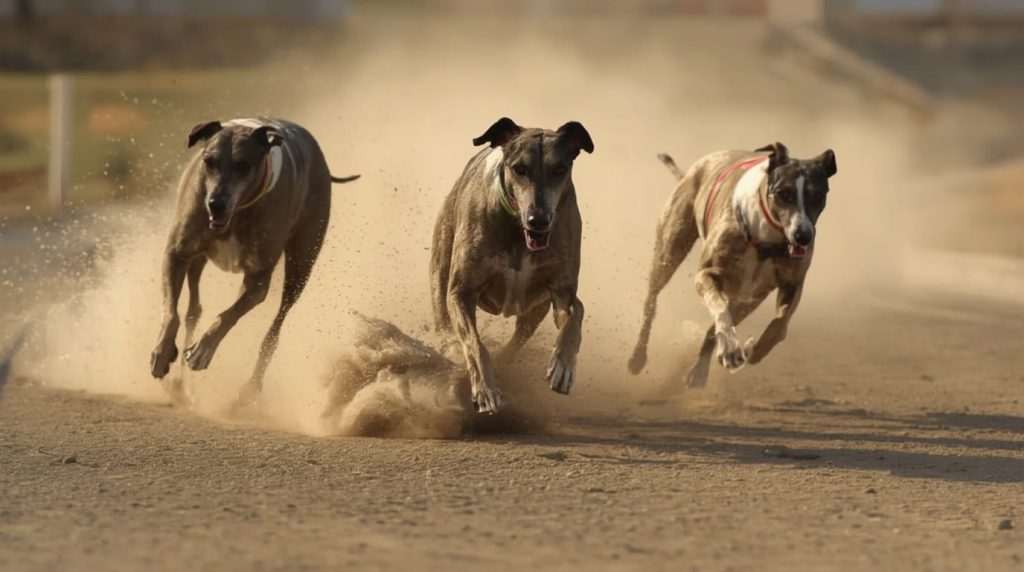
Following the form and reading the card is one thing. Watching the race run is where it comes alive, and the good news is that almost every Australian greyhound meeting is streamed or broadcast somewhere.
Sky Racing is the backbone of greyhound broadcasting in Australia. Sky Racing 1 and Sky Racing 2 between them cover the full national daily schedule, switching between meetings as races jump throughout the day. If a TAB meeting is running, Sky Racing is showing it. You can access Sky Racing through:
- Foxtel — Sky Racing channels are included in Foxtel’s sports packages.
- Kayo Sports — the streaming platform carries Sky Racing as part of its racing coverage, accessible on phone, tablet, desktop and smart TV.
- Licensed venues — pubs, clubs, RSLs and TAB agencies across Australia show Sky Racing on venue screens. Walk into almost any licensed venue and the dogs will be on somewhere.
Betting operator streaming is how most punters actually watch these days. The major licensed bookmakers stream greyhound races live within their apps and websites, which means you can check the form, place a bet and watch the race without leaving the platform:
| Operator | Live streaming |
|---|---|
| TAB | Yes, all TAB meetings |
| Sportsbet | Yes, funded account required |
| Ladbrokes | Yes, funded account required |
| bet365 | Yes, funded account required |
| Neds | Yes, funded account required |
| BlueBet | Yes, funded account required |
The typical requirement is a funded account — you do not always need to have placed a bet on the specific race, but you do need money in your account to unlock the stream. In practice, if you are watching, you are probably betting, so this is rarely a barrier.
One thing worth noting is that greyhound racing gets very little free-to-air television coverage in Australia, unlike horse racing which appears on Channel 7 and Channel 10 during carnivals. For the dogs, it is Sky Racing or the betting apps. That is the reality of the sport’s broadcast landscape, and it is another reason why having an account with at least one major operator is practically essential if you want to follow the racing.
Between Sky Racing, Kayo and the betting apps, you are covered for every TAB meeting on the daily schedule. Next we look at where to actually place your bets for todays greyhound racing.
Where to bet on today’s greyhound racing
All online betting in Australia must go through operators licensed by Australian state or territory racing authorities. That is not a suggestion — it is the law. If a site is not licensed in Australia, it cannot legally accept bets from Australian residents. The upside is that the licensed market is competitive, and there are plenty of operators offering greyhound markets with strong coverage.
The major licensed operators for greyhound betting:
| Operator | Fixed odds | Tote | Live streaming |
|---|---|---|---|
| TAB | Yes | Yes (the primary tote) | Yes |
| Sportsbet | Yes | Yes (via tote options) | Yes |
| Ladbrokes | Yes | Yes | Yes |
| bet365 | Yes | No | Yes |
| Neds | Yes | Yes | Yes |
| PointsBet | Yes | No | Yes |
| BlueBet | Yes | No | Yes |
| Unibet | Yes | No | Yes |
TAB is the one operator that offers both fixed odds and its own tote pool, which gives it a unique position. Most other operators offer fixed odds as standard, with some providing access to tote dividends as an alternative. If you want the option to choose between locking in a price and riding the tote pool, TAB covers both.
A quick recap on the bet types available for greyhound racing, since the range is broader than many new punters realise:
- Win — your dog finishes first.
- Place — your dog finishes first or second (in fields of 5+; some operators pay three places in larger fields).
- Each-way — a win bet and a place bet combined in one.
- Quinella — pick the first two in any order.
- Exacta — pick the first two in the correct order.
- Trifecta — pick the first three in the correct order.
- First 4 — pick the first four in the correct order.
- Multi / accumulator — combine selections across different races for a bigger return.
The exotic bets like trifectas and first 4s carry higher risk but offer significantly larger payouts when they land, which is part of what makes greyhound racing attractive to punters who enjoy working the form.
One important point under Australian law: online in-play betting is not permitted. You can only place in-play bets by telephone. In practice, this barely affects greyhound racing, since races last under a minute and all meaningful betting happens before the boxes open. It is effectively a pre-race product regardless of the rule.
A practical habit worth adopting is comparing fixed odds across two or three operators before placing your bet. The same dog in the same race can carry noticeably different prices between Sportsbet, Ladbrokes and TAB, and taking the best available price on every bet is the simplest edge you can give yourself over time.
Types of meetings and how grading works
Not all greyhound meetings are equal, and understanding the difference between a metropolitan night card and a country morning meeting helps you calibrate your expectations, your betting and how much form data you are likely to have to work with.
Australian greyhound meetings fall into three tiers:
| Meeting type | What it means | Typical schedule | Examples |
|---|---|---|---|
| Metropolitan | Top-tier meetings at the major city tracks | Evening / night | The Meadows, Wentworth Park, Albion Park, Angle Park, Cannington |
| Provincial | Mid-tier meetings at larger regional tracks | Daytime / early evening | Bendigo, Geelong, Gosford, Ipswich, Murray Bridge |
| Country | Grassroots meetings at smaller local tracks | Morning / afternoon | Warragul, Maitland, Gawler, Townsville |
Metropolitan meetings carry the highest prize money, the strongest fields and the best form coverage. These are where the Group and feature races are held — the Australian Cup at The Meadows, the Golden Easter Egg at Wentworth Park, the Brisbane Cup at Albion Park — and the dogs running at metro level are the best in the country. If you are new and want to follow one card a week, Saturday or Thursday night metro meetings are the place to start.
Provincial meetings sit in the middle. The fields are competitive, the tracks are well maintained, and the form data is solid enough to work with. These meetings produce plenty of good betting races without the pressure of the top tier, and they are often where you spot dogs moving up in class or dropping back for an easier run.
Country meetings are the grassroots of the sport. Prize money is lower, fields can be less predictable, and form data is sometimes thinner, especially at non-TAB meetings where streaming and coverage are limited. That said, country meetings can offer genuine betting value for punters who know the local form, because the odds are often set with less market scrutiny than metropolitan races.
How grading works
Every race is assigned a grade that determines the standard of the field. Dogs move through the grading system based on their today’s greyhound racing results:
- Maiden — dogs that have not yet won a race.
- Novice — dogs with one or two wins, stepping up from maiden level.
- Grade 5 — the lowest open grade, through to Grade 1 and Free For All at the top.
- Group races — the feature events, classified as Group 1, Group 2 and Group 3, carrying the biggest prize money and the strongest fields in the country.
A dog that keeps winning moves up in grade to face stronger competition. A dog that is not competitive at its current level can be regraded downward. When you see a dog dropping from Grade 4 to Grade 5, it is stepping into an easier race, which is worth noting on the card. When you see a dog stepping up after a string of wins, it is facing a genuine test and the form may not carry over as cleanly.
Frequently asked questions
How many greyhound meetings are on today in Australia?
A typical day has 10 to 15 meetings across Victoria, New South Wales, Queensland, South Australia, Western Australia and Tasmania, with 100 to 150 individual races. The exact number changes daily and you can check the full schedule on BoxOne, Racing and Sports, or through your betting operator’s racing calendar.
What time does greyhound racing start today?
The first races of the day usually jump between 10:30 AM and 11:00 AM AEST, starting with Victorian and Queensland morning meetings. Racing continues through the afternoon and into the evening, with the last races typically finishing around 10:00 to 10:30 PM AEST at Western Australian tracks.
Where can I find today's greyhound racing fields?
The official state authority sites carry the definitive fields for each state — fasttrack.grv.org.au for Victoria, thedogs.com.au for NSW, and equivalent sites for the other states. For a single view of all meetings nationally, BoxOne, The Greyhound Recorder and Racing and Sports aggregate every meeting with form and selections.
Can I watch greyhound racing live online?
Yes. Sky Racing covers all TAB meetings and is available through Foxtel and Kayo Sports. Most major betting operators including TAB, Sportsbet, Ladbrokes and bet365 also stream races live within their apps, usually requiring a funded account to access.
Can I bet in-play on greyhound races online?
No. Under Australian law, in-play betting cannot be placed online — only by telephone. In practice this rarely matters for greyhound racing, since races last under a minute and all betting is effectively a pre-race product. You place your bet before the boxes open.
What does TAB meeting mean?
A TAB meeting is one covered by the tote system and broadcast on Sky Racing, with full betting availability through all licensed operators. Non-TAB meetings are smaller cards with limited streaming and betting coverage. Most meetings on the daily schedule are TAB meetings.
How do I know if a dog has been scratched?
Scratchings are published on the state authority sites, on form sites like BoxOne and The Greyhound Recorder, and within the betting operator apps. Late scratchings can happen close to race time after the trackside vet inspection, so checking the field again within an hour of the race is a sensible habit.
What is the best site for greyhound racing form?
It depends on what you need. BoxOne offers speed maps and AI selections across every meeting. The Greyhound Recorder provides expert editorial selections and in-depth news coverage. Racing and Sports carries detailed statistical form guides and trainer data. For most punters, using one of these alongside your betting operator gives you everything you need.