
Greyhound Racing
Wentworth Park
Sydney’s Only City Track · 520m · 720m · Glebe NSW · Racing Until 2027
18+ | Gamble responsibly | For free support call Gambling Help 1800 858 858 | gamblinghelponline.org.au
Wentworth Park greyhounds have been racing in Glebe since 1932. By September 2027, they will not be racing there at all. On December 9, 2025, NSW Premier Chris Minns announced that the greyhound track’s lease would not be renewed and the 14-hectare site would be redeveloped into housing, parkland and community sports fields as part of the broader Blackwattle Bay transformation. After nearly a century of continuous racing, Sydney’s only city greyhound venue is on a fixed clock — still operating, still hosting the Golden Easter Egg and the Million Dollar Chase, still drawing Thursday and Saturday night crowds to one of the most unlikely sporting locations in Australia, but doing all of it with an end date that everyone in the industry can see.
The track sits on Wentworth Park Road in Glebe, two kilometres from the Sydney CBD and walking distance from the light rail. It is a greyhound racing venue surrounded by university campuses, apartment developments and harbour-adjacent real estate that has made the land beneath the track worth considerably more than the sport conducted on top of it. That tension between sporting heritage and urban development has defined Wentworth Park for decades — but the December 2025 announcement resolved it in favour of housing, and the only question now is how the final chapter plays out.
The NSW Greyhound Breeders Owners and Trainers Association operates the venue under licence and stages two meetings per week — Thursday and Saturday evenings, gates from 7:00 pm. Entry is $6 for adults, with children under 18 free when accompanied by a responsible adult. The track itself is a compact sand-surface circuit with a 400-metre circumference, racing over 520 metres for the sprints and 720 metres for the staying events. A two-level grandstand provides full-circuit viewing, and the Ladbrokes Sports Bar and Restaurant on Level 1 added a hospitality dimension that expanded the venue’s appeal well beyond the traditional punting crowd.
Fourteen Group and Listed races are held at Wentworth Park each year. The Golden Easter Egg — a $300,000 Group 1 sprint final run on Easter Saturday — is the oldest and most prestigious, dating back to 1990. The Million Dollar Chase — a regional qualification series that culminates in a $1 million final every October — is the richest and most distinctive, drawing greyhounds through country heats across 16 NSW regional destinations before the semis and final at Wentworth Park. Between those two anchor events and the regular weekly programme, the venue has generated more Group-race prize money than any other greyhound track in New South Wales.
| Detail | Info |
|---|---|
| Venue | Wentworth Park Sporting Complex |
| Operator | NSW Greyhound Breeders Owners and Trainers Association (NSW GBOTA) |
| Location | Wentworth Park Road, Glebe NSW 2037 |
| Distance from CBD | 2 km |
| Racing since | 1932 (NCA licence formalised 1939) |
| Race nights | Thursday and Saturday evenings from 7:00 pm |
| Entry | $6 adults · Under 18 free with responsible adult |
| Distances | 520m, 720m |
| Track surface | Sand (converted from grass in the 1990s) |
| Track circumference | 400m |
| Group/Listed races | 14 per year |
| Signature races | Golden Easter Egg (Group 1, $300K) · Million Dollar Chase ($1M) |
| Grandstand | Two-level, enclosed, full-circuit viewing |
| Hospitality | Ladbrokes Sports Bar and Restaurant (Level 1) |
| Closing | September 2027 (lease expiry, site redevelopment) |
The page below covers the two races that define Wentworth Park — the Golden Easter Egg and the Million Dollar Chase — along with how a swamp in Glebe became the home of greyhound racing in New South Wales, what the track itself is like to race on and bet on, what the 2027 closure means for the sport, and what to expect if you are heading out to Wentworth Park while racing remains.
The Golden Easter Egg — Easter Saturday at the Park
The Golden Easter Egg is the race that defines Wentworth Park greyhounds in the same way the Melbourne Cup defines Sandown Park. It is the oldest Group 1 sprint in New South Wales, the richest single-race prize in the state outside the Million Dollar Chase, and — for trainers who have spent their careers racing at the Park — the title that matters most. The Easter Egg has been run every year since 1990, when Ultra Sense took the inaugural edition on a grass surface that would not survive the decade. Thirty-six years later, the race carries a $300,000 first prize within a carnival that generates roughly $1 million in total prize money across three weeks of heats, semi-finals and the final on Easter Saturday.
How the Easter Egg Series Works
The format is traditional and deliberate. Eighty greyhounds are nominated — the best 80 plus reserves — and the series unfolds across three consecutive Saturday nights at Wentworth Park.
- Night one — Heats. Eight races of eight dogs over 520 metres. The top two from each heat advance to the semi-finals. The remaining dogs are eliminated. Greyhounds can also earn their spot in the heats by winning an Easter Egg Prelude in the lead-up weeks, which provides a secondary qualification pathway for dogs whose form peaked slightly outside the main nomination window.
- Night two — Semi-finals. Four semi-finals over 520 metres. The first two past the post in each semi qualify for the final. The field narrows from 16 to eight.
- Night three — Final. Eight dogs, Easter Saturday, 520 metres. The grandstand fills to roughly 2,500 people, the SKY Racing cameras go live nationally, and the winner takes home $300,000.
The three-week structure does something that single-night events cannot — it builds a narrative. Dogs that win their heat impressively become public favourites. Dogs that scrape through a semi on the line carry a different story into the final. Trainers have to manage their greyhound across three high-pressure races in three weeks, balancing peak fitness against the risk of injury or form regression. By the time the final field is drawn, every dog in the race has already been tested twice under Group 1 conditions at the same track, and the form students have three weeks of sectional data to work with.
Recent Champions
Power And Glory’s 2025 victory was the most complete Easter Egg performance in the race’s modern history. Trained by Ken Burnett from Bringelly in western Sydney and owned by Jeff Eastburn — who missed the race while hospitalised — the son of Hooked On Scotch ran 29.15 seconds in the final to set a new race record. He led from the first turn, found clear air through the middle stages, and kicked away down the home straight in a performance that left no doubt about the best sprinter in New South Wales. The time of 29.15 would prove significant six months later when Power And Glory matched it exactly in the Million Dollar Chase final, becoming only the second greyhound after She’s A Pearl to complete the Egg–MDC double.
The 2026 edition produced a different kind of story. Off The Chart, trained by Victorian Peter Presutto, flew the interstate flag in emphatic fashion — winning the Easter Egg at just his 22nd career start in a maiden Group 1 victory. He led throughout in 29.32 seconds, holding off Consigliere and reserve runner Zig Zag Man while pre-race favourite Slick Splits could manage only seventh. Presutto’s post-race interview was a single sentence of disbelief followed by a long silence. The win pushed Off The Chart’s career prize money past $450,000 and confirmed what the semi-final form had suggested — that Victorian raiders could travel to Wentworth Park and beat the locals on their own surface.
The Easter Egg’s honour roll stretches back through three decades of NSW greyhound history. Brett Lee’s victory cemented his status as a national champion. Rapid Journey and Tenthill Doll both used the race as springboards to broader Group 1 campaigns. Mackenna’s dominant 2024 clean sweep — winning her heat, semi and final without being seriously challenged — was the most recent performance to enter the conversation about the best Easter Egg winners of all time.
The Easter Egg After 2027
The question that hangs over every running of the Golden Easter Egg from this point forward is where the race will be held once Wentworth Park closes. The Easter Egg has been synonymous with Glebe for its entire existence — every final since 1990 has been run at the same venue, over the same distance, on the same compact circuit. Moving it to another track changes the race. The 520-metre trip at Wentworth Park runs differently from 520 metres at Richmond or any other NSW venue, and the tight 400-metre circumference produces a specific kind of racing that favours certain dogs over others. Whether GRNSW relocates the Easter Egg to an upgraded regional venue, creates a new metropolitan facility, or sends the race interstate remains an open question that the sport’s administrators have not yet publicly answered. What is certain is that the 2027 Golden Easter Egg — if it takes place before the September lease expiry — will carry a weight that no previous running has had to bear.
The Million Dollar Chase — From Regional NSW to Centre Stage
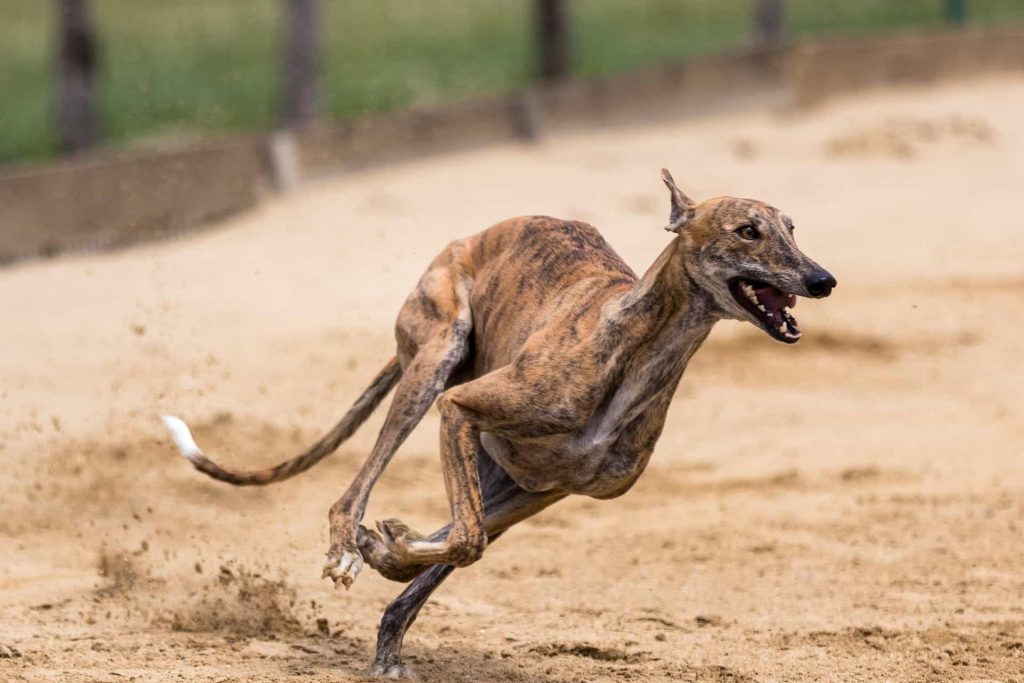
The Million Dollar Chase is the race that no other greyhound event in Australia can replicate. It is not because of the $1 million first prize — The Phoenix at The Meadows matches that figure and carries a larger total pool. It is because of the pathway. The MDC begins in regional New South Wales and ends at Wentworth Park greyhounds on a single Friday night in October, and the journey between those two points passes through 16 country towns, hundreds of nominations, and a qualification structure that gives dogs from Taree, Grafton, Wagga and Broken Hill a genuine shot at a million-dollar payday. No other race in the sport connects the bush to the city in this way.
The Regional Qualification Pathway
The Million Dollar Chase was conceived in 2018 by Greyhound Racing NSW as a series rather than a standalone race, and the regional structure is the engine that drives the entire concept.
The series kicks off in August with heats at country tracks across New South Wales — 16 regional destinations in the 2025 edition, starting at Taree for the first time. Greyhounds compete in their local heats over 520 metres, with the winners and placegetters advancing through regional finals. The Dapto Megastar (Group 1) and the Black Top at Newcastle (Group 2) were integrated into the qualification pathway from 2024, with the first three finishers in each event advancing directly to the semi-finals at Wentworth Park. The remaining qualifiers earn their spots through the regional pipeline — a dog that wins at Casino or Goulburn follows the same path to the Wentworth Park semis as a dog that wins the Megastar, but takes a longer road to get there.
Eight semi-finals at Wentworth Park narrow the field to eight finalists, and the grand final is held on a Friday night in mid-October. The winner takes home $1 million. Prize money is paid down the field, but the gap between first and second is deliberately enormous — the MDC is designed to produce a single headline, a single life-changing result, on a single night.
Seven Years of Million-Dollar Moments
The MDC has produced a catalogue of stories that would be difficult to script. Several share a common thread — small operators, unlikely dogs, and results that turned modest investments into seven-figure returns.
Mystic Riot won the inaugural 2018 final for trainer Peter Lagogiane, establishing the race as a genuine spectacle in its very first edition. Good Odds Harada followed in 2019 with a commanding victory for Frank Hurst. Handsome Prince took the 2020 edition. She’s A Pearl set the race record at 29.32 seconds in 2022 and became the first greyhound to win both the Golden Easter Egg and the Million Dollar Chase in the same year — a double that stood alone until Power And Glory matched it three years later. McInerney broke through as the first interstate winner in 2022, trained in Tasmania by Brendan Pursell, who insisted that his son Blake fly up from Hobart to handle the dog on the night because McInerney jumped best from the boxes when Blake was there.
The 2024 final produced the race’s most improbable result. Blue Kermaro had been purchased earlier in the year for $10,000. He only made the semi-final field due to another dog’s injury. On race night, he was paying $19 with the bookmakers — the longest-priced MDC finalist in the event’s history. None of that mattered once the lids went up. Blue Kermaro defeated Zipping Megatron and a field of hardened Group performers in a boilover that delivered trainer Josh Formosa a life-changing result from a dog that most of the industry had written off before the series began. Blue Kermaro retired from racing early the following year after a career-ending injury during the Golden Ticket Series — a brief, dramatic career arc that encapsulated everything the MDC was designed to be.
Power And Glory’s 2025 victory was the antithesis of Blue Kermaro’s upset. Ken Burnett’s star sprinter arrived at the final as the form runner of the series, having already won the Golden Easter Egg in a race-record 29.15 six months earlier. He led throughout, kicked seven and a quarter lengths clear, and matched his Egg time exactly to claim the million. The celebration on the Wentworth Park straight — Burnett, owner Jeff Eastburn (who had been in hospital for the Easter Egg and was determined not to miss this one), and the broader Bringelly racing community — was the culmination of a twelve-month campaign that produced two of the biggest wins in NSW greyhound history.
| Year | Winner | Trainer | Price | Key Detail |
|---|---|---|---|---|
| 2018 | Mystic Riot | Peter Lagogiane | — | Inaugural MDC winner |
| 2019 | Good Odds Harada | Frank Hurst | — | Commanding victory |
| 2020 | Handsome Prince | — | — | — |
| 2021 | She’s A Pearl | — | — | Race record 29.32s |
| 2022 | McInerney | Brendan Pursell | — | First interstate winner, Tasmanian-trained |
| 2023 | Wow She’s Fast | Jackie Greenough | — | Also dual Phoenix winner |
| 2024 | Blue Kermaro | Josh Formosa | $19 | Bought for $10,000, longest-priced finalist ever |
| 2025 | Power And Glory | Ken Burnett | — | Egg–MDC double, matched 29.15 race record |
What the MDC Means to Regional NSW
The Million Dollar Chase is not just a race with a regional qualification pathway — it is the primary connection between country greyhound racing Wentworth Park and the metropolitan stage. For trainers in towns like Taree, Wagga or Casino, the MDC heats are often the highest-profile meetings their local tracks host all year. The series brings SKY Racing cameras, increased prize money and statewide attention to venues that otherwise operate well below the radar of the Sydney-based media.
That regional function becomes more significant in the context of the broader contraction of NSW greyhound racing. Dapto closed in September 2025. Eleven other tracks — including Maitland, Wagga and Broken Hill — have been marked for wind-down. The MDC’s country heats are one of the few remaining mechanisms that distribute metropolitan-level attention and investment across the state’s shrinking network of regional venues. Whether the series can sustain that function after Wentworth Park closes — and where the semi-finals and final will be held from 2028 — is a question that GRNSW has not yet answered publicly, but one that carries implications well beyond the race itself.
Swamp to Stadium — How Greyhounds Found Glebe
Every greyhound venue in Australia has an origin story. Sandown Park began with a coursing club and a stolen hare. The Meadows spent five decades bouncing between borrowed homes before finding Broadmeadows. But neither of those histories matches the sheer implausibility of Wentworth Park greyhounds emerging from what was, in the 1830s, one of the most polluted waterways in Sydney.
The site that would become Wentworth Park started its recorded life as Blackwattle Cove Swamp — a tidal creek and wetland on the western fringe of the early colony. Between the 1830s and the 1860s, the swamp’s shoreline accumulated a concentration of noxious industries that would be difficult to imagine in what is now one of Sydney’s most desirable inner-city precincts. Abattoirs, boiling-down works and tanneries operated along the water’s edge, discharging waste directly into the cove. The pollution was so severe and the stench so persistent that even after the worst operators were removed, the local council lobbied the government to fill the entire area in rather than attempt to clean it.
The infilling began in 1876. Silt dredged from Sydney Harbour was used to reclaim the swamp, sea walls and dykes were constructed to stabilise the fill, and the work continued for four years until the cove was buried beneath metres of imported harbour sediment. Trustees were appointed to manage the newly created dry land, and the park was named after William Charles Wentworth — the explorer, politician and early advocate for Australian self-governance. For a generation, Wentworth Park functioned as public recreation space: sporting ovals, walking paths and ornamental lakes that gave the residents of Glebe and Ultimo a place to spend a weekend afternoon.
The twentieth century disrupted that arrangement repeatedly. World War I brought timber wool-storage sheds to the site, which displaced the northern sports ground and the lakes. A railway viaduct was run through the park, isolating the northern section from the rest of the precinct. The trustees began to struggle financially, and the park cycled through a series of alternative uses — each one an attempt to generate enough revenue to maintain the grounds.
| Period | Use | Outcome |
|---|---|---|
| 1928–1936 | Motorcycle speedway | Featured future world champions Lionel Van Praag and Bluey Wilkinson. Ended by track damage and noise complaints |
| 1932 | Greyhound racing (first appearance) | Informal meetings established a foothold for the sport |
| 1935 | Speedcar racing | Sydney’s first speedcar race held on October 5, 1935 |
| Various | Tin hare coursing, fun park | Most ventures failed to generate sustainable revenue |
| 1938–1939 | Government greyhound licence granted | Second licence for Wentworth Park. New track construction delayed the opening |
| 28 October 1939 | NCA greyhound track formally opened | The venue that would host nearly a century of racing took its final shape |
The formal greyhound operation began in October 1939 when the NSW National Coursing Association opened its new track — a grass circuit built to accommodate proper mechanical-lure racing rather than the informal meetings that had taken place earlier in the decade. The government had granted the second greyhound licence for Wentworth Park in July 1938, but construction delays pushed the opening back by more than a year. Once established, the NCA ran meetings with increasing regularity, and by the post-war decades the venue had settled into its identity as a greyhound racing Wentworth Park destination.
The 1970s were the high-water mark for crowd attendance. Large numbers of racegoers packed into facilities that had not been designed for the volume, and the NCA undertook construction of a substantial grandstand to accommodate what they expected would be continued growth. That expectation proved optimistic, but the grandstand became the foundation of the two-level structure that still serves the venue today.
The mid-1980s brought consolidation. The NSW Greyhound Breeders Owners and Trainers Association had been racing at Harold Park, another Sydney venue, and the government moved them into Wentworth Park to share the complex and reduce running costs. The GBOTA and the NCA coexisted at the venue for several years before the NCA eventually dissolved, leaving the GBOTA as the sole licence holder — the arrangement that persists today. The consolidation from Harold Park also marked the end of an era in which Sydney supported multiple metropolitan greyhound venues. From that point forward, Wentworth Park was the only city track — a distinction that gave it both prestige and vulnerability.
Hurdle racing, which had been a feature of Wentworth Park since the mid-century, was discontinued in the early 1980s. The grass surface was converted to sand in the 1990s, improving drainage and racing consistency. The track’s compact 400-metre circumference remained unchanged — a layout dictated by the physical boundaries of the park and the surrounding streets rather than any design preference. In 2018, GRNSW introduced the Million Dollar Chase, and Wentworth Park gained its second anchor event alongside the Golden Easter Egg. The two races — one rooted in three decades of Easter Saturday tradition, the other built from scratch as the world’s richest greyhound series — gave the venue a twin identity that sustained its profile even as the broader industry faced increasing scrutiny from welfare advocates, regulators and the Drake Inquiry.
The journey from Blackwattle Cove Swamp to Australia’s most famous greyhound venue spans nearly two centuries of landfill, failed ventures, borrowed infrastructure and stubborn persistence. The fact that greyhounds are still racing on reclaimed harbour silt in one of Sydney’s most expensive postcodes says something about both the sport’s resilience and the speed at which inner-city real estate economics can override sporting heritage. The first of those forces kept Wentworth Park alive for nine decades. The second is closing it in 2027.
The Track — A Tight Circuit in the Inner City
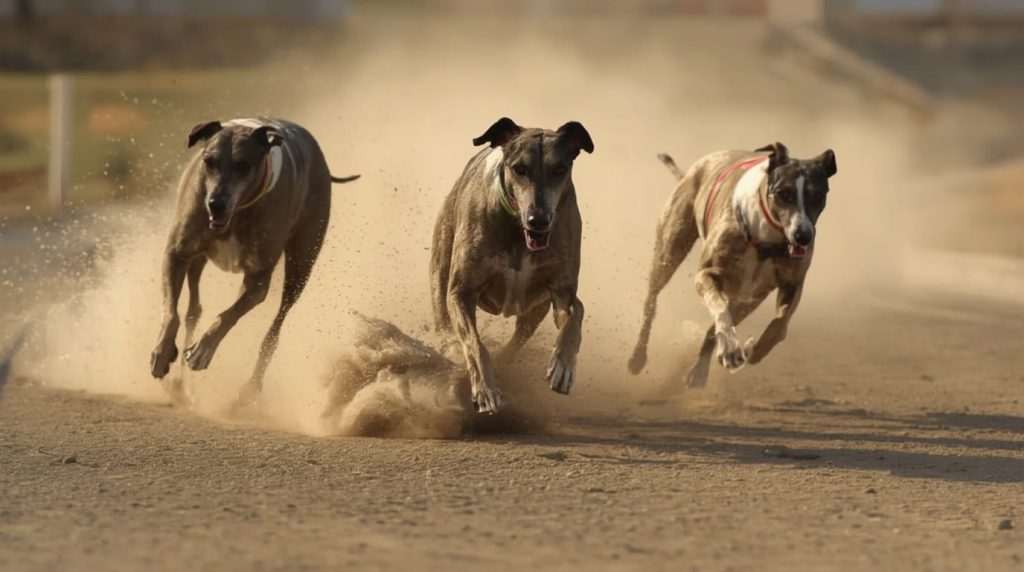
Racing at Wentworth Park feels different from racing at Sandown or The Meadows, and the reason is geometry. The track’s 400-metre circumference is among the tightest of any metropolitan greyhound circuit in Australia — a layout dictated not by racing design but by the physical boundaries of a public park wedged between residential streets, a railway viaduct and the edge of Blackwattle Bay. The result is a track where the turns come quickly, the straight sections are short, and the margin for error at the first bend is smaller than at almost any comparable venue.
Two standard distances are raced. The 520-metre sprint is the workhorse of the weekly programme and the distance used for the Golden Easter Egg, the Million Dollar Chase and the majority of the Group and Listed races on the calendar. The 720-metre staying trip is reserved for feature events like the Sydney Cup and provides one of the few genuine distance tests available in New South Wales. A 280-metre straight-track sprint also appears on some cards but is not used for feature racing.
| Distance | Use | Feature Races |
|---|---|---|
| 520m | Sprint — standard weekly and feature distance | Golden Easter Egg, Million Dollar Chase, Megastar, Association Cup |
| 720m | Staying — selected feature events | Sydney Cup ($40,000) |
| 280m | Straight sprint — occasional cards | No feature races |
The sand surface has been in place since the 1990s conversion from grass, and it produces fast times when conditions are right. Power And Glory’s 29.15 in the 2025 Easter Egg and MDC finals sits at the sharp end of the track’s capabilities. Eriza Sparkles ran 29.17 in her 2025 MDC semi-final — the fastest time ever recorded by a female greyhound at Wentworth Park. At the other end of the spectrum, Sunburnt Highway wrote his name into the venue’s record books in a different way — winning 39 races at Wentworth Park across his career, a tally that no other greyhound has matched at the track.
Box Bias and the First Turn
The tight circumference amplifies the importance of the first turn at Wentworth Park in a way that wider circuits do not. Dogs drawn in boxes 1 and 2 reach the first bend on a shorter arc and can establish the rail position with less effort than those drawn middle or wide. The compact layout also punishes specific types of dogs more harshly than wider tracks do:
- A greyhound that drifts wide on the first turn at Sandown or The Meadows loses ground but can often recover through the back straight. At Wentworth Park, the straight sections are shorter — there is simply less distance available to make up what was lost on the bend.
- A dog with moderate pace but a clean first-turn pattern will routinely beat a faster dog that loses its line at the bend. The track rewards clean beginnings and early rail position disproportionately.
- Over 720 metres, the bias softens but does not disappear. Two full circuits mean the turns come so frequently on the tight layout that cumulative ground loss through each bend still favours inside draws over the full journey.
The result is a different staying test from Sandown’s 715 metres or The Meadows’ 725 metres — less about raw stamina and more about efficiency through the turns.
September 2027 — The Closure and What Comes Next
On December 9, 2025, NSW Premier Chris Minns stood before cameras and confirmed what the greyhound racing industry had feared for years — Wentworth Park greyhounds would not survive the next lease expiry. The NSW GBOTA’s lease runs out in September 2027, and the government will not renew it. The 3.3-hectare sporting complex will be converted into community sports fields and public green space, and the surrounding 14-hectare Wentworth Park precinct will be rezoned to accommodate approximately 7,300 new homes as part of the broader Blackwattle Bay transformation.
The announcement came almost exactly two years after Minns had proposed closing Rosehill Racecourse for housing — a plan that collapsed after Australian Turf Club members voted against it. The greyhound industry did not receive the same opportunity to resist. The decision was presented as final, and the framing was deliberate: housing supply, public space, community infrastructure.
The Government’s Case
The arguments for closing Wentworth Park are rooted in urban planning rather than any specific grievance with the sport itself, although the welfare dimension looms large in the background.
- The site sits two kilometres from the Sydney CBD, connected by light rail, bus routes, a future Metro station at Pyrmont (opening 2032) and a new ferry stop at the Sydney Fish Market. In housing policy terms, it is exactly the kind of well-serviced location where new density should go.
- The rezoning is projected to deliver 7,300 new homes — including 580 student housing beds — in addition to 4,800 homes already planned or approved in the Blackwattle Bay area. Mirvac has been confirmed as preferred tenderer for the initial phase, with construction set to begin in early 2027.
- Up to 20 new community sports fields will be created on the converted sporting complex, addressing a projected shortfall identified by the City of Sydney for the area by 2031.
- Sydney Lord Mayor Clover Moore, who had long advocated for an end to greyhound racing at the site, described the decision as returning the park to the community.
The announcement landed on the same day the government released its response to the Drake Report — the Inquiry into Greyhound Racing NSW — which imposed additional welfare, integrity and reporting requirements on GRNSW. The timing linked the venue closure to the broader regulatory tightening of the industry, even though the government framed them as separate decisions.
The Industry Response and the $10 Million Transition
Racing Minister David Harris acknowledged the weight of the change and committed $10 million to support the industry’s transition away from Wentworth Park. The funds are earmarked for the Capital Grants Program — upgrades to other tracks around the state to absorb the racing that Wentworth Park currently hosts.
The practical challenge is significant. Wentworth Park is the only metropolitan greyhound venue in New South Wales. Once it closes, the nearest track to the Sydney CBD will be Richmond — roughly 60 kilometres northwest in the Hawkesbury. The sport loses not just a venue but a location — an inner-city walk-up track that drew casual spectators, university students from nearby UTS, and after-work crowds from the CBD who would never drive an hour to watch greyhounds on a weeknight.
The decision also arrives in the context of a broader contraction of NSW Wentworth Park greyhound racing infrastructure:
- Dapto closed permanently in September 2025, ending decades of racing near Wollongong
- Eleven additional tracks — including Maitland, Wagga and Broken Hill — have been marked for wind-down
- The remaining regional network is shrinking, concentrating racing into fewer venues with less geographic spread
For trainers based in the Sydney basin, the transition means longer travel to race nights, higher transport costs, and a fundamental shift in the economics of keeping dogs in work close to the city. For the sport’s public profile in NSW, the loss of a venue that sits in the shadow of the Sydney skyline is harder to quantify but potentially more damaging.
What Happens to the Feature Races
The question that matters most to the racing community is not the fate of the venue — that has been decided — but the fate of the races. The Golden Easter Egg has been run at Wentworth Park for its entire 36-year existence. The Million Dollar Chase was conceived as a Wentworth Park event, with the venue’s inner-city location as part of the spectacle. The Association Cup, the Sydney Cup, the Megastar (relocated from Dapto after its 2025 closure), the Masters Meteor and the Young Star Classic all call Wentworth Park home.
GRNSW has not publicly detailed where these races will go. The options are limited. Richmond is the closest venue but lacks the facilities and metropolitan profile to host Group 1 events of this scale. The Gardens at Newcastle — the Q1 Lakeside precinct — is a modern facility but sits 160 kilometres from Sydney. An entirely new venue somewhere in the Sydney metropolitan area is theoretically possible but would require planning approval, construction time and capital investment that the $10 million transition fund is unlikely to cover.
The most likely outcome is that the feature races will be distributed across upgraded regional venues, with the MDC and the Easter Egg potentially moving to different tracks. That would fundamentally change the character of both events — the Easter Egg has always been a Sydney race, and the MDC’s grand final has always been the moment when regional NSW converges on the city. Moving the final to a regional venue would reverse the narrative flow that gives the series its identity.
These are decisions that will be made in the months ahead. What is already clear is that Wentworth Park’s closure is not just a venue loss — it is the removal of the metropolitan anchor for an entire state’s greyhound racing programme. Victoria will still have Sandown Park and The Meadows. New South Wales, from September 2027, will have nothing within an hour of its capital city.
Visiting Wentworth Park — While Racing Remains
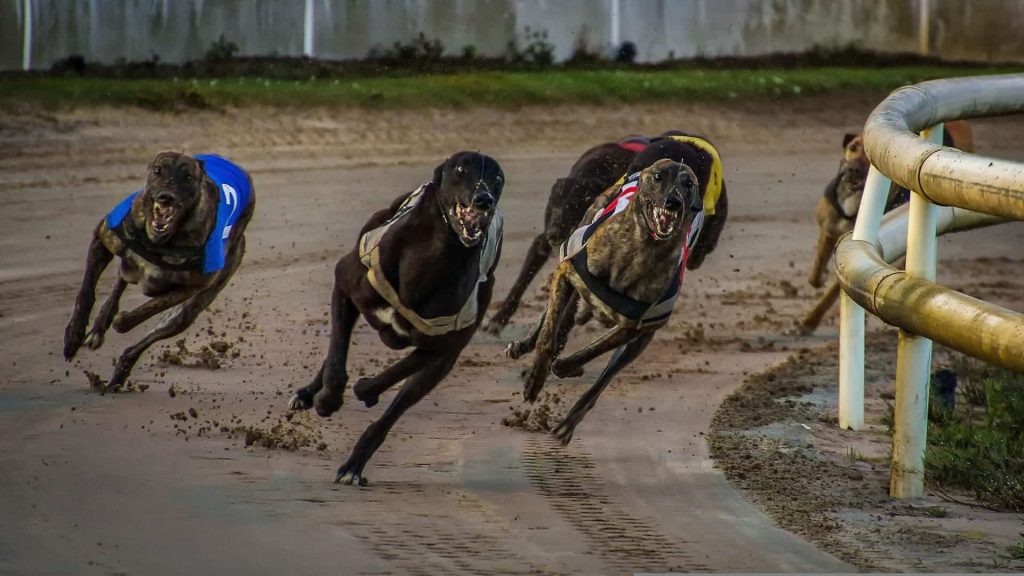
Every remaining race night at Wentworth Park is now counted rather than assumed. The venue races Thursday and Saturday evenings with gates opening from 7:00 pm — a schedule that runs through to September 2027 unless GRNSW announces otherwise. If you have thought about going but never quite made it, the window is measured in months rather than years.
What a Race Night Looks Like
A standard card runs eleven or twelve races over the 520-metre distance, occasionally mixed with a 720-metre staying event. The first race jumps shortly after gates open and the programme finishes around 10:30 pm. Entry is $6 for adults, with children under 18 admitted free when accompanied by a responsible adult. Feature nights during the Golden Easter Egg carnival in April or the Million Dollar Chase in October attract larger crowds — roughly 2,500 for the Easter Egg final — and may carry adjusted admission pricing.
The two-level grandstand is the centrepiece of the spectator experience. Every seat provides an uninterrupted view of the full circuit — a benefit of the compact 400-metre track, which keeps the action closer to the stands than at wider venues like Sandown or The Meadows. The lower level offers open-air concourse viewing for anyone who wants to stand trackside with a drink and feel the dogs come past.
Dining and Hospitality
The Ladbrokes Sports Bar and Restaurant on Level 1 is the most significant addition to the venue’s hospitality offering in recent years. It operates beyond a standard race-night bar — pool tables, darts boards, lounge areas, terrace viewing across the track, and live sport on screens throughout the room. It functions as a sports bar that happens to have Wentworth Park greyhound racing outside the window, which is a deliberate pitch to the inner-city and inner-west demographic that Wentworth Park has been increasingly attracting.
| Option | What to Expect |
|---|---|
| Ladbrokes Sports Bar (Level 1) | Full bar and restaurant, pool tables, darts, terrace with track views. The primary hospitality venue |
| Ground-level bar | Standard race-night drinks and counter service. Casual, trackside atmosphere |
| Race sponsorship packages | Name a race, presentation with winning trainer, personalised sash. Sharing menu platters from $29 per person for groups of 10+ |
Race name sponsorship is available for groups wanting a more structured night out. The package includes a personalised race name on the LED screen and semaphore board, a trackside presentation with the winning dog and trainer, and a sash to take home. It is pitched at birthday groups, work functions and social outings — the kind of experience-based hospitality that Wentworth Park has leaned into as its attendance numbers from the inner-city demographic have grown.
Getting There
This is where Wentworth Park has an advantage that no replacement venue will be able to match. The track sits in the middle of one of Sydney’s best-connected transport precincts, and the ease of getting there without a car is a major part of why the venue draws a different crowd from suburban or regional tracks.
| Transport | Details |
|---|---|
| Light rail | Wentworth Park stop on the L1 Dulwich Hill line — directly adjacent to the venue |
| Bus | Multiple routes through Glebe, Broadway and Parramatta Road |
| Walk | 15–20 minutes from Central Station through UTS and Broadway |
| Car | Street parking in Glebe and Ultimo. No dedicated on-site lot |
| Ride share | Drop-off and pick-up at main reception area |
The light rail stop is the most convenient option and puts the track within two or three stops of Central Station. The walk from Central through the university precinct takes 15 to 20 minutes and passes through Glebe’s bar and restaurant strip — which means a race night at Wentworth Park can be folded into a broader evening out rather than treated as a standalone destination. That integration with the surrounding neighbourhood is something the venue has always had and something that a track in Richmond or Newcastle cannot replicate.
Non-Race Day Access
The Wentworth Park Sporting Complex is not exclusively a greyhound venue. The infield oval is used by local schools and community sporting groups at no charge, and the complex has hosted soccer, rugby league, rugby union, public exams, charity events and functions. The GBOTA’s events team manages bookings for the venue’s indoor and outdoor spaces on non-race days, covering everything from corporate events to birthday celebrations. Trial sessions for licensed participants are conducted on Tuesdays (pen trials, 6:00–7:20 pm), with arm trials available on Wednesdays, Saturdays and Fridays by booking through ontheclock.com.au or the race-night office.
The community use of the venue will continue through the transition period. The NSW government has confirmed that current sporting and community users will retain access during the changeover from greyhound racing to the new parkland and sports field configuration. The greyhounds leave in September 2027. The community stays.
FAQ
Where is Wentworth Park greyhound track located?
Wentworth Park is located on Wentworth Park Road in Glebe, New South Wales — two kilometres from the Sydney CBD. The venue is directly adjacent to the Wentworth Park light rail stop on the L1 Dulwich Hill line and within walking distance of Central Station.
What nights does Wentworth Park hold greyhound racing?
Wentworth Park races every Thursday and Saturday evening. Gates open from 7:00 pm and a standard card of eleven or twelve races finishes at approximately 10:30 pm. Entry is $6 for adults, with children under 18 admitted free when accompanied by a responsible adult.
Is Wentworth Park greyhound track closing?
Yes. On December 9, 2025, NSW Premier Chris Minns announced that the greyhound track will close when the current lease expires in September 2027. The 14-hectare site will be redeveloped into community sports fields, parkland and housing as part of the broader Blackwattle Bay transformation. The NSW government has committed $10 million to support the industry’s transition to other tracks.
What distances are raced at Wentworth Park?
Wentworth Park races over two standard distances: 520 metres for sprints and 720 metres for staying events. A 280-metre straight-track sprint also appears on some cards but is not used for feature racing. The track is a compact sand-surface circuit with a 400-metre circumference.
What is the Golden Easter Egg?
The Golden Easter Egg is a Group 1 greyhound sprint race held annually at Wentworth Park on Easter Saturday. First run in 1990, it carries a first prize of $300,000 and is staged as a three-week series of heats, semi-finals and a final. The 2025 edition was won by Power And Glory in a race-record 29.15 seconds.
What is the Million Dollar Chase?
The Million Dollar Chase is the richest greyhound racing series in New South Wales, with $1 million going to the winner of the grand final at Wentworth Park every October. The series begins with regional heats across 16 NSW country destinations, with qualifiers advancing through semi-finals at Wentworth Park before the eight-dog final. One hundred percent of entry fees are donated to Greyhounds As Pets.