
Greyhound Racing
The Meadows
Home of The Phoenix · 525m · 600m · 725m · Broadmeadows VIC
18+ | Gamble responsibly | For free support call Gambling Help 1800 858 858 | gamblinghelponline.org.au
Melbourne has two metropolitan greyhound tracks. Sandown Park in Springvale hosts the Melbourne Cup and carries the weight of the sport’s history in Victoria. The Meadows greyhounds venue in Broadmeadows carries something different — it carries the future. Since 2021, The Meadows has been the home of The Phoenix, a $1.65 million slot-holder race that awards $1 million to the winner and has become the richest greyhound event on the planet. That single race changed the profile of the venue, the economics of the sport, and the way people outside greyhound racing think about what a night at the dogs can be.
The Melbourne Greyhound Racing Association — the MGRA — operates The Meadows as an independent not-for-profit organisation, separate from both Greyhound Racing Victoria and the Sandown Greyhound Racing Club. Founded in 1955, the MGRA ran meetings at Maribyrnong, North Melbourne and Olympic Park before settling at its purpose-built Broadmeadows home in 1999. The current venue sits on Northcorp Boulevard in an industrial estate about twenty minutes northwest of the CBD and twelve kilometres from Melbourne Airport — a location that works better on paper than it sounds, with free parking for 300 cars and easy freeway access from most parts of Melbourne.
Ten Group 1 races are contested at The Meadows each year — more than any other greyhound venue in Australia. The Australian Cup, first run in 1958, anchors a three-week February carnival that includes the Fanta Bale Super Stayers, the Rookie Rebel and the Zoom Top. The Dream Chasers Festival in November and December brings the Topgun, the Hume Cup and The Phoenix itself. Between those two carnivals and the weekly programme, the MGRA conducts 104 meetings and more than 1,000 races annually, distributing over $2 million in prize money to owners and trainers.
Racing happens twice a week — Wednesday afternoons for provincial-grade meetings and Saturday evenings for metropolitan cards. Entry is free on both days. The track runs three distances: 525 metres for the sprints, 600 metres for the middle-distance races, and 725 metres for the staying events, with selected Group 1 stayers races extended to 730 metres.
| Detail | Info |
|---|---|
| Official name | Melbourne Greyhound Racing Association (MGRA) |
| Location | 80 Northcorp Blvd, Broadmeadows VIC 3047 |
| Opened | 8 February 1999 |
| Race days | Wednesday (provincial, daytime) · Saturday (metropolitan, evening) |
| Entry | Free — all meetings |
| Distances | 525m, 600m, 725m (730m for selected stayers) |
| Track surface | Sand |
| 525m track record | 29.376s — Allen Deed (2015) |
| Group 1 races per year | 10 |
| Annual meetings | 104 (1,000+ races) |
| Signature race | The Phoenix — $1.65M pool, $1M to winner |
| Dining | Midas Sports Bar · City View Bistro · Temlee Dining Room |
| Parking | Free on-site (300+ spaces) |
The Meadows is not just a racetrack with a few feature races bolted on. It operates a conference and events centre on non-race days, maintains a community partnership with Hume City Council, and contributes an estimated $234 million and 1,500 jobs to the Melbourne metropolitan economy. The sections below cover The Phoenix and what makes it unlike any other race in the sport, the full feature calendar including the Australian Cup Carnival, how the track itself races, the MGRA’s four-venue journey to Broadmeadows, and what to expect if you are heading out to the northwestern suburbs for a night — or afternoon — at the dogs.
The Phoenix — The World’s Richest Greyhound Race
The Phoenix did not exist before 2021. Five years later, it is the most talked-about event in Australian greyhound racing and the richest greyhound race in the world — richer than the Melbourne Cup, richer than anything run in the United States, the United Kingdom or Ireland. The $1.65 million prize pool, with $1 million going to the winning slot holder, has turned a single Saturday night at The Meadows greyhounds venue into the kind of life-changing spectacle that the sport had never previously been able to offer.
What makes The Phoenix different from every other greyhound race is not the prize money. It is the format. The Phoenix is not a traditional race where trainers nominate their dogs through a grading system or qualification pathway. It is a slot-holder race — a concept borrowed loosely from motorsport and adapted for greyhound racing by the MGRA.
How the Slot-Holder Format Works
Eight slots are available for each running of The Phoenix. Any individual, business, syndicate, club or group of friends can apply for a slot through the MGRA. Applications are reviewed by the Greyhound Racing Integrity Unit and an Independent Assessment Panel, and the eight successful applicants each pay $100,000 to secure their place. That buy-in is not a bet — it is the cost of participation, and it is offset by the fact that prize money is paid all the way down to eighth place.
Once a slot holder is confirmed, they select the greyhound they want to represent them in the race. The slot holder does not need to own the dog. They can approach any trainer in the country and negotiate the use of a greyhound for Phoenix night. That negotiation is where much of the pre-race drama unfolds — trainers weighing up offers, slot holders scouting form, deals struck and broken in the weeks before the field is announced. The slot holder picks the dog. The trainer prepares it. The MGRA stages the race. And $1 million waits at the finish line.
The format opens the door in a way that no other race in the sport does. A pizza shop owner can line up alongside a corporate bookmaker. A construction company can take on a racing dynasty. The barriers to entry are financial rather than industrial — you do not need to own a kennel, breed a litter or spend years in the sport. You need $100,000 and the ability to identify the right dog at the right time.
Five Runnings, Five Stories
Each edition of The Phoenix has produced a narrative that extended well beyond the result itself. The race has a gift for generating moments that stick.
Wow She’s Fast wrote the opening chapter. Selected by Sportsbet for the inaugural 2021 running, Jackie Greenough’s bitch won the $1 million first prize at just her seventh career start — an absurdly small body of work for a race of that magnitude. She came back twelve months later and did it again, becoming the first dual Phoenix winner and pushing her career prize money past $2 million. The MGRA christened her the Queen of The Meadows, and the title was not hyperbole. No greyhound had ever earned that much money, and Wow She’s Fast achieved it across two nights at the same track over a span of twelve months.
The 2023 edition produced the race’s most improbable storyline. Jihad Talgi ran a pizza shop in Devon Meadows. He had one dog in work — Schillaci, named after a succession of sporting figures. The Ladbrokes Racing Club selected Schillaci for their slot, and Talgi’s dog led from start to finish to claim the million-dollar cheque. A fast-finishing Postman Pat’s lunge on the line almost delivered an upset, but Schillaci held on. The image of Talgi — a small-operation trainer with no Group 1 pedigree — standing on the presentation stage at The Meadows was the kind of moment the slot-holder format was designed to create.
Jason Thompson’s involvement in the next two editions confirmed that The Phoenix could produce both fairy tales and dynasty results. In 2024, Thompson purchased his own slot through Awesome Lodge and nominated Explicit — the greyhound who had already won the Melbourne Cup three weeks earlier. Explicit delivered, completing a Melbourne Cup–Phoenix double that no dog had previously achieved and retiring to stud as a three-time Group 1 winner with $1.9 million in career stakes.
The 2025 running added a twist. Deadly Avenger was transferred into Thompson’s care just days before the race — a move from respected trainer Joe Borg that sent shockwaves through the sport and sparked debate about competitive ethics and last-minute manoeuvring. Running for slot holders David Bourke Constructions from box 6, Deadly Avenger copped early checks at the first turn, found his balance, and unwound through the field to overhaul early leader Eriza Sparkles in the final stages. It was Thompson’s second Phoenix victory in two years and his seventh Group 1 for the calendar year.
| Year | Winner | Trainer | Slot Holder | Margin | Key Detail |
|---|---|---|---|---|---|
| 2021 | Wow She’s Fast | Jackie Greenough | Sportsbet | — | Won at just 7th career start |
| 2022 | Wow She’s Fast | Jackie Greenough | Sportsbet | — | First dual winner, career earnings past $2M |
| 2023 | Schillaci | Jihad Talgi | Ladbrokes Racing Club | Narrow | Pizza shop owner, one dog in work |
| 2024 | Explicit | Jason Thompson | Awesome Lodge | — | Melbourne Cup–Phoenix double, retired to stud |
| 2025 | Deadly Avenger | Jason Thompson | David Bourke Constructions | — | Transferred to Thompson days before the race |
The Phoenix runs every December as the final night of the Dream Chasers Festival. It is staged three weeks after the Melbourne Cup at Sandown Park, which gives slot holders time to assess form through the spring carnival and trainers time to have their dog ready. That three-week gap is deliberate — it turned what was previously a post-Cup afterthought into the climax of the entire festival. General admission is free. Hospitality packages in the Temlee Dining Room and Terrace Party Marquee go on sale months in advance. The atmosphere on Phoenix night — by every available account — is unlike anything else in Australian greyhound racing.
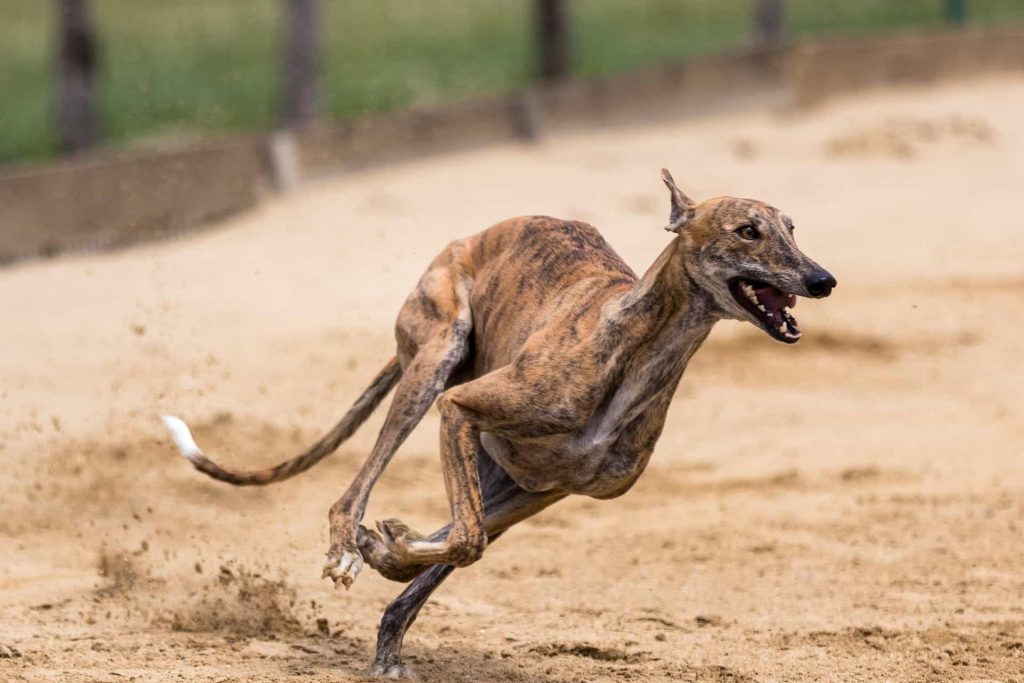
The Australian Cup Carnival and the Feature Race Calendar
The Phoenix dominates the headlines, but the Australian Cup is the race that connects The Meadows greyhounds to the longer arc of the sport’s history. First run in 1958 at the Arden Street Oval in North Melbourne — won by the now-legendary Rookie Rebel — the Australian Cup is the oldest Group 1 sprint final still contested in Victoria and one of the most prestigious titles in Australian greyhound racing. The $300,000 first prize makes it the second-richest sprint behind The Phoenix, and the three-week carnival structure that surrounds it turns February into the most concentrated block of elite racing on the MGRA’s calendar.
How the Australian Cup Carnival Works
The carnival runs across three consecutive Saturday nights in February, and the escalation from week to week is designed to build toward a finals night that stacks three Group 1 races onto a single card.
Night one opens with the Australian Cup heats — eight races of eight dogs over 525 metres, with the top two from each heat advancing to the semi-finals. The Silver Chief Classic heats run on the same card, giving the evening a volume of quality that few standalone meetings can match. Night two narrows the field. Four semi-finals over 525 metres determine the eight Australian Cup finalists, and the Fanta Bale Super Stayers heats run alongside them over 730 metres. Night three is the showpiece — the Australian Cup final, the Fanta Bale Super Stayers final, and the Rookie Rebel invitational all decided on a single card, with a consolation race and the GRV Vicbred Maiden Series final rounding out the programme. Five Group 1 races across one evening. Free entry. It is arguably the strongest single-night card in Australian greyhound racing outside of Phoenix night itself.
The Australian Cup — Six Decades of Champions
The Cup’s honour roll reads like a compressed history of the sport. Rookie Rebel’s inaugural victory in 1958 gave the race its first chapter and eventually gave The Meadows one of its Group 1 race names. The decades since have produced a succession of champions who used the Australian Cup as the centrepiece of their careers — from Silver Chief Classic winners who graduated to Cup glory through to interstate raiders who came to Melbourne specifically to chase the title.
The 2003 final at The Meadows produced a moment that has no parallel in major Australian greyhound racing. Graeme Bate’s tearaway leader Blackjack Tom was joined on the line by Max Burdiken’s Most Awesome in a dead heat — the first in the history of a major Group 1 greyhound race in Australia. Both connections shared the prize money and the bragging rights, and the photograph of the two dogs crossing together remains one of the most reproduced images in the sport.
More recently, Tim Zoo gave Jason Thompson his first Australian Cup in 2024 — a milestone that seemed overdue for a trainer who had sent 25 finalists to the race across two decades without winning it. Tim Zoo ran 29.71 seconds to beat Schillaci by 1.75 lengths, and Thompson’s reaction on the night made it clear how much the race meant to a kennel that had won virtually everything else. The 2025 edition went to Mepunga Tully, trained by Jeffrey Britton, who edged Tim Zoo by a quarter of a length in 29.64 seconds — a result that confirmed the bitch as one of the best sprinters in the country after her earlier Australian Cup heat time of 29.58 had already turned heads.
The Full Group 1 Calendar
The Meadows hosts ten Group 1 races across the calendar year — more than any other single greyhound venue in Australia. They split naturally into two clusters: the Australian Cup Carnival in February and the Dream Chasers Festival events in November and December.
Australian Cup Carnival (February):
| Race | Distance | Format | Notable Detail |
|---|---|---|---|
| Australian Cup | 525m | Heats → semis → final | $300,000 first prize, since 1958 |
| Silver Chief Classic | 525m | Heats → final | “The Derby of greyhound racing” |
| Fanta Bale Super Stayers | 730m | Heats → final | Renamed from Super Stayers in 2023 |
| Rookie Rebel | 600m | Invitational | Named after the 1958 Australian Cup winner |
| Zoom Top | 525m | Invitational | Named after champion with 136 career starts |
Dream Chasers Festival (November–December):
| Race | Distance | Format | Notable Detail |
|---|---|---|---|
| The Phoenix | 525m | Slot-holder (8 runners) | $1M to winner, world’s richest since 2022 |
| Topgun Sprint | 525m | Invitational | Panel-selected, no heats |
| Topgun Stayers | 730m | Invitational | Group 1 since 2018 |
| Hume Cup | 600m | Heats → final | Named for Hume City Council partnership, G1 since 2012 |
| Temlee | 525m | Invitational | Named after Olympic Park champion, panel-selected |
The split between the two carnivals gives The Meadows a balanced calendar — the Australian Cup Carnival opens the racing year in February with a traditional heats-and-finals format across multiple distances, while the Dream Chasers Festival closes it in December with invitation-only spectacles and the slot-holder showpiece. Between those peaks, the regular Wednesday and Saturday programme keeps the venue active year-round, and additional Group 2 and Listed races — including the Bold Trease over 725 metres and the Maturity Classic — fill the middle months.
The connection between The Meadows and Sandown Park through the Dream Chasers Festival is worth noting. The Melbourne Cup heats and final are run at Sandown. The Topgun, Hume Cup and Phoenix are run at The Meadows. The two venues operate independently — different clubs, different governance, different facilities — but for four weeks in November and December, they function as a single two-venue carnival. More than $3.5 million in total prize money is distributed across the festival, and the sequence from Melbourne Cup heats through to Phoenix night creates a narrative arc that no other period in the Australian greyhound calendar can match.
The Track — Distances, Surface and Box Bias
The Meadows is a sand-surface circuit built on one of the highest points in metropolitan Melbourne — a geographic detail that sounds trivial until you factor in the wind. The Broadmeadows site is exposed to strong crosswinds that can affect race times and running patterns in ways that more sheltered venues like Sandown Park do not have to contend with. On a calm night, The Meadows greyhounds run times that sit comfortably alongside any track in the country. On a windy one, the same dogs can record splits a length or more slower without any change in effort. Punters who bet at The Meadows regularly learn to check the weather before the races, not just the form.
The track itself is a circle circuit with a post-to-post distance of 450 metres and three standard racing distances. The 525-metre sprint is ten metres longer than Sandown’s 515-metre trip — a small difference on paper, but enough to shift the balance slightly away from pure box speed and toward sustained pace through the middle stages. The 600-metre middle distance provides a genuine gap between sprinting and staying, and the 725-metre staying trip is the standard for distance races, with selected Group 1 events extended to 730 metres.
Track Records
The Meadows’ track records have stood for a decade across all three distances — a longevity that says something about both the quality of the dogs who set them and the difficulty of the track when conditions are less than perfect.
| Distance | Record | Holder | Date |
|---|---|---|---|
| 525m | 29.376s | Allen Deed | 3 January 2015 |
| 600m | 33.911s | Dyna Double One | 6 February 2016 |
| 725m | 41.933s | Space Star | 28 February 2015 |
Dyna Double One’s 600-metre record is particularly notable. The Geelong-trained dog was one of the most naturally gifted middle-distance greyhounds of his generation, and his 33.911 seconds at The Meadows has survived nearly a decade of Group 1 fields trying to beat it. Allen Deed’s 525-metre mark of 29.376 has proven equally durable — and given that dogs like Explicit, Tim Zoo and Mepunga Tully have all raced at The Meadows without threatening it, the record says as much about the track’s variability as it does about Allen Deed’s speed on that particular January night.
Box Bias at The Meadows
The inside-box advantage at The Meadows is real but less extreme than at Sandown Park. Box 1 has historically produced winners at a strike rate of 17–21% across the 525-metre distance — well above the 12.5% theoretical average in an eight-dog field, but noticeably lower than Sandown’s 24.67% for the equivalent sprint trip. The difference comes down to track geometry. Sandown’s cutaway first turn creates a sharper rail advantage. The Meadows’ circle-track design distributes the turning arc more evenly, which means dogs drawn in boxes 3, 4 and 5 can hold their position through the first bend without losing as much ground as they would at Springvale.
That does not mean the draw is irrelevant. Box 1 is still the best gate at The Meadows on any measure, and boxes 7 and 8 remain the hardest to win from over the sprint distance. But the gap between inside and outside is narrower than at Sandown, which makes The Meadows a track where race pattern and sectional speed carry slightly more weight relative to raw box position. A dog with a strong middle section — the ability to sustain pace from the 200-metre mark to the 400-metre mark — tends to perform better at Broadmeadows than a dog whose entire race plan depends on leading into the first turn and holding on.
Over 600 metres, the bias flattens further. Over 725 metres, it largely disappears. The staying races at The Meadows are decided by stamina and race fitness rather than the luck of the box draw — a pattern that mirrors what happens at Sandown over 715 metres and at most other Australian tracks once the distance extends beyond a single circuit.
The wind factor adds a layer that no amount of box-draw analysis can fully account for. A headwind down the back straight slows front-runners and benefits closers. A tailwind does the opposite. On a still evening, the form guides read as expected. On a blustery Broadmeadows night — and there are plenty of those — the wind can override the form entirely. It is one of the track’s quirks, and experienced Meadows punters treat it as a variable rather than an excuse.
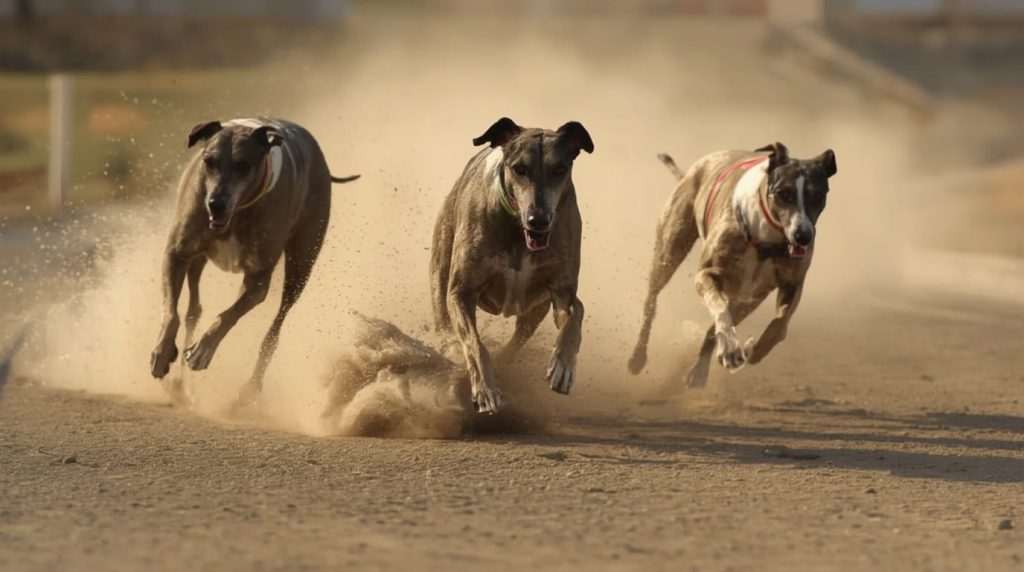
Four Homes in Five Decades — How The Meadows Found Broadmeadows
No greyhound club in Australia has moved as many times as the MGRA. The story of The Meadows greyhounds is a story of displacement — forced relocations, borrowed venues, parking lots where cars got stripped during race meetings, and a 27-year search for somewhere permanent. The current Broadmeadows facility is the MGRA’s fourth home, and the fact that it exists at all owes as much to stubbornness and compensation cheques as it does to any strategic plan.
The Melbourne Greyhound Racing Association was formed in 1955 when a group of members split from the Greyhound Owners Trainers and Breeders Association to establish an independently licensed racing operation. The split was philosophical — the new group wanted to run things their own way — but the practical challenge was immediate. They wanted to race at White City, one of Melbourne’s established greyhound venues, and could not afford the £35,000 asking price. With no track and no capital, the MGRA leased the Maribyrnong circuit for £100 per week and began staging meetings on borrowed ground.
| Year | Venue | What Happened |
|---|---|---|
| 1955 | Maribyrnong | MGRA formed, leased existing track for £100/week |
| 1957 | North Melbourne | First relocation, still without a permanent home |
| 1962 | Olympic Park No.2 | Moved into Melbourne’s sporting precinct. Monday nights became an institution |
| Mid-1990s | Olympic Park | CityLink motorway project forced the MGRA out. Compensation received |
| 1997–98 | — | 85 sites evaluated across Melbourne. Broadmeadows selected. 18 months of construction by MAB Corp |
| 8 Feb 1999 | The Meadows, Broadmeadows | Opening night. 8,000 people attended the first meeting |
The Maribyrnong arrangement was never meant to be permanent, and it was not. By 1957 the club had moved to North Melbourne, and in 1962 the MGRA made what seemed like its most significant step — into Olympic Park No.2, deep inside Melbourne’s sporting precinct on the south bank of the Yarra. The first meeting was held on August 20, 1962, and Monday nights at Olympic Park quickly became an institution. For three decades, the MGRA ran its programme from the heart of the city, building a loyal audience and a reputation that extended well beyond the greyhound community.
Olympic Park was not without its problems. The MGRA shared the precinct with other sporting codes, and the friction was constant:
- Scheduling disputes over race nights, trial access and catering control with co-tenants from other codes
- Chronic parking shortages that had followed the club from North Melbourne and worsened at Olympic Park
- Cars broken into and stripped during meetings with a regularity that became part of the venue’s reputation
- A failed experiment with twin mechanical hares after concerns that Meadows greyhounds could not see the single lure properly
These were not fatal issues on their own, but they accumulated — and when the real disruption came, it came from outside the sport entirely. The CityLink motorway project in the mid-1990s cut directly through the Olympic Park precinct and forced the MGRA out of its home. The club received compensation for the displacement, which provided the financial foundation for a permanent relocation — but finding somewhere to go proved far more difficult than leaving.
The MGRA’s committee, led by chairman Fred Abel and general manager Marg Long, evaluated 85 different sites across Melbourne before settling on a block of land on Camp Road in Broadmeadows. The Hume City Council, which governed the area, saw the MGRA as a commercial and community partner rather than an unwelcome neighbour, and the relationship between the council and the club became one of the defining features of the new venue. Construction took approximately 18 months through MAB Corporation, and the site’s position on one of Melbourne’s highest points — which would later become part of the track’s racing character through its wind exposure — was a construction-phase headache as well.
The Meadows opened on Monday February 8, 1999. Eight thousand people turned up for the first meeting — a crowd that validated both the relocation decision and the years of planning that preceded it. Greyhound racing was back on the north side of Melbourne after decades of absence, and the demographics of Broadmeadows introduced a younger, more diverse audience to the sport than the Olympic Park crowd had typically attracted.
Marg Long ran the operation from day one. She had joined the MGRA before the move to Broadmeadows, overseen the construction alongside Fred Abel, and remained as general manager for the next 18 years — the only person to hold the role in the venue’s history. When Long retired in June 2017, the MGRA inducted her into the Victorian Greyhound Hall of Fame. Her farewell meeting was the last time anyone would see the person who had built The Meadows from virgin ground walk the venue as its operator.
The venue Long left behind bore little resemblance to the leased Maribyrnong track where the MGRA had started 62 years earlier. Ten Group 1 races. A conference and events centre. A community partnership with the local council. And — four years after Long’s retirement — The Phoenix, a race that would turn a purpose-built track in an industrial estate into the home of the richest greyhound event in the world. None of it was inevitable. Most of it was improvised. The MGRA spent five decades looking for a permanent home, and when it finally found one, it built something that exceeded anything the original 1955 splinter group could have imagined.
Visiting The Meadows — Race Nights, Dining and Getting There
The Meadows runs two meetings every week, and both are free to attend. Wednesday cards are provincial-grade meetings held during the afternoon — gates open earlier, the crowd skews toward regulars and form students, and the atmosphere is functional rather than festive. Saturday evenings are the metropolitan meetings — gates open at 5:00 pm, the first race jumps around 6:30 pm, and a standard twelve-race card wraps up at approximately 10:30 pm. On Group 1 nights during the Australian Cup Carnival or the Dream Chasers Festival, the programme may run longer and the crowd will be substantially larger, but the format stays the same. Turn up, walk in, find a spot.
Dining and Hospitality
The Meadows operates three distinct food and beverage areas, and the gap between the cheapest and most expensive option is wide enough to cover most budgets and occasions.
| Venue | What to Expect |
|---|---|
| Midas Sports Bar | Ground-level bar and eatery. Counter meals, deep-fried staples, cold drinks. Casual atmosphere, screens showing races. The default for a low-key night out |
| City View Bistro | Upper-level dining with reinvented bistro classics. Track views on one side, Melbourne city skyline on the other. A step up from the Midas without formal dress expectations |
| Temlee Dining Room | Premium seated dining for feature nights. Three-course packages with or without beverages, starting from $79 per person. Grandstand seating access and race broadcast screens included. Named after the Olympic Park champion |
On Group 1 race nights, the MGRA extends the offering beyond the permanent venues. Food vans, pop-up cafes and themed bars appear across the grounds, and the general concourse transforms into something closer to a festival layout than a standard race-night setup. Phoenix night in particular has developed a reputation for atmosphere that goes well beyond what most people expect from a greyhound track — live music, on-course activations, and a crowd that includes a significant number of first-time visitors drawn by the $1 million headline rather than any existing connection to the sport.
On-course betting facilities are available through the track’s tote and bookmaker ring. All meetings are broadcast through SKY Racing, which means punters who cannot attend in person can still watch and wager through any licensed Australian bookmaker.
Getting to The Meadows
The Broadmeadows location is not as central as Olympic Park was, but it compensates with the kind of practical access that a suburban venue can offer — free parking, easy freeway connections, and proximity to the airport that makes it a realistic option for interstate visitors flying in for feature nights.
| Transport | Details |
|---|---|
| Car | Via Western Ring Road, Tullamarine Freeway or Pascoe Vale Road to Northcorp Boulevard, Broadmeadows |
| Parking | Free on-site — 300+ spaces plus bus capacity |
| Airport | 12 km from Melbourne Airport (Tullamarine) |
| CBD | Approximately 20 km northwest of Melbourne CBD |
| Ride share | Drop-off and pick-up at main reception area |
There is no train station within walking distance of The Meadows — a notable difference from Sandown Park, which sits directly on the Cranbourne and Pakenham line. Driving or ride share are the practical options for most visitors. The trade-off is that parking is generous and free, which is more than Olympic Park ever offered. On a standard Wednesday or Saturday meeting, finding a spot is never an issue. On Phoenix night or Australian Cup finals night, arriving early is worth the effort.
Beyond Race Night — Events, Functions and Community
The Meadows operates as a multi-purpose venue seven days a week, not just on the two days it hosts racing. The Meadows Conference and Events Centre offers indoor and outdoor spaces across a range of formats, and the MGRA’s events team manages bookings for corporate functions, training days, graduations, weddings, memorials and community gatherings. The venue has hosted product launches, school visits and charity events since opening in 1999 — a deliberate strategy to keep the facility active and visible in the Broadmeadows community on the five days each week when no races are run.
The partnership with Hume City Council underpins much of this community positioning. The council supported the MGRA’s relocation to Broadmeadows in the late 1990s and has maintained the relationship since — the Hume Cup, one of The Meadows’ Group 1 races, carries the council’s name. The MGRA’s own figures estimate that greyhound racing contributes $234 million and more than 1,500 jobs to the Melbourne metropolitan economy, with a significant share of that activity flowing through The Meadows and its supply chain of trainers, breeders, veterinary services and hospitality staff in the northern suburbs.
The MGRA also offers retired greyhounds access to the track facilities for off-lead exercise — a practical welfare measure that gives former racing dogs a familiar space to run without the pressure of competition. Owners of retired greyhounds can arrange access through the club’s office, and the arrangement reflects a broader industry shift toward post-racing welfare that tracks across Australia are adopting at varying speeds.
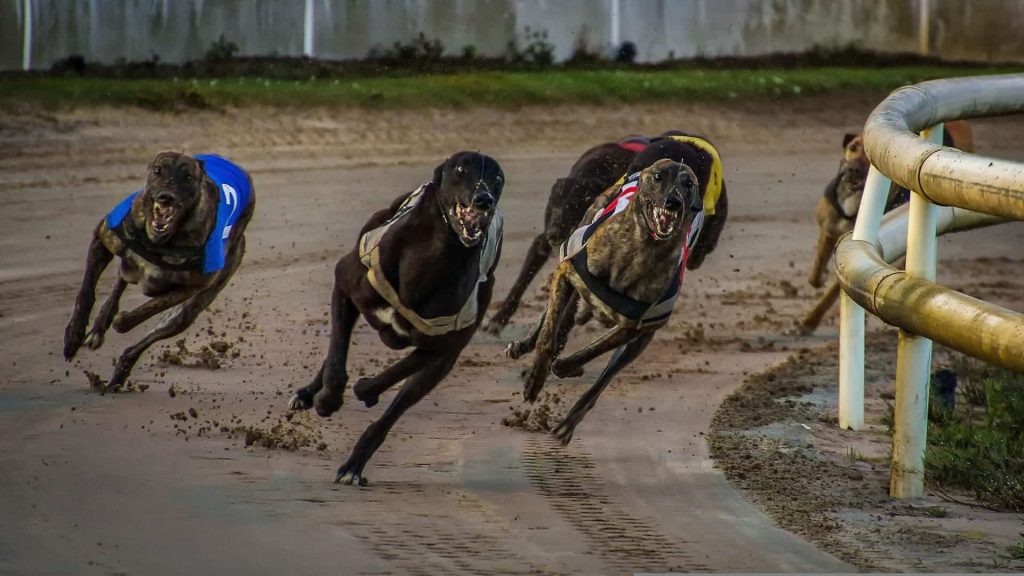
The Meadows — Where Greyhound Racing Reinvented Itself
The Meadows is not the oldest greyhound venue in Melbourne. It does not host the Melbourne Cup. It spent its first four decades without a permanent home, and its current location in an industrial estate in Broadmeadows does not carry the postcode prestige of Sandown Park in Springvale or the inner-city romance of the old Olympic Park site on the Yarra. On almost every traditional measure, The Meadows greyhounds venue should be playing second fiddle to its metropolitan rival across town.
It is not. The Phoenix changed that equation in 2021, and the five runnings since have confirmed the shift. The world’s richest greyhound race is not run at the venue with the longest history or the most famous postcode — it is run at a purpose-built track in the northern suburbs by an independent not-for-profit club that spent half a century looking for somewhere to call home. The slot-holder format brought new money, new audiences and new stories into a sport that had been telling variations of the same story for decades. A pizza shop owner winning $1 million. A construction company backing the right dog. A dual champion crowned Queen of The Meadows at her seventh career start. These are not the kind of narratives that traditional racing structures produce.
But The Phoenix is not the whole picture. The Australian Cup Carnival delivers three weeks of elite racing every February in a format that honours the sport’s traditional heats-and-finals pathway. Ten Group 1 races across the calendar year give trainers and owners more opportunities to win at the highest level than any other single venue in the country. The MGRA’s partnership with Hume City Council and its conference and events programme keep the facility embedded in its local community on the days when no races are run. And the track itself — wind-exposed, honest, less forgiving of inside-box reliance than Sandown — produces racing that rewards sustained speed and punishes one-dimensional dogs.
The MGRA has been building toward this version of The Meadows since Marg Long walked onto a construction site in Broadmeadows in the late 1990s and decided that the club’s fourth home would be its last. It took 27 years of borrowed venues and forced relocations to get there. It took The Phoenix to make the rest of the sport pay attention. What happens next — whether the race grows, whether the prize money climbs, whether the slot-holder concept spreads to other codes — will be decided at a track that most of Melbourne still underestimates. That has been the pattern since 1955, and the MGRA has never seemed particularly bothered by it.
FAQ
Where is The Meadows greyhound track located?
The Meadows is located at 80 Northcorp Boulevard in Broadmeadows, Victoria — approximately 20 kilometres northwest of Melbourne’s CBD and 12 kilometres from Melbourne Airport. The venue offers free on-site parking for 300+ cars.
What days does The Meadows hold greyhound racing?
The Meadows races every Wednesday and Saturday. Wednesday meetings are provincial-grade cards held during the afternoon. Saturday meetings are metropolitan-grade evening cards with gates opening at 5:00 pm, the first race jumping around 6:30 pm and a standard twelve-race programme finishing at approximately 10:30 pm. Entry is free on both days.
What distances are raced at The Meadows?
The Meadows offers three standard racing distances: 525 metres for sprints, 600 metres for middle-distance races, and 725 metres for staying events. Selected Group 1 stayers races are extended to 730 metres, including the Fanta Bale Super Stayers and the Topgun Stayers.
What is The Phoenix greyhound race?
The Phoenix is the world’s richest greyhound race, held at The Meadows every December as the finale of the Dream Chasers Festival. It carries a $1.65 million prize pool with $1 million going to the winner. The race uses a unique slot-holder format where eight participants pay $100,000 each to secure a slot and then select a greyhound to run on their behalf.
What is the Australian Cup at The Meadows?
The Australian Cup is a Group 1 sprint race over 525 metres with a first prize of $300,000. First run in 1958, it is one of the most prestigious titles in Australian greyhound racing. The race sits within a three-week carnival in February that includes five Group 1 events across three consecutive Saturday nights.
What are the track records at The Meadows?
The track records are: 525m — Allen Deed in 29.376 seconds (January 2015); 600m — Dyna Double One in 33.911 seconds (February 2016); 725m — Space Star in 41.933 seconds (February 2015). All three records have stood for over a decade.