Greyhound Racing
Sandown Park
Home of the Melbourne Cup · 515m · 595m · 715m · Springvale VIC
18+ | Gamble responsibly | For free support call Gambling Help 1800 858 858 | gamblinghelponline.org.au
Every greyhound racing nation has a venue that sits above the rest. In Australia, that venue is Sandown Park. The Sandown Greyhound Racing Club has operated from its Springvale base since 1956, and in the seven decades since opening night it has built itself into the most important greyhound racing destination in the country. The Melbourne Cup final is run here every November. The Sandown Cup — Australia’s richest staying race — has been contested over its 715-metre circuit since the 1960s. The Launching Pad series fills the autumn calendar with the next generation of star chasers. Monday and Thursday nights, the lights come on, the lids go up, and the fastest dogs in Victoria tear down the back straight at close to 70 kilometres per hour.
Sandown Park sits on View Road in Springvale, roughly twenty minutes southeast of Melbourne’s CBD. The Cranbourne and Pakenham train lines stop at Sandown Park station, which puts the track within walking distance for anyone coming from the city. Entry is free on race nights — it has been for years — and the Henry Harrison grandstand offers enclosed, all-weather viewing across the full circuit. The track itself runs three distances: 515 metres for the sprints, 595 metres as the middle-distance option, and 715 metres for the staying races. Sand surface, eight-dog fields, and a cutaway first turn that rewards early speed from the inside boxes.
The numbers tell the story of a venue that punches well above its weight. The Melbourne Cup final carried a $762,500 prize pool in 2024 — with $500,000 going to the winner — and the Dream Chasers Festival that surrounds it pumps more than $3.5 million in total prize money across its multi-week calendar. The Launching Pad final alone is worth $400,000. For a single-track club running two meetings a week, that concentration of prize money is unmatched anywhere in Australian greyhound racing.
| Detail | Info |
|---|---|
| Official name | Sandown Greyhound Racing Club |
| Location | View Road, Springvale VIC 3171 |
| Opened | 8 September 1956 |
| Race nights | Monday and Thursday evenings |
| Gates open | 6:00 pm — free entry |
| Distances | 515m, 595m, 715m |
| Track surface | Sand |
| 515m track record | 28.79s — Aston Rupee (2021) |
| Signature race | Sportsbet Melbourne Cup — Group 1, 515m |
| Grandstand | Henry Harrison (enclosed, all-weather) |
| Train access | Sandown Park station (Cranbourne/Pakenham line) |
| Welfare facility | Toongabbie Lodge (adoption, rearing, whelping) |
Sandown is not just a racetrack with a famous race attached to it. The club runs its own adoption and welfare facility at Toongabbie Lodge, conducts trials for trainers throughout the week, and hosts functions and community events on non-race days. The page below covers the track itself — how it races, what makes it fast, where the bias sits — along with the Melbourne Cup and the rest of the feature calendar, the history behind the venue, and what to expect if you are heading out to Springvale for a night at the dogs.
The Track — Distances, Surface and How Sandown Races
Sandown Park is a sand-surface circuit with a reputation for producing fast times and rewarding dogs that find the front early. The track underwent a full rebuild in 1995 and received a $3 million grandstand renovation in 2010, but the racing characteristics have remained consistent across those upgrades — it is a speed track first, and a pattern-reading track second.
Three distances are offered. The 515-metre sprint is the bread and butter of the weekly calendar and the distance used for the Melbourne Cup, the Launching Pad and the Shootout. The 595-metre middle distance appears less frequently but provides an important stepping stone between sprinting and staying. The 715-metre staying trip is reserved for the Sandown Cup and its lead-up races — it is the longest distance raced at any metropolitan track in Victoria and one of the longest on the national circuit.
The track record over 515 metres belongs to Aston Rupee, who stopped the clock at 28.79 seconds in 2021. Breaking 29 seconds at Sandown is the benchmark for an elite sprinter — Explicit did it five times during his career, and Big Energy matched that tally before his Shootout win in late 2024. Over 715 metres, the staying record is held by Bobby Boucheau, whose time remains the mark that every Sandown Cup aspirant chases.
Box Bias and the First Turn
Sandown’s first turn is a cutaway design — a turn within the turn — and it creates a measurable inside-box advantage that punters need to account for. In 2024, box 1 produced winners at a rate of 24.67% over the 515-metre distance. That is well above the theoretical average of 12.5% in an eight-dog field and among the highest box-one strike rates at any major Australian track. Box 5, by contrast, was the worst performer at 11.15%.
The mechanics behind the bias are straightforward. The cutaway geometry gives the rail-drawn dog an additional advantage into the first bend — it can hold a tighter line without losing ground, and dogs drawn middle to wide need to navigate a more complex turning arc. Some dogs handle that arc without issue. Others drift or check, which causes interference and compounds the advantage for anything that has already found the rail. The result is a track where early speed from an inside draw is the single most important predictor of success in sprint races.
That does not mean wide draws are hopeless. Explicit won the 2024 Melbourne Cup from box 6. Schillaci took a Melbourne Cup heat from box 7 at $12.60. But both of those dogs possessed the raw acceleration to cross early and find the front before the turn — they overcame the draw with pace rather than luck. For the average field on a Monday or Thursday night, box 1 through box 3 hold a structural edge that shows up clearly in the long-run data.
Over 715 metres, the box bias flattens. The longer distance means dogs have more time to find their position after the first turn, and the staying races tend to favour sustained speed and stamina over raw early pace. The Sandown Cup is often won by a dog that settles midfield early and grinds its way to the front through the second half of the race — a very different profile to the Melbourne Cup sprinter.
The Melbourne Cup — Sandown park greyhounds Biggest Night
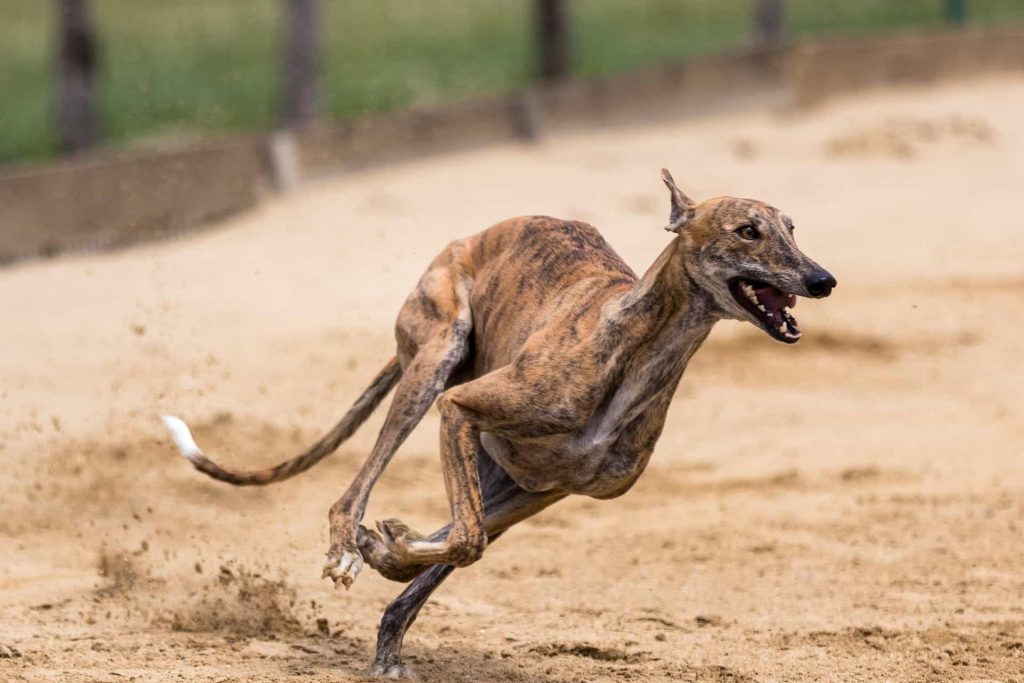
The Sportsbet Melbourne Cup is the race that defines Sandown Park and the reason most people outside the sport have heard of the venue at all. It is the oldest continuously run greyhound feature in Australia, the richest sprint final on the national calendar, and — by the measure of its honour roll — the single most prestigious title a greyhound can win in this country. The first Cup was staged on opening night in 1956, won by Rocketeer on the original grass circuit over 565 yards. Nearly seven decades later, the race has grown into a $762,500 event with the winner collecting $500,000 and a place on a roll of honour that reads like a history of the sport itself.
The Cup is run every November over 515 metres as the centrepiece of the Dream Chasers Festival — a multi-week carnival that spans both Sandown Park and The Meadows. Eight dogs make the final after winning their respective heats the previous Saturday, and the qualification pathway ensures only proven performers reach that stage.
How Dogs Qualify for the Melbourne Cup
Getting into the Melbourne Cup heats is not a matter of nominations and grading. It is an earned right, and the pathway rewards consistent Group-level performance across the preceding twelve months.
A greyhound qualifies for the heats by meeting at least one of the following criteria:
- Winning a Group 1 sprint race anywhere in Australia within the previous twelve months
- Winning a Victorian country cup (excluding the Healesville Cup)
- Winning a group race at Sandown Park over 515 metres
- Finishing in the previous year’s Melbourne Cup final
- Winning or finishing in the Shootout — the four-dog invitation race held the week before the Cup heats
- Winning a Melbourne Cup Prelude, which are staged fortnightly in the weeks leading up to the carnival
That system filters the field to a pool of dogs with verified credentials at the highest level. The eight heat winners then contest the final, with the box draw conducted live — a moment that can shift a dog’s price dramatically given Sandown’s well-documented inside-box advantage.
The Thompson Dynasty and Recent Champions
No family is more synonymous with the Melbourne Cup than the Thompsons. Jason and Seona Thompson have trained five Cup winners across three decades — a record that no other kennel comes close to matching.
| Year | Winner | Trainer | Time | Margin | Notes |
|---|---|---|---|---|---|
| 1994 | Light Of Fire | Jason Thompson | — | — | First Thompson Cup winner |
| 2012 | Got A Moment | Jason Thompson | — | — | — |
| 2013 | Black Magic Opal | Jason Thompson | — | — | Back-to-back for the kennel |
| 2017 | Aston Dee Bee | Jason Thompson | — | — | — |
| 2024 | Explicit | Jason Thompson | 29.29s | 7.5 lengths | Fifth Thompson victory, $500K first prize |
Explicit’s 2024 triumph was the most emphatic Cup victory in recent memory. Drawn in box 6 — statistically one of the tougher gates over this distance — he avoided early trouble at the first turn, slung around the field, and kicked clear down the back straight to beat stablemate Joey The Jet by seven and a half lengths. The winning time of 29.29 seconds placed him among the thirteen fastest dogs to ever race at Sandown Park. Three weeks later, Explicit won The Phoenix at The Meadows to retire as a three-time Group 1 winner with $1.9 million in career stakes.
Beyond the Thompsons, the Cup’s honour roll includes names that span the sport’s eras — from Cheltenham Lass in the 1960s through to Tornado Tears (2018), who launched from midfield to overhaul Quick Jagger in the shadows of the post. The race has a habit of producing defining moments. In 2024 alone, a $12.60 outsider named Schillaci won his heat from box 7, a pizza shop owner from Devon Meadows cried trackside, and Explicit answered every question about whether he could deliver on the biggest stage.
Feature Races at Sandown Park
The Melbourne Cup commands the spotlight, but Sandown Park’s racing calendar runs deeper than a single night in November. The club hosts a concentrated programme of Group races that collectively make it the most feature-rich single venue in Australian greyhound racing. Three events in particular anchor the calendar outside of Cup month — the Sandown Cup, the Launching Pad series, and the Shootout — each targeting a different type of dog and a different audience.
The Sandown Cup — Australia’s Premier Staying Race
The Sandown Cup is contested over 715 metres and carries a first prize of $175,000 — making it the richest greyhound staying race in the country. It was first run in 1964 under its original name, the Woolamai Cup, when Briar View took the inaugural edition on what was still a relatively new sand surface. The race was renamed the Sandown Cup that same year and has grown steadily in prestige and prize money ever since, earning Group 1 status in 1996.
Where the Melbourne Cup rewards explosive speed over 515 metres, the Sandown Cup demands something different. The 715-metre journey is a genuine test of stamina — dogs need to sustain high cruising speed through two full circuits and still have enough left to fight for the lead in the run home. The race tends to attract a different type of chaser: rangier, more aerobically efficient, often older and more experienced than the sprint-bred Melbourne Cup finalists. Fanta Bale’s 2017 victory was a landmark moment — she became the first greyhound to win Group 1 races over 500, 600 and 700 metres, and her Sandown Cup title was the one that cemented her reputation as a genuine all-distance champion.
The 2024 edition went to Irish Millie, trained by Steve Whyte, who ran 41.97 seconds to narrowly defeat Canya Amy and deliver her first Group 1 victory. It was a popular result for a dog that had knocked on the door at the top level without quite breaking through — the Sandown Cup has a history of producing those kinds of stories.
The Launching Pad — Where Future Stars Emerge
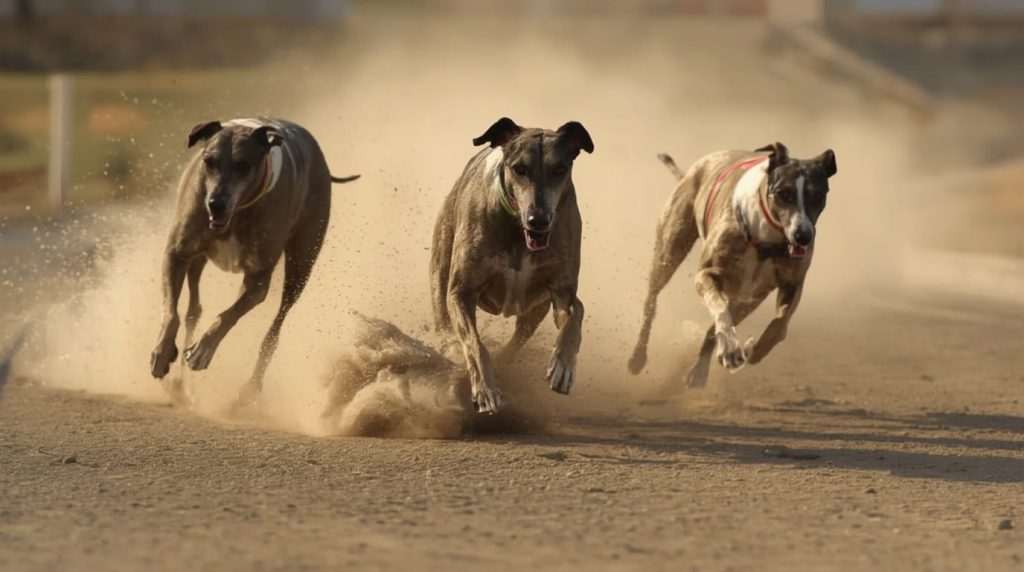
The Launching Pad occupies a unique slot on the national calendar. It is a win-restricted series over 515 metres, open only to young and lightly raced Sandown greyhounds, and its purpose is exactly what the name suggests — giving the next wave of talent a platform to announce themselves. The series runs through March and April with heats, semi-finals and a final that carried $150,000 to the winner and a total pool of $400,000 in 2025.
The restriction on entries is what makes the Launching Pad different from open-age Group racing. By limiting the field to dogs with fewer career wins, the series creates a pathway for emerging chasers who are not yet competitive in open Group company but clearly have the raw ability to get there. Several Launching Pad graduates have gone on to win at the highest level — the race functions as a proving ground, and trainers from across Australia target it as the first major stepping stone for a promising young dog.
Dashing Slay’s 2025 final was a case study in what the series is designed to produce. The South Australian-trained greyhound ran a staggering 28.95 seconds in her semi-final — a time that would be competitive in any open Group 1 sprint in the country — and then backed it up with a 15-length demolition in the final, stopping the clock at 29.08. At the time of writing, Dashing Slay’s connections were weighing up whether to keep her in Victoria and target the bigger feature races at Sandown and The Meadows.
The Shootout and the Dream Chasers Festival
The Shootout is the most unusual race on Sandown’s calendar. It is a Group 3 event with just four runners — hand-picked by invitation — competing over 515 metres for a $50,000 winner-takes-all prize. Held in November as part of the Dream Chasers Festival, the Shootout strips the sport down to its simplest proposition: four elite sprinters, no hiding places, the fastest dog wins.
Big Energy made history in 2024 by winning the Shootout for the second time — the only greyhound to achieve the feat. His five sub-29-second runs at Sandown Park placed him in rare company, and the Shootout was the event where his raw speed over the Springvale circuit was most visible. The four-dog format eliminates the traffic and interference that can define larger fields, and the result is usually a clean test of pace.
The Shootout sits within the broader Dream Chasers Festival, which is the flagship carnival for Victorian greyhound racing and arguably the most concentrated stretch of elite racing anywhere in the country. The festival spans several weeks across November and December, with events split between Sandown Park and The Meadows.
- Topgun Sprint and Stayers Invitational — invitation-only races at The Meadows to open the carnival
- Hume Cup — Group 1, held at The Meadows alongside the Topgun events
- Melbourne Cup Heats — eight heats at Sandown Park, the highest-quality single night of racing on the Australian calendar
- Shootout — four-dog Group 3 at Sandown, run on a feature card alongside Cup Preludes
- Melbourne Cup Final — Group 1 at Sandown Park, $762,500 prize pool
- The Phoenix — Group 1 at The Meadows, $1.65 million prize pool with $1 million to the winner. The world’s richest greyhound race, run three weeks after the Cup
That sequence — from Topgun through to The Phoenix — puts more than $3.5 million in prize money on the table across a single carnival. Sandown Park hosts the heart of it, and The Meadows provides the finale.
From Coursing Club to Cup Headquarters — Sandown Park’s History
Sandown Park’s origins sit a full two decades before the first official race meeting. In 1934, a group of Sandown greyhounds owners in Melbourne’s southeast formed the Springvale and District Coursing Club and staged their inaugural event on James Young’s land along Springvale Road. Two hundred and fifty spectators turned up to watch 68 greyhounds run nine races over a 250-yard straight track — a modest beginning by any measure, made more modest when somebody stole several of the hares two days before the meeting. The club folded not long after, but the appetite for greyhound sport in the area had been established.
Roy Maidment picked up where the Springvale club left off, founding the Sandown Greyhound Racing and Coursing Club in partnership with the National Coursing Association of Victoria. Through the late 1930s and 1940s, the operation ran coursing events — live hare pursuit rather than mechanical lure racing — at a site that would eventually be absorbed by the Victorian Amateur Turf Club for its Caulfield operations. When that land was lost, the Sandown Park Coursing Club purchased a 19-acre block on the other side of the railway line in Lightwood Road for £9,100. A straight track was installed at a cost of £6,000 as a condition of the purchase — a concession to coursing interests — and it was used exactly once.
The real turning point came in 1956. The Victorian government legislated for two metropolitan greyhound track licences under non-proprietary racing rules, and the NCA of Victoria — now holding the Lightwood Road freehold — secured one of them. On September 8, 1956, the newly built Sandown Park circuit opened with mechanical hare racing, and the first Melbourne Cup was run that same year on a grass surface over 565 yards. Rocketeer won the inaugural edition in front of a crowd that had no way of knowing what the race would eventually become.
The next decade reshaped the venue. In 1964, the grass track was replaced with sand — a shift that improved drainage, reduced maintenance costs and produced faster, more consistent racing surfaces. The Woolamai Cup was renamed the Sandown Cup in the same year. Two years later, TAB betting was introduced at the track, connecting Sandown’s racing product to the off-course wagering network that would eventually become the financial backbone of the sport. Handicap conditions for the Melbourne Cup were also eliminated in 1966, turning it into a set-weights event where the fastest dog in the field had every advantage — a change that aligned the race with modern Group racing principles.
Through the 1970s and 1980s, Sandown consolidated its position as the premier greyhound venue in Victoria. The Melbourne Cup grew in prize money and prestige, the Sandown Cup established itself as the national staying championship, and the track became the default choice for interstate raiders chasing Group glory in Melbourne. Celebrity involvement occasionally brought the venue into mainstream consciousness — American actor Robert Stack presented the Melbourne Cup trophy in 1978, and Elke Sommer did the same in 1979.
The physical venue underwent a complete rebuild in 1995, replacing the ageing infrastructure with modern facilities designed for both racing and hospitality. A second major upgrade followed in 2010, when a $3 million renovation delivered the Henry Harrison grandstand — the enclosed, all-weather structure that remains the centrepiece of the spectator experience today. The grandstand provides full-circuit viewing, escalator and lift access, and bar and dining facilities that turned Sandown from a place you went to watch dogs into a place you went for a night out that happened to include dogs.
More recently, the creation of the Dream Chasers Festival in the early 2020s and the launch of The Phoenix in 2021 reshaped Sandown’s position within a broader carnival structure. The Melbourne Cup is no longer a standalone event — it sits within a multi-week festival that generates more than $3.5 million in prize money across Sandown and The Meadows. That evolution reflects a deliberate strategy by GRV and the club to package greyhound racing as a major sporting carnival rather than a series of isolated race nights. Sandown provides the heritage and the Cup. The Meadows provides The Phoenix and the finale. Together, the two venues anchor a November-December racing programme that has no equivalent anywhere else in the greyhound world.
Toongabbie Lodge and Greyhound Welfare
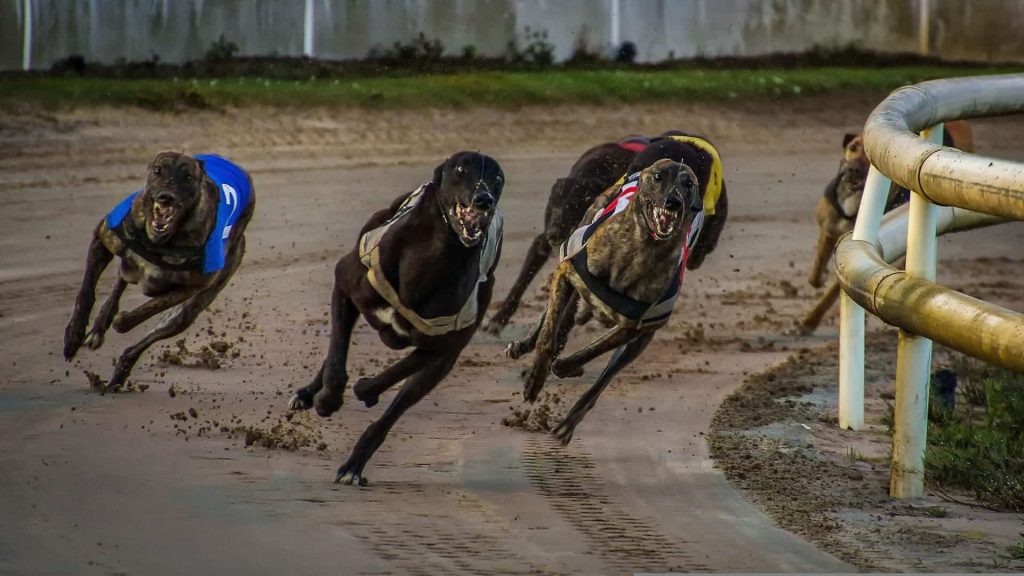
Most greyhound racing clubs in Australia limit their involvement to what happens on race night — fields, prize money, stewards, results. The Sandown Greyhound Racing Club has taken a different approach. In 2019, the club’s board commissioned a feasibility study into building a purpose-built facility that would cover the full lifecycle of a racing greyhound, from whelping through to retirement and rehoming. The result is Toongabbie Lodge — a 125-acre property outside Traralgon in southeastern Victoria that opened in late 2021 and operates as one of the most comprehensive greyhound welfare facilities in the country.
The lodge is not a kennel or a holding facility. It provides services across four distinct areas:
- Whelping and rearing — purpose-built infrastructure for breeding and raising greyhounds from birth through to early education, with veterinary oversight and socialisation protocols built into the programme from the start
- Pre-training and education — greyhounds at Toongabbie go through structured handling, exercise and socialisation in accordance with GRV’s Education and Husbandry Management Plan, including controlled exposure to isolation and different environments
- Boarding — short-term and holiday stays for racing Sandown greyhounds, with transport available between the lodge, Sandown Park and veterinary facilities in Maffra
- Retirement and adoption — the centrepiece of the operation, where dogs transitioning out of racing are assessed, retrained and matched with adoptive families or individuals
Gippsland’s largest rehoming facility, Toongabbie Lodge works alongside GRV’s Greyhound Adoption Program and is listed on PetRescue as an adoption source. The adoption fee is $350 and includes a rug, muzzle, lead and collar. Prospective owners receive ongoing support after placement — the lodge maintains contact with adopters and runs facilitated play groups on the property where retired greyhounds can socialise off-lead across the acreage. For trainers, the lodge charges $132.02 per week for rearing or boarding, with direct debit as the preferred payment method.
The broader significance of Toongabbie Lodge is what it represents about the Sandown club’s positioning within the industry. Greyhound welfare is the most scrutinised aspect of the sport in Australia — the 2015 live-baiting scandal, the 2016 McHugh Inquiry in NSW, and ongoing rehoming statistics all sit in the public record. By investing in a facility that covers the full lifecycle rather than just the racing years, the Sandown Greyhound Racing Club has staked out a position that goes beyond regulatory compliance. Whether that position is sufficient to address every welfare concern raised by advocacy groups is a separate question — but the infrastructure itself is real, operational, and open to visitors who want to see it firsthand.
The club also contributes to its local Springvale community through non-racing initiatives. Staff volunteer time to prepare and deliver meals to nearby charities — more than 200 meals per week — and the Sandown Park venue hosts community events, functions and school visits on non-race days. These are smaller-scale commitments than the Toongabbie investment, but they reflect the same underlying strategy: a racing club that presents itself as a community asset rather than a single-purpose venue.
Visiting greyhounds Sandown Park — Race Nights, Dining and Getting There
Sandown Park runs two race meetings every week, and both are open to the general public with free admission. The regular schedule is Monday and Thursday evenings, with gates opening at 6:00 pm and the first race typically jumping around 6:30 pm. A standard card runs twelve races, which means the final event wraps up somewhere around 10:30 pm. Feature nights during the Dream Chasers Festival or Launching Pad series may draw larger crowds and carry a longer programme, but the format stays the same — turn up, walk in, find a spot and watch.
The Henry Harrison grandstand is the main spectator area and the part of the venue that sets Sandown apart from most regional tracks. It is a fully enclosed, air-conditioned structure with viewing across the entire circuit, escalator and lift access to both levels, and bar and dining facilities built into the layout. On a cold Melbourne winter night, the difference between watching from an open-air concourse and watching from an enclosed grandstand with a drink in hand is not trivial — it is a big part of why Sandown draws a more casual, non-punting crowd than many other tracks in the state.
Dining options cover a range of price points. The club rooms offer bar snacks and counter meals on regular race nights — functional, affordable, nothing fancy. For feature events, Sandown steps it up with sit-down three-course dinners and entertainment packages that turn the evening into something closer to an event night than a standard trip to the dogs. Function hire is available on non-race days for private events, corporate bookings, and community groups.
Getting to Sandown Park
The venue is well connected by public transport for a suburban Melbourne racetrack, and the car access is straightforward with free on-site parking.
| Transport | Details |
|---|---|
| Train | Cranbourne or Pakenham line to Sandown Park station — short walk to the venue |
| Bus | Route 811 to Sandown Greyhounds / View Road stop |
| Car | Entry via View Road or Station Street, Springvale VIC 3171 |
| Parking | Free on-site parking at the View Road entry |
| Ride share | Drop-off and pick-up at the main reception area |
The train option is the most convenient for anyone coming from the city or inner suburbs. Sandown Park station sits on the Cranbourne and Pakenham lines — two of Melbourne’s busiest commuter corridors — which means services run frequently through the evening and the journey from Flinders Street takes roughly 35 to 40 minutes. The walk from the station to the track entrance is short enough that you can hear the crowd before you see the venue.
For drivers, Springvale is about twenty minutes southeast of the CBD via the Monash Freeway or Princes Highway. The free parking at the View Road entrance puts you directly outside the grandstand precinct, so there is no shuttle or long walk from a distant lot. On regular Monday and Thursday nights, parking is never an issue. Feature nights during the Dream Chasers Festival can fill up earlier, but even then the on-site capacity is generous.
Trials and Non-Race Day Access
Sandown Park is not only a race-night venue. The club conducts trial sessions throughout the week under GRV oversight, giving trainers the opportunity to run their dogs over the track outside of competitive meetings. Trial results are published on the Sandown Greyhound Racing Club website in downloadable PDF format, and bookings can be arranged through the club’s office. Trial sessions serve a practical function for trainers preparing dogs for nominations — a dog that has trialled well at Sandown carries more confidence into race-night grading than one stepping onto an unfamiliar circuit.
On non-race days, the venue is used for track maintenance, facility upkeep and community functions. Schools receive access to the facilities at no charge, and the club encourages community interaction with the venue beyond the racing programme. It is a deliberate effort to keep Sandown Park active and visible in the Springvale area seven days a week rather than going dark between Thursday night and the following Monday.
FAQ
Where is Sandown Park greyhound racing track located?
Sandown Park is located on View Road in Springvale, Victoria — roughly twenty minutes southeast of Melbourne’s CBD. The venue is accessible by train via Sandown Park station on the Cranbourne and Pakenham lines, by Bus 811, or by car with free on-site parking at the View Road entry.
What nights does Sandown Park hold greyhound racing?
Sandown Park races every Monday and Thursday evening. Gates open at 6:00 pm, the first race typically jumps around 6:30 pm, and a standard twelve-race card finishes at approximately 10:30 pm. Entry is free on all race nights.
What distances are raced at Sandown Park?
Sandown Park offers three racing distances: 515 metres for sprints, 595 metres for middle-distance races, and 715 metres for staying events. The 515-metre trip is used for the Melbourne Cup and the majority of the weekly programme. The 715-metre distance is reserved for the Sandown Cup and its lead-up races.
What is the track record at Sandown Park over 515 metres?
The 515-metre track record is 28.79 seconds, set by Aston Rupee in 2021. Breaking 29 seconds at Sandown is considered the benchmark for an elite-level sprinter.
How does a greyhound qualify for the Melbourne Cup at Sandown Park?
Greyhounds qualify for the Melbourne Cup heats by winning a Group 1 sprint race, a Victorian country cup, a group race at Sandown Park over 515 metres, or a Melbourne Cup Prelude within the previous twelve months. The previous year’s Cup finalists and Shootout participants also qualify. Eight heat winners then contest the final.
What is Toongabbie Lodge and how is it connected to Sandown?
Toongabbie Lodge is a 125-acre greyhound welfare facility outside Traralgon in southeastern Victoria, built and operated by the Sandown Greyhound Racing Club. It provides whelping, rearing, education, boarding and adoption services across the full lifecycle of a racing greyhound. It is Gippsland’s largest greyhound rehoming facility.