
Greyhound Racing
Tasmania
Tasracing · Ladbrokes Park Elwick · 3 tracks statewide · Home of the Group 1 Hobart Thousand
18+ | Gamble responsibly | For free support call Gambling Help 1800 858 858 | gamblinghelponline.org.au
Tasmania is home to Australia’s oldest greyhound classic. The Hobart Thousand has been run every December since 1938 — through wartime, through the sport’s lean years, through every shift in the industry — and it still draws the best sprinters from the mainland each summer. That history matters. It gives Tasmanian greyhound racing a character that larger states, for all their scale, don’t quite replicate.
The state runs three tracks — Hobart, Launceston and Devonport — under Tasracing, which also governs thoroughbred and harness racing. The 2025/26 season schedules 155 greyhound meetings across the three venues, a compact but active calendar that punches well above its weight in feature racing quality.
The context for any discussion of Tasmania greyhound racing in 2026 is the phase-out. In August 2025, Premier Jeremy Rockliff announced that the sport would end in the state by 30 June 2029. Legislation passed the House of Assembly in December 2025. Breeding greyhounds for racing has been banned since 1 January 2026. The sport is still fully operational — fields are running, Group races are being contested, TAB markets are live — but the end date is confirmed and the transition is underway.
This page covers the governing structure, all three tracks, the feature race calendar, and the phase-out timeline in full.
| Detail | Info |
|---|---|
| Governing body | Tasracing |
| Integrity body | Office of Racing Integrity (ORI) |
| Website | tasracing.com.au |
| Tracks | Hobart (Elwick), Launceston (Mowbray), Devonport (Spreyton) |
| 2025/26 meetings | 155 greyhound meetings |
| Flagship race | Hobart Thousand — Group 1, 461m, $100,000 |
| Racing ends | 30 June 2029 (legislation passed) |
| Breeding ban | In effect from 1 January 2026 |
Tasracing and the Office of Racing Integrity
Tasracing is Tasmania’s single governing body for all three racing codes — greyhound, thoroughbred and harness. It operates at the commercial and administrative level: allocating race dates, managing prize money distribution, overseeing track infrastructure, and running the Tasracing FormPlus data platform that publishes fields, form and results for all three codes. Every greyhound meeting in the state runs under its calendar.
Integrity sits separately. The Office of Racing Integrity (ORI) is a division of the Tasmanian Department of Natural Resources and Environment, which means it operates independently of Tasracing rather than being part of the same organisation. ORI handles licensing of trainers, owners and breeders; drug testing and swabbing; stewarding on race day; and investigations into breaches of the rules of racing. The separation of commercial administration (Tasracing) from integrity oversight (ORI) is deliberate — it removes the conflict of interest that arises when the same body both promotes and polices the sport.
| Function | Body |
|---|---|
| Race programming and dates | Tasracing |
| Prize money and infrastructure | Tasracing |
| Fields, form and results (FormPlus) | Tasracing |
| Trainer and owner licensing | ORI |
| Drug testing and stewards | ORI |
| Integrity investigations | ORI |
| Phase-out transition oversight | ORI (Transition Working Group) |
For the greyhound industry specifically, ORI has taken on an expanded role since the phase-out announcement. It now chairs the Greyhound Racing Transition Working Group, which is responsible for developing and overseeing the operational, welfare and integrity components of the transition to June 2029. Quarterly progress reports go to a dedicated Parliamentary Committee.
Hobart Greyhound Racing — Ladbrokes Park Elwick
Hobart is the home of Tasmanian greyhound racing in every meaningful sense. It hosts the Hobart Thousand, the state’s Group 1 feature, and carries the longest continuous history of the three venues. The Hobart Greyhound Racing Club (HGRC) held its first meeting at the TCA grounds before relocating in 2007 to Tattersall’s Park at Elwick — a shared tri-code facility that also hosts thoroughbred and harness meetings. The greyhound track sits inside the broader Elwick complex on the southern outskirts of Hobart.
The track runs on a sand surface and races predominantly over 461m, which is the standard sprint distance for Tasmania greyhound racing and the distance of the Hobart Thousand. The 2025/26 season allocates 24 greyhound meetings to Hobart — the second-highest of the three venues by meeting count, behind Launceston’s 26.
Race nights run on Mondays and Thursdays, with the Thursday card carrying the feature-race program during the summer festival period. Hobart also hosts the annual dual-code Good Friday meeting alongside the Tasmanian Trotting Club — one of the longer-running joint events on the Tasmanian racing calendar.
| Detail | Info |
|---|---|
| Venue | Tattersall’s Park, Elwick, Hobart |
| Club | Hobart Greyhound Racing Club (HGRC) |
| Surface | Sand |
| Primary distance | 461m |
| 2025/26 meetings | 24 |
| Race nights | Monday and Thursday |
| Flagship race | Hobart Thousand (Group 1, December) |
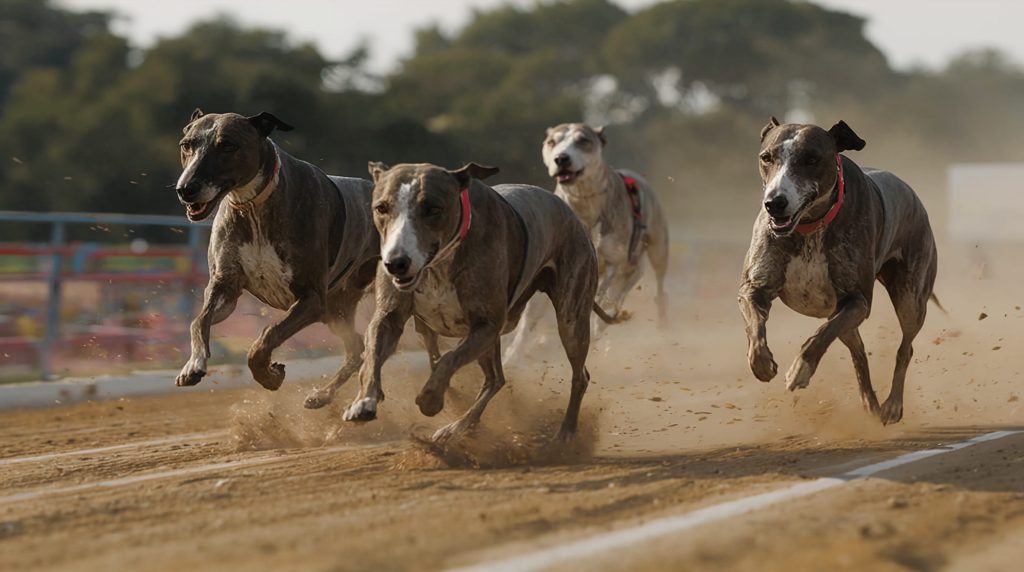
The Hobart Thousand — Australia’s Oldest Greyhound Classic
The Hobart Thousand is the centrepiece of Tasmanian greyhound racing and one of the most historically significant races on the Australian calendar. First run in 1938, it holds the distinction of being Australia’s oldest continuously run greyhound classic — a title no other state race can claim. It has been contested every December since, interrupted only by the constraints of the Second World War years, and it has grown steadily in stature and prize money over that time.
The race is run over 461m at Ladbrokes Park Elwick and currently carries $100,000 to the winner. It operates on a heats-and-final format, with seven heats run on the first Thursday of December and the eight qualifiers — seven heat winners plus the fastest runner-up — contesting the final the following week. The format means the night of the heats is itself a significant event, drawing fields of 50-plus nominated starters and giving punters two full cards of competitive racing to follow.
The 2024 final was won by Bernie Burrow, trained by Mick Stringer and racing for the Arriva Syndicate. Breaking from box two, Bernie Burrow led throughout and held off the Victorian raider Hotel Whisky One by 1.75 lengths in a winning time of 25.49 seconds. The victory was Stringer’s second Hobart Thousand title — his first came with Little Spaniard in 2008 — and came just one week after his induction into the Tasmanian Greyhound Racing Hall of Fame.
Key facts about the race:
- Distance: 461m (sprint)
- Grade: Group 1
- Prize money: $100,000 to the winner
- Date: Second Thursday of December (final night)
- Format: Seven heats plus fastest runner-up qualify for the 8-dog final
- 2024 winner: Bernie Burrow — Mick Stringer — 25.49s
- 2023 winner: Crackerjack Bull — Jordan Cooper
- History: First run 1938 — oldest greyhound classic in Australia
What defines the Hobart Thousand beyond its age is the consistent quality of its fields. Interstate trainers — predominantly from Victoria — target the race specifically, often transferring dogs to Tasmanian stables for the campaign. Recent editions have featured multiple Group 1 winners from the mainland alongside the best local starters, making it a genuine national-quality event rather than a state final with a historic name.
Launceston Greyhound Racing — Mowbray
Launceston is the oldest greyhound racing club in Tasmania. The Launceston Greyhound Racing Club was founded in 1935 — two years before the Hobart club held its first meeting — by a group of seven enthusiasts who leased land at Invermay from a local landowner named Nelson and built what became one of the most respected greyhound venues in the country. That original White City track ran for nearly seven decades before the club relocated in December 2004 to the tri-code complex at Mowbray, joining the thoroughbred and harness racing codes at a shared facility on the northern outskirts of the city.
The move to Mowbray came with significant investment. Over $2 million went into grandstand and public facility upgrades, and a further $3.7 million was spent on track lighting and the construction of the greyhound circuit itself. The result is a purpose-built facility that has since hosted heats and finals of the National Sprint and Distance Championships on multiple occasions — a mark of the track’s standing within the national industry.
| Detail | Info |
|---|---|
| Venue | Mowbray Racecourse, Launceston |
| Club | Launceston Greyhound Racing Club (LGRC) |
| Circumference | 442m |
| Surface | Sand |
| Primary distance | 515m |
| 2025/26 meetings | 26 |
| Race night | Monday |
| Flagship race | Launceston Cup (Group 2, February) |
The club’s headline event is the Group 2 Launceston Cup, run over 515m in February. First contested in 1936, it is one of the oldest greyhound races in Australia, skipped only in 1945 during the final year of the Second World War. It ran as a Group 3 event from 1995 before being elevated to Group 2 status in 2002, and it regularly draws interstate raiders alongside the best Tasmanian starters. The 2024 edition was won by Fast Mirandi, trained by Paul Hili. Beyond the Cup, Launceston hosts the Illingworth Classic and the Tasmanian Derby and Oaks — giving the venue a feature racing calendar that runs across much of the season rather than concentrating everything into a single night.
Devonport Greyhound Racing — Spreyton Showgrounds
Devonport is the youngest of Tasmania’s three greyhound venues, but its origins still stretch back further than most punters would expect. The track was established on April 3, 1952, at the Devonport Showgrounds in Spreyton — built inside the existing trotting track — after a group of greyhound racing enthusiasts campaigned to bring the sport to the state’s north-west. Like its Launceston counterpart, it shares its site with harness racing, with Tasracing leasing the facility from the Devonport Show Society. The sand surface was introduced during the 1980s, replacing the original grass circuit, and the track has operated in its current form since then.
Devonport races on a Tuesday night schedule under the North West Greyhound Racing Club (NWGRC), with Tasracing also running periodic Devonport-at-Launceston and Devonport-at-Hobart meetings where the club’s card is hosted at one of the other two venues. The 2025/26 season allocates 15 dedicated meetings to Spreyton, making it the smallest of the three venues by volume — though it contributes regularly to the broader calendar through the cross-venue meetings.
The track’s key features at a glance:
- Venue: Devonport Showgrounds, Spreyton
- Club: North West Greyhound Racing Club (NWGRC)
- Surface: Sand
- Primary distance: 461m
- Race night: Tuesday
- 2025/26 meetings: 15 dedicated (plus cross-venue meetings)
- Flagship race: Devonport Chase (Group 3, January)
The headline event at Devonport is the Group 3 Devonport Chase, run over 461m each January. The 2024 edition was won by Raider’s Guide, trained by Gary Fahey, in a time of 25.67 seconds — a local result in a race that more often than not attracts mainland challengers. Devonport’s smaller scale relative to Hobart and Launceston doesn’t diminish its place in the Tasmanian calendar. The north-west of the state has its own racing community with deep roots in the sport, and Spreyton has been its home for over seventy years.
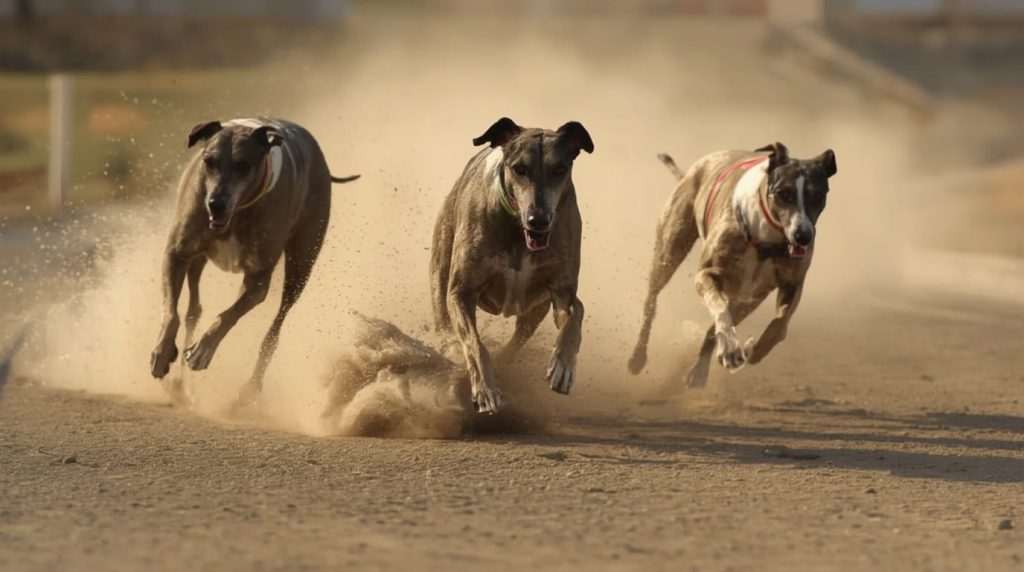
Tasmanian Greyhound Feature Racing Calendar
Beyond the three track-specific Group races, Tasmania runs a broader feature calendar that spans the full season from August through to July. The program is modest by mainland standards — Victoria’s Group 1 schedule alone outweighs everything Tasmania contests in a year — but it is coherent and well-structured, with each major distance category getting its own championship event and the summer period anchored by a concentrated festival of racing across all three venues.
The season opens in August and September with the distance championships. The Tasmanian Sprint Championship runs over 515m at Launceston and typically draws the strongest local fields of the early season, while the Tasmanian Distance Championship, run over 720m, identifies the state’s best staying dogs before the summer feature program begins. Both operate on a heats-and-final format and serve as form guides for what follows later in the calendar.
The core of the feature season runs from November through to February, centred on the Summer Racing Festival:
- Hobart Thousand — Group 1, 461m, $100,000, December (Hobart)
- Launceston Cup — Group 2, 515m, February (Launceston)
- Devonport Chase — Group 3, 461m, January (Devonport)
- Dennis Collis Memorial — B64 Grade 5, 461m, January (Hobart)
- Ladbrokes Chase — Group 3, 461m, January (Hobart on behalf of NWGRC)
- Tasmanian Breeders Classic — listed staying feature, November (Hobart)
- Tasmanian Gold Cup — sprint feature, 461m (Hobart)
- Illingworth Classic — sprint feature (Launceston)
- Tasmanian Derby and Oaks — age classics for younger dogs (Launceston)
Supporting the feature program is the GCA Group Race Calendar, which integrates Tasmanian Group events into the national schedule and determines interstate travel patterns. The Hobart Thousand consistently attracts the largest mainland contingent — typically five or more Victorian-trained finalists — while the Launceston Cup and Devonport Chase draw smaller but still competitive interstate fields.
The summer festival period also includes several named memorial races on Hobart Thousand final night — the Bob Brown Memorial Hobart Thousand Consolation, the Billy Grice Memorial and the Denise Fysh Memorial — all run over 461m on the same card. These support races give a broader field of starters a Group night experience even without making the Thousand final itself, and they have their own following among local racing fans who track the careers of the dogs that contest them year after year.
The Phase-Out — Tasmanian Greyhound Racing Ends 30 June 2029
Greyhound racing Tasmania is fully operational in 2026. Fields are running, TAB markets are live, the Group race calendar is being contested, and the three tracks are hosting their scheduled meetings. That is the accurate picture for anyone looking to follow or bet on racing in the state right now. The context that cannot be separated from it is that the sport has a confirmed end date.
On 10 August 2025, Premier Jeremy Rockliff announced that the Tasmanian Government would phase out greyhound racing by 30 June 2029. The announcement came after a period of government review and — notably — less than a month after the Premier had publicly committed to the industry’s long-term sustainability, a reversal that drew sharp criticism from industry participants. The Greyhound Racing Legislation Amendments (Phasing Out Reform) Bill 2025 was introduced to Parliament on 6 November 2025 and passed the House of Assembly on 4 December 2025.
The legislation sets out a staged transition rather than an immediate closure. The key dates and measures are:
- 1 January 2026 — Breeding greyhounds for racing banned (with limited exceptions for existing pregnancies)
- Ongoing until 2029 — Racing continues under existing licensing; dogs already registered can race out their careers
- From 2026 — Dogs that have not raced for 12 months, or reach six years of age, must be retired and cannot be re-registered
- From 2026 — Owners must notify Tasracing before transferring dogs and obtain written approval before euthanising animals, except in veterinary emergencies
- 30 June 2029 — All greyhound racing in Tasmania ceases; penalties of up to $20,500 or six months imprisonment apply for conducting or participating in races after this date
The transition is overseen by the Tasmanian Racing Integrity Commissioner, Sean Carroll, who chairs the Greyhound Racing Transition Working Group — a body of industry representatives and animal welfare experts tasked with developing the full closure plan. A dedicated Parliamentary Committee receives quarterly progress reports. The government has committed $500,000 in the interim Budget to support implementation.
The welfare of dogs already in the system is central to the transition framework. Tasracing and the ORI are working with rehoming organisations to ensure all registered greyhounds are placed into homes or appropriate care before and after the June 2029 closure. The Greyhounds Tasmania website, developed by the three regional clubs, links to the Greyhound Adoption Program and interim desexing program for owners and trainers planning ahead.
Tasmania will not be the first jurisdiction to exit greyhound racing — the ACT ended the sport in 2018 — but it will be the largest, and the June 2029 deadline gives the industry three full racing seasons from the time of this writing to wind down in an orderly way. The Hobart Thousand, the Launceston Cup and the Devonport Chase will all be contested at least twice more before the lights go out at Elwick, Mowbray and Spreyton.
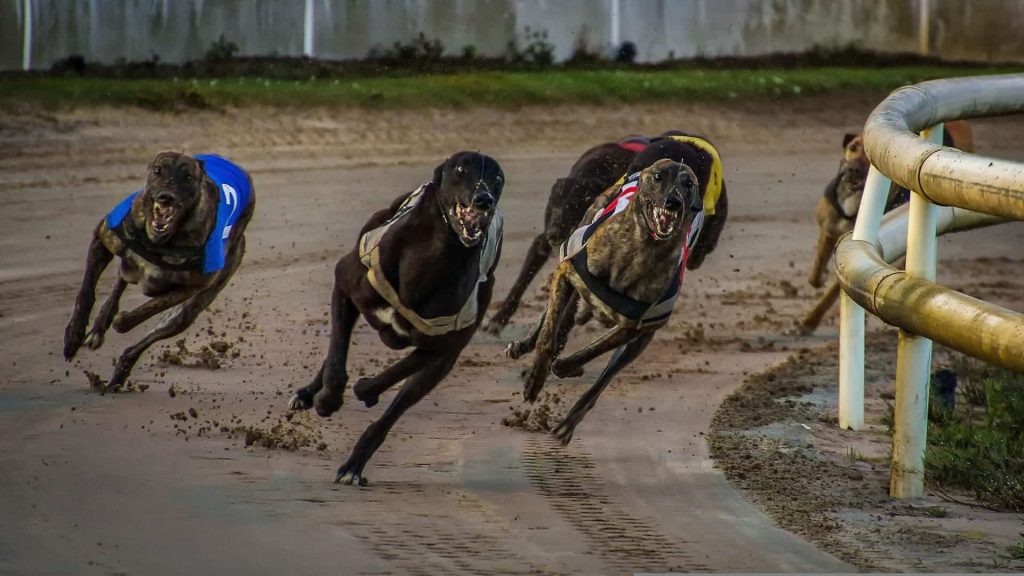
Where to Watch and Bet on greyhound racing Tasmania
Tasmanian greyhound racing is fully covered by Australia’s major licensed betting operators and broadcast platforms. Despite the state’s smaller scale relative to Victoria or NSW, all three tracks receive SKY Racing coverage and TAB markets, meaning punters anywhere in the country can follow and bet on Hobart, Launceston and Devonport meetings in exactly the same way they would for any mainland venue.
For fields, form and results, Tasracing’s own platform is the primary source:
- tasracing.com.au — official fields, race programs, results and news for all three tracks
- form.tasracing.com.au — FormPlus data platform with detailed form, replays and live vision for all Tasmanian racing
- greyhoundstasmania.com.au — industry hub run by the three regional clubs, linking to fields, the Greyhound Adoption Program and licensing information
- thedogs.com.au — national greyhound fields and form platform, updated after nominations close each Tuesday
Live streaming is available through SKY Racing, accessible via the SKY Racing app or through most licensed betting operators as a free product for account holders. Hobart Thursday night meetings — particularly during the Hobart Thousand series in December — receive SKY 1 coverage, giving them the broadest national audience of any Tasmanian greyhound card.
For betting, all major Australian licensed operators carry Tasmanian greyhound markets. Fixed odds are typically available around 20 minutes before jump time on standard meetings, with Sportsbet and Bet365 opening markets approximately 24 hours in advance for feature races. TAB tote markets run on all three tracks as standard. The standard national responsible gambling support line — Gambling Help: 1800 858 858 — applies across all operators and all states, including Tasmania.
One practical note worth flagging: given the breeding ban now in effect and the confirmed June 2029 closure, the depth of Tasmanian fields will gradually thin over the remaining seasons as the pool of registered dogs contracts. Interstate raiders will continue to supplement local fields for the major Group races, but graded meetings at Devonport in particular may see smaller fields in the 2027 and 2028 seasons than punters are currently accustomed to. That is worth keeping in mind when assessing form and market depth on lower-grade Tasmanian cards in the final years of the sport’s operation there.
Greyhound racing in Tasmania — Verdict
Tasmania occupies a unique position in the Australian greyhound racing landscape. It is the smallest of the active racing states by track count and meeting volume, but it hosts the sport’s oldest classic, runs three well-established venues with genuine history behind them, and produces a feature racing calendar that consistently attracts mainland challengers. The Hobart Thousand is not a parochial state final — it is a genuine national-quality Group 1 event that Victorian trainers plan campaigns around months in advance. That distinction matters, and it is worth stating clearly.
The phase-out changes the context of everything written on this page without invalidating any of it. Racing in Tasmania is real, active and competitive through to June 2029. The Group race calendar will run in full for at least two more complete seasons. The TAB markets are live, the SKY Racing coverage is in place, and the dogs currently registered in the state will race out their careers under the same rules and conditions that have always applied. For punters and racing followers, the practical experience of following Tasmanian greyhound racing in 2026 is no different from what it was two years ago.
What the phase-out does change is the longer-term picture. The breeding ban means the local dog population will contract steadily from 2026 onward. Graded fields at Devonport and in the lower grades at Hobart and Launceston will thin before the Group races do — interstate raiders will prop up the feature events longer than they sustain the Tuesday night card at Spreyton. Anyone following Tasmanian racing closely over the next three years should track field sizes and scratching rates on non-feature meetings as a leading indicator of how the transition is progressing.
For now, the Hobart Thousand remains the reason to pay attention to Tasmanian greyhound racing above all else. Bernie Burrow’s December 2024 victory — a local dog, a Hall of Fame trainer, a track he had been specifically campaigned at — was the kind of result the race has always been capable of producing, and will continue to produce for as long as it runs. The 2025 edition will be the 88th running of Australia’s oldest greyhound classic. Whatever follows June 2029, that history does not disappear.
FAQ
What is the governing body for greyhound racing in Tasmania?
Greyhound racing in Tasmania is administered by Tasracing, the state’s single governing body for all three racing codes — greyhound, thoroughbred and harness. Integrity functions including licensing, drug testing, stewarding and investigations are handled separately by the Office of Racing Integrity (ORI), a division of the Tasmanian Department of Natural Resources and Environment.
How many greyhound tracks are there in Tasmania?
Tasmania has three active greyhound tracks — Hobart (Tattersall’s Park at Elwick), Launceston (Mowbray) and Devonport (Spreyton Showgrounds). All three operate on sand surfaces and share their venues with thoroughbred and harness racing codes. The 2025/26 season schedules 155 greyhound meetings across the three venues.
What is the Hobart Thousand?
The Hobart Thousand is Tasmania’s premier greyhound race and the oldest continuously run greyhound classic in Australia. First held in 1938, it is a Group 1 event run over 461m at Ladbrokes Park Elwick each December, carrying $100,000 to the winner. It operates on a heats-and-final format across two Thursday night cards. The 2024 edition was won by Bernie Burrow, trained by Mick Stringer, in a time of 25.49 seconds.
Is greyhound racing being banned in Tasmania?
Yes. The Tasmanian Government passed legislation in December 2025 to phase out greyhound racing by 30 June 2029. The sport is fully operational until that date — all three tracks are running, TAB markets are live and the full Group race calendar is being contested. A breeding ban has been in effect since 1 January 2026, meaning no new greyhounds can be bred for racing in the state. The transition is overseen by the Office of Racing Integrity and the Greyhound Racing Transition Working Group.
When does greyhound racing end in Tasmania?
Racing ceases on 30 June 2029 under the Greyhound Racing Legislation Amendments (Phasing Out Reform) Act. After that date, conducting or participating in greyhound races in Tasmania carries penalties of up to $20,500 or six months imprisonment. The Hobart Thousand, Launceston Cup and Devonport Chase will each be contested at least twice more before the closure.
Where can I find Tasmanian greyhound fields and form?
Official fields and race programs are published at tasracing.com.au. Detailed form, replays and live vision are available through the FormPlus platform at form.tasracing.com.au. National greyhound form aggregator thedogs.com.au also carries Tasmanian fields after nominations close each Tuesday. Live streaming is available via SKY Racing and through most licensed Australian betting operators as a free product for account holders.
Can I bet on Tasmanian greyhound racing from interstate?
Yes. All major Australian licensed betting operators carry fixed odds and TAB tote markets on Hobart, Launceston and Devonport meetings. Fixed odds open approximately 20 minutes before jump time on standard meetings, with Sportsbet and Bet365 releasing markets around 24 hours in advance for feature races including the Hobart Thousand.