
Greyhound Racing
Albion Park
Brisbane’s Historic Home of Greyhound Racing · 1993–2025 · Now Racing at The Q
18+ | Gamble responsibly | For free support call Gambling Help 1800 858 858 | gamblinghelponline.org.au
Albion Park was Queensland’s premier greyhound racing venue for over three decades — from its first meeting on 11 February 1993 to its final Group 1 events in January 2025. Located on Amy Street in Breakfast Creek, four kilometres from the Brisbane CBD, the track hosted every significant greyhound race in the state: the Brisbane Cup, the Gold Cup, the Gold Bullion (formerly the Winter Cup), the National Sprint Championship, the Golden Easter Egg qualifiers, and the Queensland carnival that drew interstate entries from Victoria, NSW, and beyond.
That era is now over. The Q — an $85–90 million, three-track facility in Purga, south of Ipswich — opened on 4 April 2025 and has assumed Albion Park’s position as Queensland’s premier venue. The Group 1 races have moved. The Brisbane Cup, with prize money boosted to $650,000, now runs at The Q. The Thursday night feature meetings that defined Albion Park’s weekly rhythm for three decades have relocated. The venue’s final Thursday night feature card ran in early May 2025, and the last scheduled greyhound meeting at Albion Park took place on 6 July 2025 — though Racing Queensland’s calendar shows a reduced schedule of Tuesday meetings continuing into 2026 during the transition period.
This page covers Albion Park’s history and significance, the track layout that produced five racing distances unique among Australian metropolitan venues, the major races that defined the Queensland greyhound calendar, and the transition to The Q that marks the next chapter for greyhound racing in southeast Queensland.
| Detail | Info |
|---|---|
| Location | Amy Street, Breakfast Creek, QLD 4010 |
| Opened | 11 February 1993 |
| Previous venue | The Gabba (1972–1993) |
| Operated by | Brisbane Greyhound Racing Club (now Queensland Greyhound Racing Club) |
| Surface | Loam |
| Circumference | 437m |
| Distances | 331m, 395m, 520m, 600m, 710m |
| Group 1 races hosted | Brisbane Cup (520m), Gold Cup (710m), Gold Bullion/Winter Cup (520m) |
| Final Group 1 events | 30 January 2025 — Gold Cup (Ethanol Water), Gold Bullion (Good Odds Cobber) |
| Final feature meeting | Early May 2025 (Thursday night) |
| Last scheduled meeting | 6 July 2025 (reduced Tuesday schedule continued into 2026) |
| Successor venue | The Q — Purga, Ipswich ($85–90M, opened 4 April 2025) |
| Broadcast | SKY Racing — all meetings televised nationally |
History — The Gabba to Albion Park to The Q
Brisbane greyhound racing did not start at Albion Park — it started at The Gabba, the sporting ground that most Australians associate with AFL and cricket rather than greyhound racing. From 1972 to 1993, The Gabba hosted night greyhound meetings on a track built around the outside of the sporting oval. Thursday nights at The Gabba were a Brisbane institution — the dogs running on the same patch of ground where Sheffield Shield cricket was played during the day and the Brisbane Lions would later make their AFL home.
The arrangement ended in the early 1990s when the Queensland Government decided to expand The Gabba’s capacity for cricket and AFL. The greyhound track, which occupied the perimeter of the oval, was incompatible with the redevelopment plans. Greyhound racing needed a new home — and it needed one without interrupting the racing calendar.
The move — February 1993
The transition was remarkably clean. The Gabba hosted its final greyhound meeting on 4 February 1993. One week later — 11 February 1993 — Albion Park staged its first. No gap in the racing schedule, no interim venue, no period of displacement. The greyhounds raced at The Gabba on Thursday and raced at Albion Park the following Thursday. Bob Lambert, then CEO of the Brisbane Greyhound Racing Club, later recalled that the initial move was “very well-received” — the Albion Park track was a significant upgrade over The Gabba surface, and the expanded facilities allowed Monday night meetings to be added alongside the established Thursday schedule, doubling the racing frequency.
The new venue was purpose-built for greyhound racing rather than adapted from existing sporting infrastructure — a distinction that shaped the next three decades. At The Gabba, the greyhound track was a secondary use of a space designed for cricket and football. At Albion Park, everything — the track geometry, the surface, the starting boxes, the lure system, the spectator facilities — was engineered specifically for Albion Park greyhound racing from the ground up.
The golden era — 1993 to 2020s
Albion Park’s position as Queensland’s premier venue was never seriously contested. Regional tracks operated at Ipswich, Bundaberg, Townsville, Rockhampton, and Capalaba, but Albion Park held all Group racing, all national feature qualifiers, and the overwhelming majority of the state’s prize money. The Brisbane Cup, the Gold Cup, the Winter Cup (later renamed the Gold Bullion), the National Sprint Championship, and the Golden Greys Carnival — every race that defined Queensland greyhound racing at the national level was contested at Amy Street.
The track underwent its most significant upgrade in October 2014, when the racing surface was reconstructed and the distances were reconfigured. All regular meetings were temporarily moved to Ipswich while the works were completed. When Albion Park reopened, the five-distance layout that would become its most distinctive characteristic — 331m, 395m, 520m, 600m, and 710m — was established. No other metropolitan greyhound track in Australia offered five racing distances, and the variety became a defining feature that shaped how Queensland-trained greyhounds developed compared to their interstate counterparts.
The Brisbane Cup — from $100,000 to $1 million
The Brisbane Cup’s journey tells the story of Albion Park’s evolution in miniature. First run as the Gabba Sprint Championship in 1972, renamed the Brisbane Cup in 1977, the race moved with everything else to Albion Park in 1993 and grew steadily in status and prize money over the following decades. Originally a December event, the Brisbane Cup was repositioned to July and elevated to the centrepiece of the Queensland winter carnival. Prize money climbed from five figures in the early years to $100,000, then to $250,000, and ultimately to $1 million — though the million-dollar edition would not be held at Albion Park. That milestone belongs to The Q.
The final chapter — 2025
The announcement that greyhound racing would relocate from Albion Park to a purpose-built facility at Purga had been part of Queensland racing planning for years — through multiple proposals, site changes, name changes, and budget revisions. The Greater Brisbane Greyhound Centre concept, first announced in 2019, eventually became The Q — an $85–90 million, three-track complex that promised world-class facilities with greyhound welfare at the centre of its design.
The final Group 1 events at Albion Park were run on 30 January 2025 during the Golden Greys Carnival — the Gold Cup (won by Ethanol Water over 710m) and the Gold Bullion (won by Good Odds Cobber over 520m). Both races carried the weight of finality that only a last-ever running at a venue can produce. Good Odds Cobber’s Gold Bullion victory was described as a determined front-running display — a fitting farewell from a fan favourite on the last night of Group 1 racing at a venue that had hosted hundreds of Group finals over 32 years.
The Q opened on 4 April 2025. Albion Park’s Thursday night feature meetings ended in early May. The last scheduled meeting ran on 6 July 2025 — a Sunday card that closed the book on 32 years of continuous racing at Amy Street, though a reduced Tuesday schedule has continued into 2026 as part of the transition logistics. The Albion Park site continues to host harness racing through the Harness Racing Club, but the Albion Park greyhound racing chapter — from that first meeting in February 1993 to that final Sunday in July 2025 — is effectively complete.
Track Layout and Distances
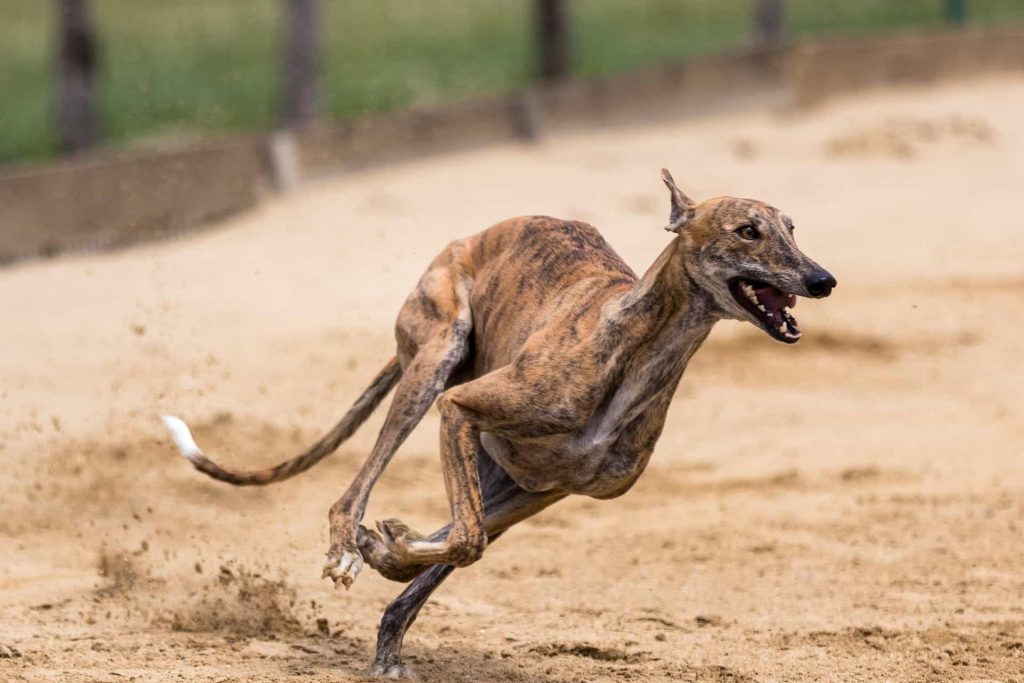
Albion Park’s most distinctive feature among Australian metropolitan greyhound venues was the five-distance layout — 331m, 395m, 520m, 600m, and 710m on a loam surface with a 437-metre circumference. No other metro track in the country offered this range. Sandown Park races over two distances. The Meadows over two. Wentworth Park over two. Angle Park over two. Albion Park offered five — a variety that shaped how Queensland greyhounds were trained, raced, and assessed in ways that the two-distance model used everywhere else did not replicate.
331m — the short sprint
The 331m was a pure speed test — one turn, minimal tactical requirement, over in less than 19 seconds at the top level. The distance favoured greyhounds with explosive box speed and the acceleration to clear the field before the turn, because the run to the line after the bend was too short for any meaningful positional recovery. A greyhound that missed the start over 331m was effectively racing for minor placings from the first stride.
For punters, the 331m was the distance where box draw mattered most. Inside boxes — particularly box 1 — dominated the strike rate statistics because the shortest path to the turn from inside was disproportionately advantageous on a distance this short. The 24% strike rate that box 1 recorded at Albion Park across all distances was even more pronounced over 331m specifically.
395m — the middle sprint
The 395m added enough distance beyond the 331m to allow greyhounds with slightly less early speed but stronger mid-race pace to compete. The turn dynamics were similar to the 331m — one turn with the start positioned further back on the track — but the extra 64 metres of running meant that a greyhound outpaced early had a realistic window to recover through the straight. Not a wide window — 395m is still a sprint — but wider than the 331m allowed.
The 395m occupied a niche that most Australian tracks do not cater for — too short for a standard 500m+ sprinter and too long for a pure 300m dash specialist. Queensland trainers used the distance to assess where a greyhound’s speed profile sat before committing to either shorter or longer trips, and some dogs found their best form specifically at 395m without excelling at either extreme.
520m — the standard sprint
The 520m was the feature distance at Albion Park — the trip over which the Brisbane Cup, the Gold Bullion, the National Sprint Championship, and the majority of Group and Listed races were contested. Two turns, a pace-testing middle section, and a run to the line that rewarded greyhounds with both speed and stamina. This was the distance that determined a greyhound’s quality in Queensland racing — the benchmark against which every sprinter was measured.
Box draw tendencies over the 520m followed the pattern common to two-turn tracks: inside boxes held a statistical advantage across all conditions, with box 1’s 24% strike rate reflecting the shorter path to the first turn and the rail position through both bends. Outside boxes were not uncompetitive — greyhounds with sufficient early speed could overcome the wider path — but the structural advantage of the inside draws was consistent and measurable over large samples.
The track record over 520m was held by Sennachie, who ran 29.38 seconds winning the 2019 Brisbane Cup — a time that stood as the benchmark through to the venue’s final years.
600m — the middle distance
The 600m was the distance that no other Australian metropolitan track offered — too long for a sprint, too short for a traditional staying trip. It occupied a space in the racing programme that allowed greyhounds with genuine pace but the ability to sustain it beyond the standard 520m to demonstrate an ability that did not fit neatly into the sprint-or-stay categories used everywhere else.
The National Distance Championship qualifier at Albion Park ran over 600m, making it the distance that connected Queensland’s staying talent to the national carnival. A greyhound that could win over 600m at Albion Park demonstrated the speed to compete at sprint trips and the stamina to handle the staying events — a dual capability that the 600m tested more precisely than either the 520m sprint or the 710m stay.
710m — the staying trip
The 710m was the longest distance at Albion Park and the trip over which the Gold Cup — the sole Group 1 staying event in Queensland — was contested. Multiple turns, a true test of stamina, and a race dynamic that differed fundamentally from the sprints: positional patience, energy conservation through the middle stages, and the ability to produce a sustained finishing effort after 40+ seconds of racing.
Staying races at 710m attracted a smaller but dedicated subset of trainers and punters — those who understood that form over 520m did not automatically translate to 710m ability, and that the physical and tactical demands of the longer trip produced a different hierarchy among greyhounds. A dog that dominated the sprints could struggle to run out a strong 710m, and a staying specialist that looked moderate over 520m could transform into a different animal over the extra distance.
The five-distance legacy
The five-distance layout was not just a scheduling convenience — it influenced how Queensland greyhounds were developed from their earliest racing days. A trainer in Victoria has two distances at Sandown Park to assess a greyhound’s aptitude. A trainer in Queensland had five distances at Albion Park to find where each dog performed best. The result was a more nuanced assessment pathway that could identify a greyhound’s optimal distance with greater precision — and that produced a Queensland racing culture where versatility across distances was valued alongside raw speed at any single trip.
The Q has inherited the responsibility of offering a range of distances, though whether it replicates the exact five-distance model of Albion Park or introduces its own configuration is part of the ongoing transition. What cannot be replicated at any new venue is the 32 years of track-specific form data, track records, and the institutional knowledge that punters and trainers accumulated at Albion Park — knowledge that will take years of racing at The Q to rebuild from scratch.
Major Races — The Group 1 Calendar and Final Editions at Albion Park
Albion Park greyhounds hosted three Group 1 events — the Brisbane Cup, the Gold Cup, and the Gold Bullion (formerly the Winter Cup). Together they formed a racing calendar that gave Queensland three national-calibre features across two distances and two seasons. All three have now moved to The Q, but their history belongs to Albion Park — and the final editions at the venue carry a significance that ordinary Albion Park greyhounds results do not.
| Race | Group | Distance | Season | First Prize (final Albion Park edition) | Final Albion Park Winner |
|---|---|---|---|---|---|
| Brisbane Cup | 1 | 520m | July (winter) | $250,000 | Run at Albion Park through 2024 — 2025 edition moved to The Q at $650,000 |
| Gold Cup | 1 | 710m | January (summer) | $100,000 | Ethanol Water (30 January 2025) |
| Gold Bullion | 1 | 520m | January (summer) | $100,000 | Good Odds Cobber (30 January 2025) |
Brisbane Cup — Queensland’s premier sprint
The Brisbane Cup is the race most closely associated with Albion Park — the flagship event that defined the Queensland winter carnival and attracted the strongest interstate fields of any race on the state calendar. First run as the Gabba Sprint Championship in 1972, renamed the Brisbane Cup in 1977, and relocated to Albion Park in 1993 along with everything else, the race grew from a local feature into one of the most significant sprint events in national greyhound racing.
The prize money trajectory tells the story of the race’s rising status:
- 1970s–1990s — five-figure prize money, predominantly local fields
- 2000s — climbed to $75,000, began attracting regular Victorian entries
- 2010s — reached $100,000 and established itself as a genuine Group 1 draw
- 2024 — $250,000, the richest Brisbane Cup at Albion Park, won by a field that included representatives from four states
- 2025 — moved to The Q at $650,000, with reports of a $1 million target
The 2024 Brisbane Cup was the last edition at Albion Park — though the race’s identity is not defined by the venue. The Brisbane Cup is now a Q event, and the boosted prize money ensures it will attract deeper fields than even the strongest Albion Park editions produced.
Gold Cup — the staying test
The Gold Cup was Queensland’s only Group 1 staying race — contested over 710m during the Golden Greys summer carnival in January. Where the Brisbane Cup tested raw sprint speed, the Gold Cup tested stamina, tactical awareness, and the ability to sustain pace through multiple turns over 40+ seconds of racing.
Ethanol Water’s victory on 30 January 2025 — a front-running display in a time of 41.57 seconds during the heats, followed by the final — was the last Group 1 performance the Albion Park 710m would ever produce. The staying trip was the distance that most clearly separated Albion Park from venues like Sandown or Wentworth Park, where staying races are contested over different configurations on different surfaces. The 710m at Albion Park had its own character, its own form lines, and its own hierarchy of champions. That body of knowledge — accumulated over decades of staying races on the same surface, the same circumference, the same lure — ended with Ethanol Water’s run.
Gold Bullion — the sprint companion
Originally known as the Winter Cup, rebranded as the Gold Bullion, this Group 1 event paired with the Gold Cup on the Golden Greys carnival’s headline night — giving January’s feature card two Group 1 events across two distances on the same evening. The Gold Bullion covered 520m, the same distance as the Brisbane Cup but in a different season with a different competitive landscape.
Good Odds Cobber’s victory in the 2025 Gold Bullion was described as a determined front-running display — a characterisation that understates what the moment represented. This was not just a Group 1 win. It was the last Group 1 event ever held at Albion Park. The last time a greyhound broke from the boxes and crossed the finishing line first in a Group 1 race at Amy Street. For Frank and Tracey Hurst, Good Odds Cobber’s connections, the victory meant prize money and prestige. For the venue, it meant a full stop.
Beyond Group 1 — the supporting features
Albion Park’s feature calendar extended well beyond the three Group 1 events. The supporting programme filled the gaps between the headline races and provided a pathway for Queensland greyhounds to progress toward Group company.
- National Sprint Championship — the Queensland heat was contested at Albion Park over 520m, with the winner earning a place in the national final
- Golden Ticket — Group 3 sprint over 520m during the Golden Greys carnival, positioned as a lead-up to the Gold Bullion
- Flying Amy Classic — Group 2 sprint named after one of Queensland’s most celebrated greyhounds
- Queensland Derby — age-restricted feature identifying the best young sprinters in the state
- Queensland Oaks — the female equivalent of the Derby
- Albion Park Cup — Listed race providing a local feature outside the carnival periods
These races collectively created a year-round programme where Queensland trainers could target Group and Listed racing every month rather than concentrating an entire season’s ambitions into two carnival periods. The pathway — grading races on Monday and Wednesday, stronger fields on Thursday, feature heats and finals on carnival nights — gave every level of greyhound a structured route from maiden racing to Group company. That pathway now runs through The Q, but its architecture was built at Albion Park.
The Q — Queensland’s New Home
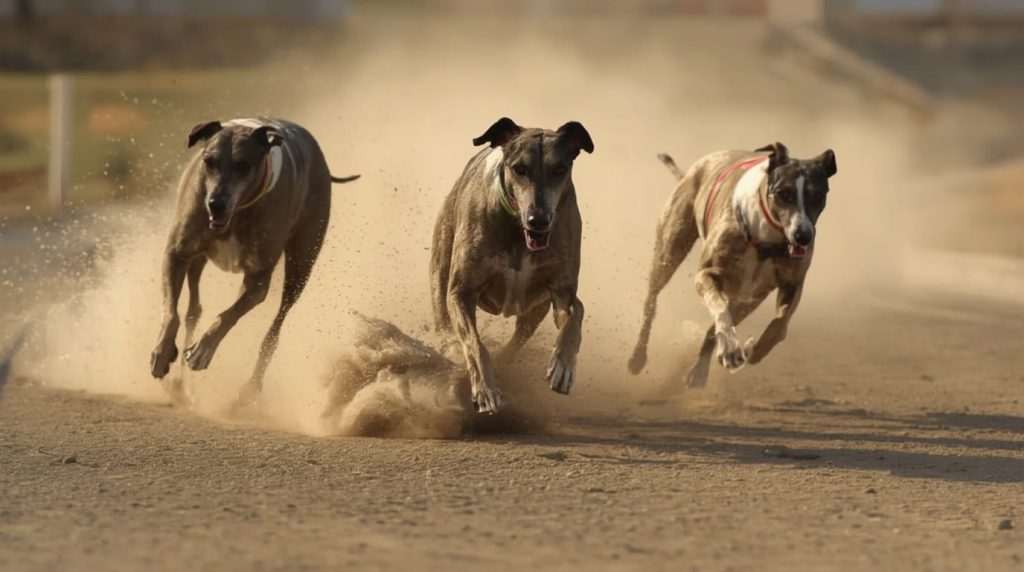
The Q is what happens when a state government decides that Albion Park greyhound racing infrastructure should be built from scratch rather than incrementally upgraded over decades. Located in Purga, south of Ipswich — roughly 45 minutes from the Brisbane CBD — the $85–90 million facility opened on 4 April 2025 and represents the single largest investment in greyhound racing infrastructure in Australian history.
The project was not a quick decision. Queensland had been planning a new premier greyhound venue since at least 2011, when Racing Queensland launched an infrastructure review that examined sites at Deagon (north of Brisbane Airport), Logan, and eventually Purga. The Greater Brisbane Greyhound Centre concept was announced in 2019 at $39 million. By the time construction began, the budget had more than doubled and the vision had expanded from a single replacement track to a three-track complex with welfare facilities that no existing Australian venue could match.
Three tracks, not one
| Track | Type | Purpose |
|---|---|---|
| Q1 Lakeside | Two-turn course | Feature racing — Brisbane Cup, Gold Bullion, Group events, Saturday night metro meetings |
| Q2 Parklands | Two-turn course | Standard grading meetings, midweek racing, development-level events |
| Q Straight | Straight track | Sprint racing over 300m+ with no turns — a format unique among Queensland’s major venues |
The three-track layout is the most significant structural difference between The Q and Albion Park. Albion Park had one track with five distances. The Q has three separate tracks, each designed for a different racing purpose. The straight track is the novelty — straight-track racing has a dedicated following in Victoria (Healesville) and NSW (Richmond), but Queensland has never had a purpose-built straight track at its premier venue. The format eliminates the first-turn bias that dominates one-turn and two-turn racing, which means box draw becomes less influential and raw speed in a straight line — without the ability to use the rail or cut corners — determines the result.
The separation of feature racing (Q1 Lakeside) from grading meetings (Q2 Parklands) is a practical improvement over Albion Park’s single-track model. At Albion Park, the same surface hosted everything from Monday night maiden races to the Brisbane Cup final. Wear patterns from high-frequency use affected the track condition for feature nights, and the surface could change noticeably between early and late races on a heavy-use card. At The Q, the feature track can be maintained to a higher standard because it carries fewer total meetings — the everyday racing load is distributed to Q2 Parklands while Q1 Lakeside is preserved for the occasions that demand the best possible surface.
Welfare at the centre
The Q was designed with greyhound welfare as a foundational principle rather than an afterthought — a reflection of the increased scrutiny the industry has faced nationally since the 2015 live-baiting scandal and the ongoing pressure from animal welfare advocates. The facility includes on-site veterinary facilities, swimming pools for greyhound rehabilitation, and kennelling that meets contemporary welfare standards. The track designs themselves incorporate safety features — camber, surface composition, turning radius — informed by injury data collected across Australian greyhound racing over the past decade.
Whether The Q delivers on the welfare promise is a question that years of racing data will answer — track safety is measured in injury rates over thousands of races, not in design specifications on paper. But the investment in welfare infrastructure is genuine and visible in a way that incremental upgrades to existing venues cannot match.
Prize money — the financial leap
The move to The Q has coincided with significant prize money increases that reshape Queensland’s position in the national greyhound racing economy.
| Race | Last Albion Park edition | First Q edition | Increase |
|---|---|---|---|
| Brisbane Cup | $250,000 | $650,000 | +160% |
| Gold Bullion | $100,000 | TBC (2026) | Expected increase |
| Gold Cup | $100,000 | TBC (2026) | Expected increase |
The Brisbane Cup at $650,000 — with reports of a $1 million target — transforms the race from a strong Group 1 into one of the richest greyhound races in Australia, competitive with the Melbourne Cup at Sandown and The Phoenix at The Meadows. This level of prize money changes the interstate calculation for trainers: a Victorian or NSW operation that might have bypassed the Albion Park Brisbane Cup at $250,000 will treat a $650,000 race at The Q as a mandatory calendar entry. Deeper fields mean better racing, better racing means more betting interest, and more betting interest sustains the prize money. The cycle is self-reinforcing — if the facilities and the prize money deliver, The Q has the financial architecture to establish itself as a genuine rival to Victoria’s dominance of the national Group 1 calendar.
The location question
The most frequently discussed trade-off in The Q transition is location. Albion Park sat four kilometres from the Brisbane CBD — accessible by public transport, close to established dining and entertainment precincts, and embedded in the urban fabric of inner-city Brisbane. The Q is in Purga, roughly 45 minutes from central Brisbane by car and significantly less accessible by public transport. For the casual racegoer who attended Albion Park as part of a night out in Brisbane, the trip to Purga is a different proposition entirely.
For trainers, the relocation has practical implications beyond race nights. Kennel operations, trial schedules, and daily logistics are all affected by the venue change. SA-based trainers accustomed to flying into Brisbane and having the track a short cab ride from the airport now face a longer ground transfer. The Q’s facilities may be superior in every measurable way — but the convenience of Albion Park’s inner-city location is something that a purpose-built venue 45 minutes out of town cannot replicate regardless of how much is invested in the facility itself.
For punters who bet off-course — the majority of the betting market — the location is irrelevant. SKY Racing broadcasts from The Q exactly as it did from Albion Park. The TAB app streams from The Q. The odds market functions identically. The physical distance between the track and the Brisbane CBD matters only to on-course attendees and connections — for everyone else, the racing product is the same product delivered through the same channels, from a new address.
Albion Park’s Legacy — What the Venue Meant
Albion Park was not just a greyhound track — it was the venue that shaped Queensland greyhound racing into what it became nationally. Three decades of continuous operation at a single purpose-built facility created an ecosystem: trainers built their programmes around Albion Park’s five distances, punters accumulated decades of track-specific knowledge, breeding decisions were influenced by what succeeded on the Albion Park loam, and Queensland’s position in the national greyhound hierarchy was defined almost entirely by what happened on Amy Street on Thursday nights.
The track records that stood
| Distance | Record Holder | Time | Year | Context |
|---|---|---|---|---|
| 520m | Sennachie | 29.38s | 2019 | Set winning the Brisbane Cup — the benchmark sprint performance at the venue |
| 710m | Ethanol Water | 41.57s | 2025 | Set in the Gold Cup heats — the last track record established at Albion Park |
| 331m | Various holders | Sub-19s | — | The shortest sprint produced the fastest, most explosive racing |
| 600m | — | — | — | The unique middle-distance trip that no other metro track offered |
Sennachie’s 520m record — 29.38 seconds, set in the 2019 Brisbane Cup — defined what world-class sprinting at Albion Park looked like. Trained by Steve White in South Australia, Sennachie combined Fernando Bale bloodlines with a racing style that used Albion Park’s two turns and long straight to devastating effect. The record stood through the venue’s final years, unchallenged even by the greyhounds that contested the richer, deeper fields of the 2024 Brisbane Cup.
The champions who defined the venue
Albion Park produced and hosted champions across eras — greyhounds whose careers were built on the Amy Street surface and whose form at the venue established their national reputations.
- Sennachie — the 520m track record holder and 2019 Brisbane Cup winner. The SA-trained sprinter demonstrated that interstate greyhounds could learn the Albion Park surface quickly enough to break records on it — a pattern that accelerated in the venue’s later years as prize money attracted deeper interstate fields.
- Dyna Tron — one of the most celebrated Queensland-trained greyhounds of the 2010s. Multiple Group winner at Albion Park whose career at the venue illustrated how the five-distance layout allowed trainers to find a greyhound’s best trip through progressive distance testing.
- Orchestrate — Tony Brett’s 2022 Brisbane Cup winner, representing the new generation of Queensland-trained sprinters who could compete with and beat the best interstate entries on home soil.
- Good Odds Cobber — the greyhound who wrote the final sentence in Albion Park’s Group 1 story. Frank and Tracey Hurst’s front-runner won the 2025 Gold Bullion on 30 January — the last Group 1 winner the venue would ever produce. The moment carried a weight that transcended the race result itself.
The five-distance influence on Queensland racing
The legacy of Albion Park’s five-distance layout extends beyond the venue itself — it influenced how an entire generation of Queensland greyhounds was developed. Trainers in other states work with two distances at their metropolitan track. Queensland trainers had five, which meant a greyhound that showed moderate ability over 520m could be tested at 395m (sharper sprint), 600m (middle distance), or 710m (staying) before a judgement was made about its future.
This produced a Queensland racing culture that valued distance versatility differently from Victoria or NSW. A greyhound that could win over 395m and 600m at Albion Park demonstrated a breadth of ability that the two-distance model at Sandown or Wentworth Park could not test. The result was Queensland-trained greyhounds that occasionally surprised interstate rivals by competing effectively across a wider range of trips than their form at any single distance would suggest.
Whether The Q preserves this five-distance development pathway or introduces its own distance model will influence how Queensland racing evolves in the next decade. The three-track layout — Q1 Lakeside, Q2 Parklands, and Q Straight — has the physical capacity to offer multiple distances across its facilities. But the specific combinations, and whether they replicate the 331m-to-710m range that made Albion Park unique, will determine whether the five-distance legacy continues or becomes a historical footnote.
The cultural footprint
Albion Park’s significance extended beyond racing form and track records. For 32 years, the venue was a gathering point for the Queensland greyhound community — trainers, breeders, punters, and spectators who came to Amy Street not just for the racing but for the social infrastructure that formed around it. Thursday nights at Albion Park were a routine for generations of Brisbane racing families. The restaurant overlooking the track, the TAB area where regulars occupied the same seats meeting after meeting, the bookmakers’ ring where familiar faces set familiar markets — these elements cannot be relocated to a new venue. They can be rebuilt over time, but the specific community that Albion Park sustained was a product of place and habit that three decades of consistency created.
The Q will build its own community, its own Thursday night regulars, its own trackside traditions. That process started on 4 April 2025 and will take years to develop. What Albion Park leaves behind is not just a racing record — it is the proof that a single venue, maintained consistently and programmed thoughtfully, can anchor an entire state’s greyhound racing culture for a generation. The Q inherits that responsibility. Whether it fulfils it depends on the next 32 years, not the first.
How to Watch and Bet on the Q and Albion Park Greyhound Racing
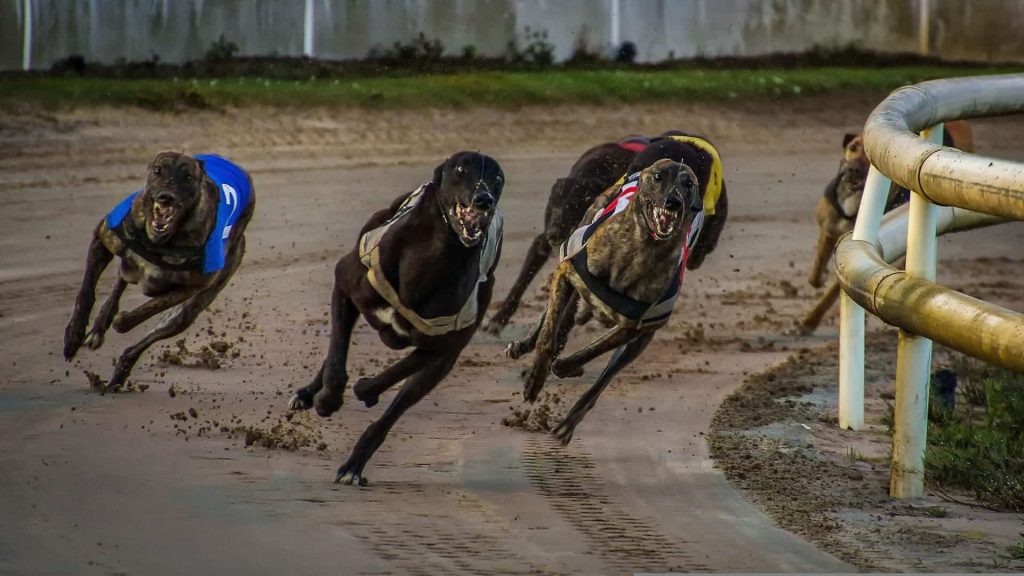
The transition from Albion Park to The Q changed the venue — it did not change the viewing or betting infrastructure. Every meeting at The Q is broadcast through the same SKY Racing channels, streamed through the same TAB apps, and available through the same bookmakers that carried Albion Park racing for three decades. A punter who watched Thursday nights at Albion Park from their lounge room in Melbourne sees the same product from the same broadcast team on the same channel — from a different track.
Watching The Q
| Method | What you need | Coverage |
|---|---|---|
| SKY Racing (SKY 1 or SKY 2) | Foxtel, Kayo Sports, or a venue with SKY Racing screens | All meetings — every race at Q1 Lakeside, Q2 Parklands, and Q Straight |
| TAB app | A funded account with your state TAB operator | Live streaming of all Queensland meetings — free with a funded account |
| On-course at The Q | Physical attendance at Purga | Trackside viewing across all three circuits, hospitality facilities, TAB and bookmakers on course |
| Pub/club with SKY Racing | Any licensed venue with SKY Racing screens | Full coverage alongside interstate and international meetings |
The SKY Racing broadcast team provides the same pre-race analysis, form summaries, and market updates for The Q that they provided for Albion Park. The commentary team, the camera angles, and the production quality are consistent with the national standard — a meeting at Q1 Lakeside receives the same broadcast treatment as a meeting at Sandown Park or Wentworth Park.
For punters who relied on the TAB app to stream Albion Park meetings, the transition requires no action — The Q meetings appear in the app’s schedule alongside every other Australian meeting and stream identically. A funded TAB account provides live streaming without a separate SKY Racing subscription — the same access model that applied to Albion Park.
Betting on Queensland greyhound racing
All Queensland greyhound meetings — whether at Q1 Lakeside, Q2 Parklands, Q Straight, or the remaining regional tracks — are available through every licensed Australian bookmaker.
| Bookmaker | QLD coverage | Live streaming | Notes |
|---|---|---|---|
| TAB | All meetings — full market depth | Yes — with funded account | The default for tote betting and the broadest market |
| Sportsbet | All meetings — fixed odds | Via SKY Racing subscription | Competitive fixed odds, regular greyhound promotions |
| Ladbrokes | All meetings — fixed odds | Via SKY Racing subscription | Early morning prices, strong fixed-odds market depth |
| bet365 Australia | All meetings — fixed odds | Yes — with funded account | International brand with full Australian greyhound coverage |
| Neds | All meetings — fixed odds | Via SKY Racing subscription | Part of the Ladbrokes group — similar market depth |
The form reset — what punters need to know
The most significant practical impact of the Albion Park-to-Q transition for punters is the form reset. Thirty-two years of track-specific data at Albion Park — box draw statistics, distance records, track bias patterns, surface behaviour in different weather conditions — does not transfer to The Q. The new tracks have different geometries, different surfaces, different lure systems, and different box draw dynamics. A greyhound that consistently performed from box 1 at Albion Park’s 520m may find the Q1 Lakeside configuration rewards a different draw. A staying specialist whose 710m form at Albion Park was built on intimate knowledge of that specific track’s turns and camber faces a learning curve on The Q’s equivalent distance.
For punters, this reset period creates both risk and opportunity:
- Risk — applying Albion Park form assumptions to The Q produces unreliable assessments during the early months of racing. Box draw strike rates at The Q are being established from scratch. Track condition behaviour under different weather is unknown. The relationship between trial times and race performance has no baseline. Punters who bet Queensland racing on autopilot using patterns developed at Albion Park will find those patterns do not map to the new venue.
- Opportunity — the form reset creates a window where attentive punters can build knowledge of The Q faster than the broader market prices it in. A punter who watches the first 200 meetings at Q1 Lakeside with focused attention — tracking which boxes win, how the surface responds to rain, which trainers adapt quickly and which struggle with the new configuration — accumulates an edge that the historical data cannot provide and that casual punters relying on pre-transition assumptions will not have.
The first full year of racing at The Q — from the April 2025 opening through to the 2026 winter carnival — is the knowledge-building period that will define Queensland greyhound punting for the next decade. The punters who invest attention now, while the data is still thin and the market is still adjusting, will be the ones best positioned when the patterns solidify and the The Q’s racing character becomes established.
Attending The Q
For racegoers who previously attended Albion Park in person, The Q offers superior facilities in a less convenient location. The venue includes spectator areas across all three tracks, hospitality and dining, TAB facilities, bookmakers, and free parking. Entry to standard race meetings is free.
The 45-minute drive from Brisbane CBD — compared to Albion Park’s four-kilometre proximity — is the primary barrier for casual attendees. The Q is most accessible by car, with public transport options limited compared to the inner-city accessibility that Albion Park provided. For feature meetings — Brisbane Cup night, Gold Bullion carnival — the drive is a minor consideration given the quality of the racing on offer. For a casual Wednesday night card, the distance may discourage the spontaneous attendance that Albion Park’s location enabled.
Racing Queensland’s schedule shows meetings at The Q multiple times per week — Thursday and Saturday nights for metro racing at Q1 Lakeside, with Q2 Parklands handling the additional midweek and weekend schedule. The straight track operates on a separate timetable. The combined output across all three tracks produces more total racing than Albion Park delivered as a single venue — which means more opportunities for both attending and betting, spread across more sessions per week.
Frequently Asked Questions
Is Albion Park still racing greyhounds?
Albion Park’s final Thursday night feature meeting ran in early May 2025, and the last scheduled full meeting took place on 6 July 2025. However, Racing Queensland’s calendar shows a reduced schedule of Tuesday meetings continuing into 2026 as part of the transition logistics. The venue’s Group 1 events — the Brisbane Cup, Gold Cup, and Gold Bullion — have all moved permanently to The Q. Albion Park continues to host harness racing through the Albion Park Harness Racing Club.
What is The Q?
The Q is an $85–90 million, three-track greyhound racing facility in Purga, south of Ipswich, which opened on 4 April 2025. It replaces Albion Park and Ipswich as Queensland’s premier greyhound racing venue. The facility includes Q1 Lakeside (feature racing), Q2 Parklands (grading meetings), and Q Straight (straight-track racing) — three separate circuits designed for different racing purposes. The Brisbane Cup, Gold Cup, Gold Bullion, and all Group racing now run at The Q.
What distances did Albion Park race over?
Albion Park offered five racing distances — 331m, 395m, 520m, 600m, and 710m — on a loam surface with a 437-metre circumference. No other metropolitan greyhound track in Australia offered this range. The five-distance layout influenced how Queensland greyhounds were developed, allowing trainers to assess each dog’s optimal trip across a wider range than the two-distance models used at Sandown Park, The Meadows, Wentworth Park, and Angle Park.
Where is The Q located?
The Q is in Purga, south of Ipswich — approximately 45 minutes by car from the Brisbane CBD. The location is significantly less accessible than Albion Park’s inner-city position four kilometres from central Brisbane. The venue is most easily reached by car, with free parking available. Public transport options are limited compared to what Albion Park provided.
Has the Brisbane Cup moved to The Q?
Yes. The 2025 Brisbane Cup was the first edition held at The Q, with prize money boosted from $250,000 (the last Albion Park edition in 2024) to $650,000 — a 160% increase. Reports indicate a target of $1 million for the Brisbane Cup in future editions. The race retains its Group 1 status and its position as the centrepiece of the Queensland winter carnival.
What happened to the Brisbane Greyhound Racing Club?
The Brisbane Greyhound Racing Club and the Ipswich Greyhound Racing Club amalgamated to form the Queensland Greyhound Racing Club (QGRC), which now operates The Q. The merger consolidated the two clubs that had operated Queensland’s metropolitan greyhound racing into a single entity aligned with the single-venue model that The Q represents.
What is the 520m track record at Albion Park?
Sennachie holds the 520m track record at 29.38 seconds, set winning the 2019 Brisbane Cup. The record stood through to the venue’s final years, unchallenged even by the stronger fields attracted by the increased prize money in the 2020s. As a historical record, it will stand permanently — no future race at Albion Park will have the opportunity to break it.
Does Albion Park form translate to The Q?
Not directly. The Q has different track geometries, different surfaces, different lure systems, and different box draw dynamics across its three circuits. Box draw statistics, distance records, and track bias patterns accumulated over 32 years at Albion Park do not transfer to the new venue. Punters should treat the early months of racing at The Q as a form reset — building new track-specific knowledge from scratch rather than applying Albion Park assumptions to a venue that races differently.