
Greyhound Racing
Angle Park
South Australia’s Only Metro Track · 530m · 731m · Cardigan St, Adelaide · Racing Since 1972
18+ | Gamble responsibly | For free support call Gambling Help 1800 858 858 | gamblinghelponline.org.au
Angle Park is South Australia’s premier greyhound racing venue and the only metropolitan track in the state — every Group race, every feature final, and every significant event on the SA greyhound calendar runs here. Located on Cardigan Street off South Road in Adelaide, the track has hosted racing continuously since its first registered meeting on 20 April 1972, making it one of the longest-serving purpose-built greyhound facilities in the country. The Adelaide Cup — Group 1, $100,000 to the winner, the race that puts South Australian greyhound racing on the national stage — has been contested at Angle Park every year since the track opened.
For a state with a smaller greyhound racing footprint than Victoria, NSW, or Queensland, Angle Park punches above its weight in the national calendar. The track hosts three to four meetings per week across Monday nights, Thursday nights, Wednesday mornings, and Friday nights for feature racing — a frequency that provides regular racing opportunities for SA-trained greyhounds while attracting interstate entries for the feature events that carry national significance.
The venue operates under Greyhound Racing SA (GRSA), which manages all aspects of SA greyhound racing — from race programming and integrity through to welfare and licensing. Angle Park is GRSA-owned and operated, which means the track, the facilities, and the racing product are administered by a single body rather than split between a club and a regulatory authority as occurs in some other states.
| Detail | Info |
|---|---|
| Location | Cardigan Street (off South Road), Adelaide, SA |
| Opened | 20 April 1972 |
| Operated by | Greyhound Racing SA (GRSA) |
| Surface | Loam |
| Distances | 530m (sprint), 731m (staying) |
| Track type | One-turn, long home straight |
| Meetings | Monday night, Thursday night, Wednesday morning, Friday night (features) |
| Feature race | Adelaide Cup — Group 1, $137,000, 530m, October |
| Broadcast | SKY Racing — all meetings televised nationally |
| TAB | Full TAB facilities on course |
| Dining | Chasers Restaurant (trackside) |
| Parking | Free — inside the grounds |
| Public trials | Wednesday 6:00pm, Saturday/Sunday 7:00am |
Track Layout and Distances
Angle Park is a one-turn track — a configuration that favours early speed and clean runs to the first bend more heavily than the two-turn layouts used at most eastern seaboard venues. The distinction matters for punters because one-turn tracks produce different box draw biases, different racing patterns, and different types of winners than two-turn tracks like Sandown Park or Wentworth Park. A greyhound that wins from the front at Angle Park may struggle on a two-turn layout where mid-race positioning and second-turn ability matter more than pure early pace.
530m — the standard sprint
The 530m is the workhorse distance at Angle Park. The vast majority of races — grading events, feature heats, the Adelaide Cup, SA Anniversary Cup, Piping Shrike Feature, and most midweek cards — run over this trip. The Adelaide Cup switched from 515m to 530m in 2021, adding roughly half a second to winning times without changing the fundamental character of the race. It remains a speed test with a premium on early positioning.
The start is on the back straight. Angle Park greyhounds break from the boxes into a sweeping run toward the first turn — the only turn on the course — before straightening into a long home straight that rewards greyhounds with sustained speed rather than just early brilliance. The length of the home straight is one of Angle Park’s defining features: a greyhound that rounds the turn in fourth or fifth but has a strong finishing kick has more time to close the gap than it would on a tighter track with a shorter run to the line.
Box draw tendencies on the 530m
The one-turn configuration creates box draw patterns that differ from what punters accustomed to Victorian or NSW racing might expect:
- Dry, fast conditions — wider draws (boxes 6, 7, 8) carry a slight advantage. The sweeping approach to the first turn allows outside runners to maintain their speed without the compression that occurs on tighter bends. Dogs drawn wide can hold their line through the turn without being forced to check or shift — a luxury that two-turn tracks rarely provide from wide draws.
- Wet or heavy conditions — inside draws (boxes 1, 2, 3) regain the advantage. Wet loam slows the overall pace and tightens the field, which means the shorter path to the first turn from inside boxes translates into a more pronounced positional benefit. The rail run becomes the preferred line when the surface is holding greyhounds back.
- The middle draws — boxes 4 and 5 are the most neutral positions, performing consistently across conditions without the pronounced advantages or disadvantages of the extremes. In fields where the early speed map is unclear, middle box greyhounds often avoid the worst-case scenarios that can affect both inside (getting squeezed) and outside (running extra distance) draws.
Checking the track condition before a meeting — published on the GRSA website and updated on race day — adds a practical layer to box draw analysis that raw strike rate statistics from long-term averages do not capture. A box that wins 18% of races across all conditions might win 25% on dry tracks and 12% on wet ones. The condition on the day matters more than the historical average.
731m — the staying trip
The 731m distance starts on a different part of the track and involves two full circuits — transforming Angle Park from a one-turn sprint track into a two-turn staying test. The character of racing over 731m is fundamentally different from the 530m: early speed still matters for initial positioning, but the second circuit introduces tactical elements — settling behind the pace, conserving energy for the second turn, and timing the finishing effort — that the sprint trip does not require.
The 731m is used less frequently than the 530m but produces some of the most compelling racing at the venue. The Premier’s Cup — a feature event held on Adelaide Cup night — runs over this distance, and the SA St. Leger adds another staying feature to the annual calendar. Staying races attract a different profile of greyhound: dogs with the stamina to sustain speed over two turns and the racing intelligence to navigate traffic in a longer race where positional changes happen more gradually.
For punters, the 731m requires a different form assessment than the 530m. A greyhound’s recent form over sprint distances does not automatically translate to staying ability — and a dog stepping up from 530m to 731m for the first time is an unknown quantity over the longer trip regardless of how impressive the sprint form reads. Previous 731m form at Angle Park specifically is the most reliable indicator, because the two-turn layout at this distance plays differently from staying trips at other venues.
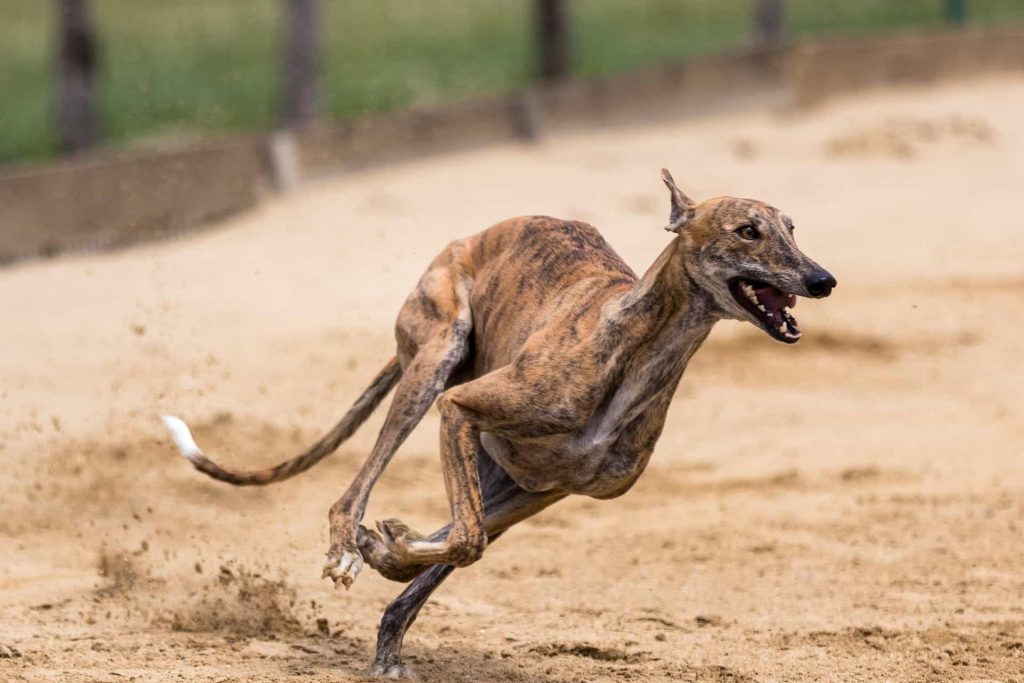
Race meetings — what runs when
Angle Park hosts three to four meetings per week across a structured weekly schedule where each session serves a different purpose in the SA racing ecosystem. Understanding which night produces which type of racing helps punters focus their attention on the sessions that match their betting approach — a Wednesday morning grading card and a Friday night feature meeting attract different fields, different form profiles, and different betting dynamics.
Monday nights
Monday night is a standard grading card — the bread-and-butter of the Angle Park weekly programme. Fields are predominantly SA-trained greyhounds competing in grading races across the 530m distance, with occasional 731m events mixed into the programme. The cards typically run 10 to 12 races, with grade 5 and grade 6 events forming the majority of the programme alongside higher graded races for dogs progressing through the ranks.
Monday nights are where the local SA form picture takes shape. The greyhounds that perform here — the consistent winners working their way through the grades, the dogs returning from spells, the first starters making their debut — are the ones that appear in feature heats later in the season. For punters who bet primarily on SA racing, Monday nights provide the form lines that everything else builds upon.
Wednesday mornings
The midweek morning session runs mixed-grade cards with a focus on providing racing opportunities for Angle Park greyhounds that need runs — dogs returning from injury, those between feature campaigns, and maidens gaining race experience. The fields are generally smaller and the betting turnover lower than the night meetings, which means price fluctuations can be more pronounced and early odds less reliable as indicators of market sentiment.
Wednesday mornings are not where the strongest SA greyhounds race — they are where the depth of the SA greyhound population gets its track time. For punters, the value in Wednesday mornings lies in spotting greyhounds on the way up before the market catches on — a maiden that wins impressively on a Wednesday morning and is nominated for a Thursday night grading race is the type of form line that rewards attention to the quieter sessions.
Thursday nights
Thursday night is the primary midweek meeting and the session where the quality steps up from Monday. Higher-graded events, stronger fields, and the races that serve as lead-up runs to feature events fill the programme. When the Adelaide Cup heats approach in October, the Thursday night cards in September become trials by fire — connections use these meetings to sharpen their greyhounds for the feature heats, and the form produced on Thursday nights in the weeks before a major event is the most relevant recent data available.
The Adelaide Cup heats themselves run on a Thursday night — typically four heats over 530m with the winner of each plus the three fastest runners-up progressing to the Friday night final. Thursday night during Adelaide Cup week is the most significant single meeting on the Angle Park calendar outside the final itself — the heats determine not just who qualifies but how the final will be assessed.
Friday nights — feature racing
Friday night is reserved for the occasions that matter — feature finals, Group races, and the events that attract interstate entries and national attention. The Adelaide Cup final, the SA Derby final, the SA Oaks final, the Champion Puppy final, and the anniversary features all run on Friday nights. These meetings carry the highest prize money, the strongest fields, the largest crowds, and the most comprehensive SKY Racing coverage.
Friday night meetings are structured around a headline feature supported by higher-grade races that round out the card. A typical Adelaide Cup final night includes the Cup final itself, the Premier’s Cup over 731m, the SA Country Cup final, the Piping Shrike Feature, and a full card of quality support races — eight to ten races in total with prize money significantly above the Monday and Thursday levels.
For punters, Friday nights are where the national form intersects with the local picture. Interstate entries — particularly from Victoria, where the depth of sprinting talent is the strongest in the country — change the complexion of feature fields. A greyhound with impressive Sandown Park form travelling to Angle Park for the Adelaide Cup brings a different set of variables than a local SA dog racing on its home track.
The weekly rhythm at a glance
| Session | Typical card | Purpose | Best for |
|---|---|---|---|
| Monday night | 10–12 races, grading | Local SA form-building, grade progression | Punters who follow SA form closely and want to track dogs between grades |
| Wednesday morning | 8–10 races, mixed grade | Race experience, returning dogs, maidens | Spotting early form from unraced or lightly raced greyhounds |
| Thursday night | 10–12 races, higher grades | Lead-up runs to features, Adelaide Cup heats | Form assessment for upcoming feature races, strongest midweek betting |
| Friday night | 8–10 races, features | Group races, finals, interstate fields | Major events, highest prize money, national-calibre fields |
Major Races — The Feature Calendar
Angle Park’s feature calendar concentrates the most significant SA greyhound racing events into a programme that runs from mid-year through to the following autumn. The Adelaide Cup in October is the centrepiece — Group 1, $100,000 to the winner, the race that draws interstate attention — but the supporting features across the rest of the calendar provide consistent high-quality racing that elevates Angle Park above a venue that hosts one big night per year and fills the rest with grading cards.
Adelaide Cup — Group 1, $100,000, 530m (October)
The headline event. Covered in full detail in the next section, but its position at the top of the feature calendar deserves acknowledging here: the Adelaide Cup is SA’s only Group 1 greyhound race and one of the most prestigious sprint events on the national calendar. The $137,000 winner’s purse — increased from $100,000 ahead of the 2025 edition — attracts the best 530m sprinters from across Australia, and the heats-and-final format spread across Thursday night (heats) and Friday night (final) makes Adelaide Cup week the most significant racing event at Angle Park by a considerable margin.
Premier’s Cup — 731m (Adelaide Cup Night)
The Premier’s Cup runs on the same Friday night card as the Adelaide Cup final, providing the staying counterpoint to the sprint feature. Contested over the 731m trip — two full circuits of the track — it is the most prestigious staying race on the SA calendar and one of the few opportunities punters get to see high-quality distance racing at Angle Park outside of the regular 731m events scattered through the weekly programme.
The race attracts a different profile of greyhound from the Adelaide Cup — stayers rather than sprinters, dogs with the stamina for two turns and the tactical intelligence to position themselves through a longer race. Running it on the same card as the Adelaide Cup gives Friday night during Cup week a dual-distance quality that most Australian feature meetings do not offer — the best sprinters in the country followed by the best stayers in the state, on the same night, at the same venue.
SA Derby — 530m (September/October)
The SA Derby is the premier race for younger greyhounds — restricted by age and typically attracting the most promising developing dogs in the state alongside interstate nominations. The race identifies the next generation of quality SA sprinters and frequently produces greyhounds that go on to contest the Adelaide Cup in the same year or the following season.
The Derby and the Adelaide Cup are positioned close together on the calendar, which creates a pathway — a young greyhound that runs well in the Derby heats demonstrates the class and race fitness that connections look for before nominating for the Adelaide Cup heats the following week. For punters, the Derby form is directly relevant to Adelaide Cup assessment.
SA Oaks — 530m (September/October)
The female equivalent of the SA Derby — same age restrictions, same sprint distance, same role in identifying emerging talent. The Oaks and Derby typically run on the same feature night, providing a double bill of quality age-restricted racing that showcases the depth of the SA breeding programme alongside interstate entries.
Champion Puppy — 530m
Another age-restricted feature, the Champion Puppy targets the youngest cohort of racing greyhounds. The race runs earlier in the season than the Derby and Oaks, which means the Angle Park greyhounds competing are at an earlier stage of their development — often with fewer career starts and less exposed form. This makes the Champion Puppy one of the more unpredictable features on the Angle Park calendar, and one where trial form and breeding assessments carry more weight than established racing records.
SA Anniversary Cup — 530m
An open feature that commemorates the founding of greyhound racing in South Australia. The Anniversary Cup does not carry Group status but offers prize money above standard grading events and attracts quality SA-trained fields. Its position on the calendar provides a benchmark race for local greyhounds between the quieter months and the Adelaide Cup preparation period — a performance indicator that connections and punters use to assess where dogs stand heading into the feature season.
Piping Shrike Feature — 530m
Named after the state emblem of South Australia, the Piping Shrike runs as a support feature on the Adelaide Cup final card. It provides a high-quality sprint race for greyhounds that did not qualify for the Adelaide Cup final — often including the fastest eliminee from the heats and other quality sprinters that narrowly missed the cut. The Piping Shrike is the consolation race in format but frequently produces competitive fields that would headline any standard meeting.
SA St. Leger — 731m
The St. Leger is the second staying feature on the Angle Park calendar after the Premier’s Cup, offering another opportunity for 731m specialists to compete over the distance that appears less frequently in the regular weekly programme. The race adds depth to the staying division and provides a form reference for the Premier’s Cup later in the season.
Match Race Challenge (March/April)
The Match Race Challenge brings a different format to Angle Park — head-to-head races between SA-trained greyhounds and interstate challengers. The 2022 edition produced one of the most memorable moments in recent Angle Park history when Wow She’s Fast smashed the 530m track record with a 29.86s run that erased Aston Rupee’s previous benchmark of 29.95s — a performance that secured direct entry into that year’s Adelaide Cup final.
The Match Race format strips away the variables of a full eight-dog field and isolates the comparison between two greyhounds in a way that standard racing does not allow. The results are not always predictive of feature race performance — head-to-head dynamics differ from full-field racing — but the spectacle and the quality of the greyhounds attracted to the challenge make it one of the more distinctive events on the SA calendar.
The full feature calendar at a glance
| Race | Distance | Approximate timing | Significance |
|---|---|---|---|
| Adelaide Cup (Group 1) | 530m | October | $137,000 — SA’s premier greyhound race, national-calibre field |
| Premier’s Cup | 731m | October (Cup night) | Top staying race in SA — runs alongside the Adelaide Cup final |
| SA Derby | 530m | September/October | Best young sprinters — pathway to Adelaide Cup |
| SA Oaks | 530m | September/October | Female equivalent of the Derby — same pathway |
| Champion Puppy | 530m | Mid-year | Youngest cohort — unpredictable, development-stage racing |
| SA Anniversary Cup | 530m | Varies | Local benchmark feature — form indicator heading into Cup season |
| Piping Shrike Feature | 530m | October (Cup night) | Support feature on Cup night — quality consolation field |
| SA St. Leger | 731m | Varies | Second staying feature — 731m form reference |
| Match Race Challenge | 530m | March/April | SA vs interstate head-to-heads — spectacle and record-breaking |
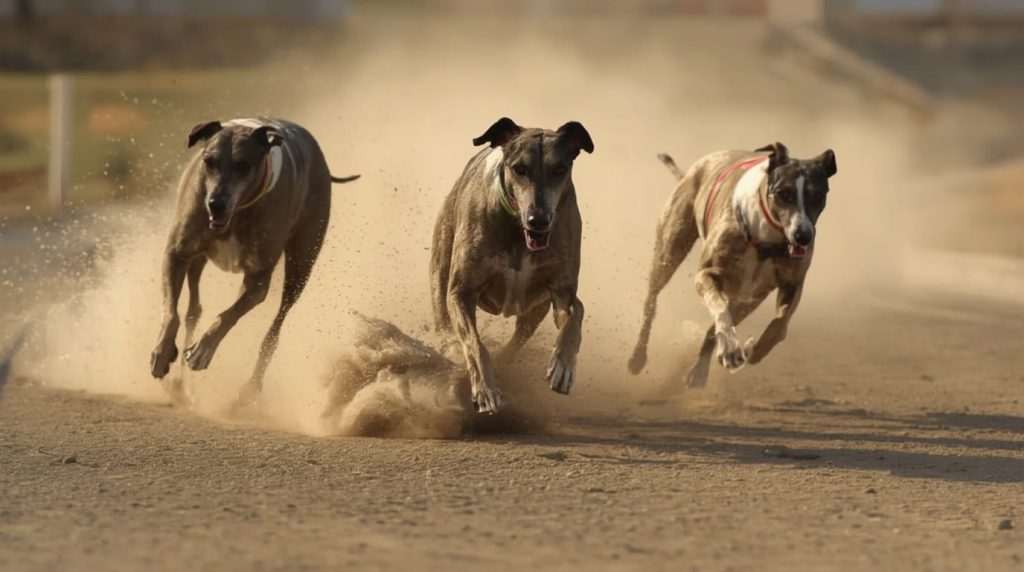
The Adelaide Cup — SA’s Group 1 in Detail
The Adelaide Cup has been contested at Angle Park every year since the track opened in 1972 — over fifty consecutive runnings of a race that has grown from a local feature into one of the most significant sprint events on the national greyhound racing calendar. Group 1 status, $137,000 to the winner as of 2025, and a field drawn from the best 530m sprinters in the country make the Adelaide Cup the single event that defines Angle Park’s position in Australian greyhound racing.
History and evolution
The race was originally run over 515m — Angle Park’s standard sprint distance for the first four decades of its operation. In 2021, the Adelaide Cup switched to 530m to align with the track’s updated distance configuration, adding roughly half a second to winning times without changing the fundamental character of the race. The pre-2021 and post-2021 results are not directly comparable in terms of raw time, but the profile of the race remains consistent: a pure speed test on a one-turn course that rewards early positioning, clean runs through the bend, and sustained pace down the long home straight.
The prize money has evolved alongside the race’s status. For years, the winner’s cheque sat at $100,000 — significant but static. Ahead of the 2025 edition, GRSA lifted the first prize to $137,000, a 37% increase that reflects both the growing national profile of the race and the investment in SA greyhound racing that the governing body has committed to. The Match Race Challenge — now offering $200,000 to the overall winner — adds further financial weight to Adelaide Cup week, making the combined prizemoney across the carnival among the richest in the national calendar outside of Victoria’s Group 1 events.
The Cup has tracked the evolution of Australian greyhound racing over five decades. Early editions were predominantly local affairs — SA-trained greyhounds racing against SA-trained greyhounds for modest prize money. As prize money grew and national travel logistics improved, the race began attracting interstate entries — first from Victoria, then from NSW and beyond. The modern Adelaide Cup is a genuinely national event where the final field typically includes greyhounds trained in three or four different states, each bringing form lines from their home tracks that must be translated to the Angle Park surface and configuration.
The heats-and-final format
The Adelaide Cup runs as a two-stage series — heats on the Thursday night, final on the Friday night. The 2025 edition expanded from four heats to seven, reflecting the growing nomination numbers and the increased prize money attracting deeper fields. The format creates a compressed timeline that tests both speed and recovery.
- Heats (Thursday night) — the winner of each heat qualifies automatically for the Friday night final. The fastest runners-up across all heats (based on time) fill the remaining places in the eight-dog final field. This means some heats produce two qualifiers (the winner plus a fast runner-up) and others produce only one. The time component adds a layer of strategy — a greyhound that wins its heat comfortably in a slower time is guaranteed a finals berth, but a greyhound that finishes second in a fast heat may qualify on time ahead of heat winners from slower races.
- Final (Friday night) — the eight qualifiers contest the $137,000 final on a stacked card that also includes the Premier’s Cup, Piping Shrike Feature, and quality support races. The box draw for the final is conducted on course after the running of the last heat on Thursday night — meaning connections know their finals draw within hours of qualifying and have less than 24 hours to adjust their preparation.
The compressed Thursday-Friday timeline is distinctive among Australian Group 1 events. Most Group 1 races at Victorian and NSW tracks allow a week between heats and final. The Adelaide Cup’s two-day turnaround rewards greyhounds that recover quickly and penalises dogs that need time between efforts — a factor that adds a fitness variable beyond pure speed.
Recent Adelaide Cup winners
| Year | Winner | Trainer | Time (530m) | First Prize | Notes |
|---|---|---|---|---|---|
| 2025 | Mallee Beauty | Cameron Butcher (SA) | 30.05s | $137,000 | First SA-trained winner in years — broke the Victorian dominance. Won by 0.75 lengths |
| 2024 | Excavation | Jason Thompson (VIC) | 29.30s | $100,000 | Fastest Adelaide Cup on the 530m distance — also broke the track record in the Match Race series |
| 2023 | Transponder | Jason Thompson (VIC) | 30.27s | $100,000 | Won from box 1, held off Big Energy by 0.13 lengths — tight finish |
| 2022 | Wow She’s Fast | Kel & Jackie Greenough (VIC) | — | $100,000 | Also broke the 530m track record (29.86s) in the Match Race Challenge en route to the final |
The 2025 result broke a pattern that had defined the Adelaide Cup for years. Victorian-trained greyhounds — particularly from the Jason Thompson kennel — had dominated recent editions to the point where the Cup felt like a Victorian away-day rather than a South Australian feature. Thompson alone had won the race six times as a trainer, and the 2024 victory by Excavation in a track-record 29.30s appeared to cement the interstate stranglehold.
Mallee Beauty changed that narrative. Trained by Cameron Butcher in South Australia, the brindle-and-white bitch won the 2025 Adelaide Cup in 30.05s, defeating Mepunga Reward by 0.75 lengths with Zelda Covilha a further 4.25 lengths back in third. It was the first time in years that an SA-trained greyhound won the state’s premier race on home soil — a result that demonstrated the improving depth of the SA sprinting talent pool and validated GRSA’s investment in lifting the race’s prize money and profile.
Butcher had signalled Mallee Beauty’s Adelaide Cup credentials in the lead-up to the series. During the Match Race Challenge — now a $200,000 feature in its own right — she ran just 0.02 seconds off Excavation’s track record in a Thursday night performance that announced her as a genuine contender. The Cup final confirmed what the match race had suggested: South Australia had produced a sprinter capable of beating the best the eastern seaboard could send.
What makes the Adelaide Cup unique among Group 1 events
Three characteristics distinguish the Adelaide Cup from other Group 1 races on the national calendar:
- The one-turn factor. Angle Park’s single-turn 530m configuration produces a different style of racing from two-turn Group 1 events like the Melbourne Cup at Sandown or the Australian Cup at The Meadows. Early speed and a clean first turn are more decisive at Angle Park because there is no second turn to create positional changes. A greyhound that leads through the turn at Angle Park typically holds the advantage down the long home straight — the geometry of the track does not create the same mid-race pressure points that two-turn layouts produce.
- The loam surface. Most Group 1 events in Victoria and NSW run on sand. The Adelaide Cup runs on loam — a surface that responds differently to weather, produces different speed figures, and rewards a slightly different physical profile in greyhounds. Interstate runners with no previous starts on loam are facing an unknown variable that their home-track form does not account for. Mallee Beauty’s 2025 victory underlined this advantage — an SA-trained greyhound racing week in, week out on the loam surface knew the track intimately in a way that travelling interstate entries could not replicate.
- The compressed timeline. The Thursday heats to Friday final turnaround is tighter than any other Group 1 on the national calendar. Recovery, fitness, and the ability to reproduce peak performance within 24 hours are tested in a way that a standard seven-day heats-to-final format does not examine. For punters, watching how a greyhound performs in its Thursday heat — not just the result but the effort level, the recovery visible in the run-on past the post, the overall impression of physical expenditure — provides information about Friday night readiness that the time and margin alone do not capture.
Facilities and Attending
Angle Park is a venue built for function rather than spectacle — it does what a Angle Park greyhound racing facility needs to do without the architectural ambition of a venue trying to attract a non-racing crowd. The facilities have been upgraded incrementally since the track opened in 1972, most notably in May 1990 when a track-view restaurant, bistro, and lounge bar were added. In 1994, GRSA purchased the freehold of the land — securing the venue’s long-term future in a way that leased facilities cannot guarantee.
Getting there
Angle Park is located on Cardigan Street off South Road in Adelaide — accessible from the city centre in approximately 15 minutes by car depending on traffic. The venue sits within the broader Angle Park recreational precinct, and the Cardigan Street turnoff from South Road is signed. For visitors unfamiliar with the area, entering “Greyhound Park Cardigan Street Adelaide” into navigation covers it without ambiguity.
Free car parking is available inside the grounds — a detail worth noting because paid parking at racing venues in larger cities is the norm rather than the exception. The car park accommodates a standard race meeting crowd comfortably on Monday, Wednesday, and Thursday. Friday night feature meetings — particularly Adelaide Cup night — fill more of the available capacity, and arriving earlier than usual on those nights avoids the later scramble for convenient spots.
Public transport access is available via bus routes along South Road, with a short walk from the nearest stop to the venue entrance. The practicality of public transport for a night meeting depends on return service timing — checking bus schedules for the specific meeting night is advisable, as services thin out later in the evening.
On-course facilities
| Facility | Details |
|---|---|
| Chasers Restaurant | Trackside dining with race views — bookings recommended for feature meetings |
| Bistro and lounge bar | Casual dining and drinks with track visibility — added during the 1990 upgrade |
| TAB | Full TAB facilities on course — bet on all Australian and international racing, not just the Angle Park card |
| Bookmakers | On-course bookmakers operating on race nights — odds displayed at the ring |
| SKY Racing screens | Televisions throughout the venue showing all SKY Racing channels — coverage of interstate and international meetings alongside the local card |
| General admission | Free or low-cost entry on standard race nights — feature meetings may carry an entry fee |
Betting on course
Two options exist for on-course betting: the TAB and the bookmakers’ ring.
The TAB offers fixed-odds and tote betting on all races — not just Angle Park but every Australian greyhound, thoroughbred, and harness meeting running that session, plus international races where available. The screens throughout the venue display odds, results, and dividends in real time. For punters who follow multiple meetings simultaneously — an Angle Park card alongside a Thursday night Sandown meeting, for example — the TAB area provides the infrastructure to bet across states without leaving the venue.
The on-course bookmakers offer an alternative odds market — and occasionally a better price than the TAB on locally trained greyhounds where the bookmaker has formed a different assessment from the tote market. Comparing TAB and bookmaker odds before placing a bet takes seconds and can capture a price advantage that compounds across a full meeting of betting. The bookmakers’ ring is busier on feature nights and quieter on standard cards, which means the odds display and the interaction with bookmakers are more leisurely on a Monday night than on Adelaide Cup Friday.
What Angle Park does not offer
Two absences worth noting for interstate visitors and travelling trainers:
- No camping facilities. Unlike some regional venues in other states, Angle Park does not provide camping or overnight accommodation for visiting trainers. Interstate connections travelling for Adelaide Cup week need to arrange accommodation independently — Adelaide’s hotel and motel options are plentiful within a short drive of the venue, but booking during Cup week is advisable rather than assumed.
- No on-site kennels for visiting greyhounds. Greyhounds must be brought to the venue and kennelled on race day — no earlier than 45 minutes before the first race. Visiting interstate greyhounds need pre-arranged kennelling at a licensed SA facility prior to race day. GRSA can provide information on available kennelling options for interstate trainers — contacting them before travelling is the practical first step.
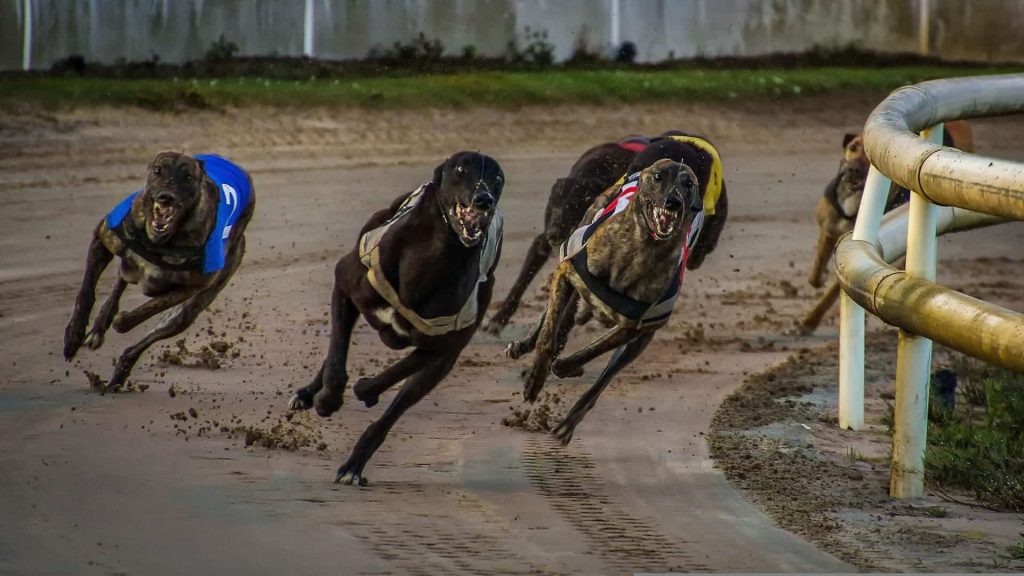
How to Watch and Bet
Every Angle Park race meeting is televised nationally through SKY Racing — which means an Angle Park greyhound meeting running on a Monday night in Adelaide is viewable from any location in Australia with SKY Racing access, and bettable through any licensed Australian bookmaker. The coverage is not limited to feature meetings: standard grading cards on Monday and Thursday receive the same broadcast treatment as the Adelaide Cup final on Friday night.
Watching Angle Park racing
| Method | What you need | Coverage |
|---|---|---|
| SKY Racing (SKY 1 or SKY 2) | Foxtel, Kayo Sports, or a venue with SKY Racing screens | All meetings — every race, every card, full commentary and market updates |
| TABtouch / TAB app | A funded account with your state TAB operator | Live streaming of all Angle Park meetings through the TAB platform — free with a funded account |
| On-course | Physical attendance at Angle Park | First-hand viewing from trackside, the restaurant, or the general admission area |
| Pub/club with SKY Racing | Any licensed venue with SKY Racing screens | Full coverage — many pubs and clubs in Adelaide and across regional SA display SKY Racing alongside thoroughbred and harness meetings |
SKY Racing is the default viewing method for the majority of Australian greyhound punters. The coverage includes pre-race analysis, the form summary for each runner, and market updates showing odds movements across the major bookmakers in the lead-up to each race. For interstate punters watching Angle Park from Victoria or NSW, the broadcast provides the visual information that form guides alone cannot convey — how a greyhound looks in the parade, its behaviour in the boxes, and the run of the race that the result and time only partially describe.
The TAB streaming option is worth noting specifically because it requires no Foxtel or Kayo subscription — a funded TAB account provides live streaming of all Australian greyhound meetings including Angle Park. For punters who bet through the TAB and do not have a separate SKY Racing subscription, this is the most cost-efficient path to live coverage. The stream quality is functional rather than premium — it delivers the race and the result without the pre-race analysis and commentary depth that the full SKY Racing broadcast provides.
Betting on Angle Park racing
Angle Park meetings are available through every licensed Australian bookmaker — corporate bookmakers (Sportsbet, Ladbrokes, TAB, bet365 Australia, Neds, PointsBet), the on-course TAB, and on-course bookmakers at the venue. The odds market for Angle Park races is thinner than for Victorian meetings — reflecting the smaller SA greyhound population and the lower betting turnover — which has practical implications for punters.
Fixed odds vs. tote — the SA dynamic
On Victorian meetings at Sandown Park or The Meadows, the fixed-odds market is deep enough that early prices hold reasonably well between opening and jump. On Angle Park, particularly on Monday and Wednesday cards, fixed-odds markets can shift significantly on relatively small wagers because the market is shallower. A few hundred dollars placed on a short-priced favourite can push the fixed odds from $1.80 to $1.50 — a movement that would require substantially more money to produce on a Sandown market.
For punters, this shallow market dynamic creates two practical considerations:
- Take the early price when it represents value. A fixed-odds price that looks fair at 11:00am on a Monday morning may be $0.40 shorter by race time because a small number of confident bets have compressed the market. If the price is value at the time of assessment, placing the bet early captures the value that waiting until closer to race time may erode.
- Monitor the tote as a comparison. The tote market is not affected by individual large bets in the same way — it pools all wagers and distributes the dividend proportionally. On Angle Park meetings where the fixed-odds market is thin, the tote can occasionally offer a better return than the compressed fixed price, particularly on roughies where the fixed-odds bookmaker has shortened the favourite and lengthened the rest of the field.
Best bookmakers for Angle Park racing
| Bookmaker | Angle Park coverage | Streaming | Strength |
|---|---|---|---|
| TAB | All meetings — full market depth | Yes — live streaming with funded account | The default for tote betting and the broadest market availability |
| Sportsbet | All meetings — fixed odds | Via SKY Racing (separate subscription) | Competitive fixed odds, frequent promotions on greyhound racing |
| Ladbrokes | All meetings — fixed odds | Via SKY Racing (separate subscription) | Strong fixed-odds market, early prices available morning of race day |
| bet365 Australia | All meetings — fixed odds | Live streaming with funded account | International brand with full Australian greyhound coverage |
| Neds | All meetings — fixed odds | Via SKY Racing (separate subscription) | Part of the Ladbrokes group — similar market depth |
| PointsBet | All meetings — fixed odds | Limited | Newer to greyhound markets — coverage is improving |
Verdict
Angle Park is not the biggest greyhound racing venue in Australia, not the most frequently raced, and not the track with the deepest betting markets. It is the only metropolitan track in a state with a compact but genuine greyhound racing culture — and it carries that responsibility with a consistency that has lasted over fifty years.
The Adelaide Cup is the event that justifies Angle Park’s position on the national map. Group 1 status, $137,000 to the winner as of 2025, and a field that draws the best 530m sprinters from across the country make it a race that any serious greyhound racing follower — punter, trainer, or spectator — should have on the calendar. Mallee Beauty’s 2025 victory — the first by an SA-trained greyhound in years — demonstrated that local track knowledge and the loam surface advantage are genuine factors that can overcome the raw quality advantage that interstate entries typically bring.
Beyond the Adelaide Cup, the weekly programme provides enough racing to sustain a local industry and enough form lines for punters who invest the time to follow them. Monday nights build the local picture. Thursday nights sharpen the quality. Friday nights deliver the occasions. The rhythm is predictable without being monotonous — and for SA-based punters who attend regularly, the familiarity with local greyhounds, trainers, and track conditions creates a knowledge advantage that no interstate visitor can replicate from form guides alone.
The one-turn layout and loam surface make Angle Park a venue with its own character — form from Sandown, The Meadows, or Wentworth Park does not translate directly, and punters who treat it as interchangeable with Victorian or NSW tracks will miss the nuances that define results here. Inside draws in wet conditions, outside draws in dry conditions, the long home straight that rewards sustained speed over pure early brilliance, and the loam surface that shifts in behaviour between fast and heavy tracks — these are the details that separate informed Angle Park betting from blind application of interstate assumptions.
For punters outside South Australia who have never bet on Angle Park, the Adelaide Cup meeting in October is the natural entry point — the highest-quality fields, the deepest betting markets, and the most comprehensive coverage the venue produces all year. For punters who discover that the one-turn loam track with its distinctive box draw biases and its compact but readable form picture suits their betting approach, the Monday and Thursday cards provide year-round opportunities that the thinner market and the defined local hierarchy can make more predictable — and more profitable — than the deeper, more competitive markets at eastern seaboard venues.
Frequently Asked Questions
Where is Angle Park greyhound track?
Angle Park is located on Cardigan Street off South Road in Adelaide, South Australia — approximately 15 minutes by car from the Adelaide city centre. The venue is within the Angle Park recreational precinct and the turnoff from South Road is signed. Free car parking is available inside the grounds.
When does Angle Park have greyhound racing?
Angle Park hosts three to four meetings per week — Monday nights (grading cards), Wednesday mornings (mixed-grade cards), Thursday nights (higher-grade and feature lead-up races), and Friday nights (feature finals and Group races). Public trials run on Wednesday evenings at 6:00pm and Saturday or Sunday mornings at 7:00am. Bookings for trials are essential and made through GRSA.
What distances does Angle Park race over?
Angle Park races over two distances — 530m (the standard sprint, used for the majority of races including the Adelaide Cup) and 731m (the staying trip, used for the Premier’s Cup and SA St. Leger among other events). The 530m is a one-turn layout with a long home straight. The 731m involves two full circuits of the track and produces a tactically different style of racing.
What is the Adelaide Cup?
The Adelaide Cup is South Australia’s only Group 1 greyhound race — $137,000 to the winner as of 2025, contested over 530m at Angle Park every October. The race runs as a heats-and-final series with heats on Thursday night and the final on Friday night. The field draws the best 530m sprinters from across Australia. The 2025 Adelaide Cup was won by Mallee Beauty, trained by Cameron Butcher in South Australia, in 30.05s — the first SA-trained winner in years, ending a prolonged period of Victorian dominance.
What surface does Angle Park race on?
Angle Park races on loam — a surface that behaves differently from the sand tracks used at most Victorian and NSW venues. Loam is generally faster in dry conditions and slower when wet, with a wider range of variation between fast and heavy tracks than sand. Times from Angle Park are not directly comparable with times from sand-track venues like Sandown Park or The Meadows.
How does the box draw work at Angle Park?
The one-turn 530m layout produces box draw tendencies that differ from two-turn tracks. In dry, fast conditions, wider boxes (6, 7, 8) carry a slight advantage because the sweeping approach to the first turn allows outside runners to maintain speed without compression. In wet or heavy conditions, inside boxes (1, 2, 3) regain the advantage as the shorter rail path benefits from the reduced overall pace. Middle boxes (4, 5) perform consistently across conditions.
What is the track record at Angle Park?
The 530m track record was set by Wow She’s Fast in September 2022 with a time of 29.86s during the Match Race Challenge. The 2024 Adelaide Cup winner Excavation ran 29.30s — though whether this constitutes the current official track record should be verified with GRSA, as track records can be subject to conditions around the circumstances of the run (heats, finals, match races, standard grading).